Iran’s tipping point: U.S. and Israel eye regime change
Following the Venezuelan playbook, Tehran braces for internal unrest and external pressure. Can the regime survive?


شارك على
 مسنجر
مسنجر
 واتساب
 ثريدز
ثريدز
 بريد إلكتروني
 الطباعة
شارك على




After the Venezuela event, Iran was immediately placed front and center as the next target for Donald Trump.
There are similarities: both countries’ economies depend on oil. They are ruled by ideologically contradictory regimes that are identical in their oppressive practices toward their people, and are therefore classified by America and the West as dictatorships.
They have established bilateral cooperation to bypass American sanctions by all means and have developed quasi-strategic relations with China and Russia, the sworn enemies of America and the West.
In June of last year, Iran was subjected to Israeli and American strikes that helped weaken it and revealed the extent of intelligence infiltration within its regime, similar to how the Venezuelan president was abducted from his residence through intelligence infiltration.
The Americans could have conducted further strikes to overthrow Nicolás Maduro's regime, but fears of spreading chaos and the lack of a ready alternative led them to merely remove the head of the regime as a decisive warning to other members “to do the right thing,” as defined by Washington.
This is not yet the end of the “Maduro regime.” It could be the beginning of the end, so pragmatism may either succeed in weathering the turbulent storm to preserve the state and then turn to unrigged elections, or the revolutionary left wing may prevail, driving Venezuela into civil wars of unforeseeable duration and leading to an unknown regime.
In both situations, the United States is intervening to tip the scales in its favor. But what about Iran in light of these possibilities? Here too, assuming the regime is nearing its end, there is no immediate alternative.
During the ongoing popular protests, there was renewed demand for the return of the previous monarchy, albeit supported by Israel and lacking broad popular acceptance. Meanwhile, it was mentioned that the Americans are searching for figures who could form a core for a transitional phase, which in turn implies advanced, qualitative communication with insiders closely linked to politicians and, especially, military figures within the regime itself.
In this context, the hypothesis of regime change and/or its downfall and collapse must be examined, along with whether it is a near or imminent possibility.
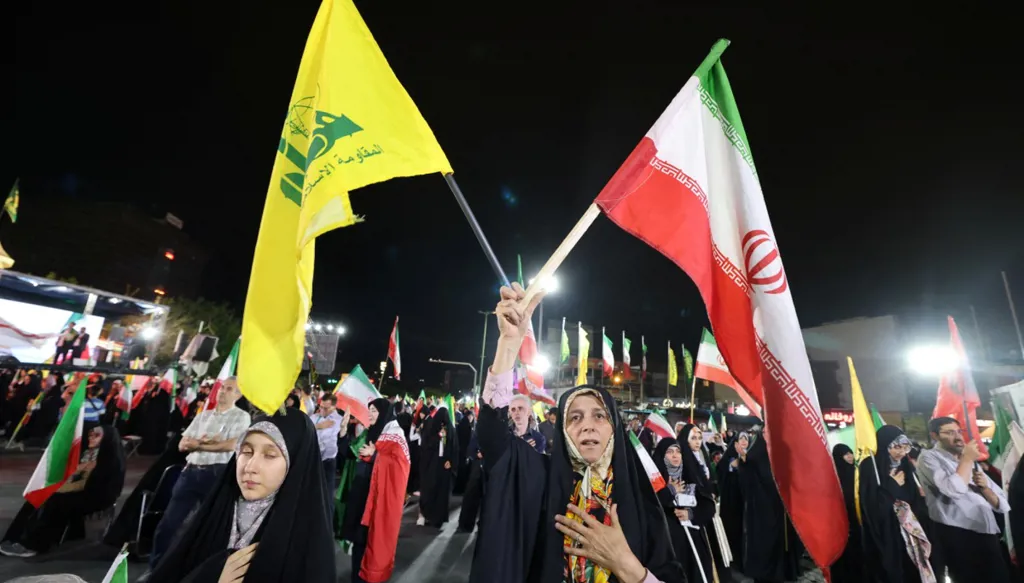
No scenario can be envisioned based on the ongoing psychological warfare data against this regime. Internally, it has become clear that its failure to provide the most basic services (water and electricity) and to support food security by addressing the national currency's situation stems from its continuous inability to resolve the sanctions problem, leading to unprecedented public despair.
Externally, it has no allied or friendly states capable of effectively defending it, as its agreements with China and Russia allowed Beijing to buy oil at the lowest prices and Moscow to continue supplying equipment for the nuclear program and fighter jets, yet they have proven not to be obligated to intervene if Iran is targeted by Israeli or American attacks. After Iran's regional influence declined, the regime is left only with the militias it established, funded, armed, and indoctrinated, but they too have weakened, and beyond them, there are no supporters advocating for the preservation of its model.
Among the latest assessments of the regime's cohesion and the effectiveness of its measures to restore its security capabilities damaged by America and Israel, two conclusions emerge: First, the regime cannot be toppled by popular protests, no matter how large or prolonged, because it will not hesitate to employ bloody violence against them.
Secondly, it falls only through external intervention, and by a scenario different from the previous war, which requires organized fighters on the ground - indeed, such as army units and the "Revolutionary Guard" being ready to defect and abandon the Supreme Leader (for whom a successor is currently being sought) and taking key regions out of the regime’s control. These possibilities could be hypothetical or a prescription for internal war and chaos, but any other options do not seem realistic given the nature of the regime's military composition.
The regime attempted to find exits through various channels but was significantly delayed. Its conditions for resuming negotiations with Washington might be legitimate, and it may have concluded that Washington does not actually aim to topple the regime. However, it clearly understood that Washington seeks to force it into concessions, as Donald Trump had called for its “surrender.”
Thus, returning to negotiations is possible but extremely difficult, as it awaits Iranian pre-acceptance of the American condition: to completely abandon the nuclear program. Undoubtedly, the regime cannot make this concession, which is why Benjamin Netanyahu raised the issue of the missile program and declared it an “existential threat” to Israel, promoting a new war as his ticket to the next elections. In his meeting with Trump in Florida, he received a green light to prepare for the war, with the condition that the final decision remains American.
As for Trump himself, nothing prevents him, after the Caracas operation, from changing his stance regarding regime change in Tehran, but he will give it some time while he advances toward ending the Ukraine war. Meanwhile, the Iranian regime seems to be betting, in vain, on a change in American conditions if the mid‑term elections in November result opposite to Trump’s advantage and his Republican majority in Congress.
Disclaimer: The opinions expressed by the writers are their own and do not necessarily represent the views of Annahar.

العلامات الدالة
الأكثر قراءة