Diplomatic protocol decoded: How high-level visits between countries are governed


شارك على
 مسنجر
مسنجر
 واتساب
 ثريدز
ثريدز
 بريد إلكتروني
 الطباعة
شارك على




In diplomatic protocol, visits between countries by officials, ministers, or diplomats typically occur only after a formal invitation.
This was confirmed by Dr. Imad Salameh, head of the Department of Political and International Studies at the Lebanese American University. He noted that customary protocols are often observed between countries out of respect for diplomatic relations and the principle of reciprocity, which is a fundamental aspect of international relations and a reflection of respect for national sovereignty.
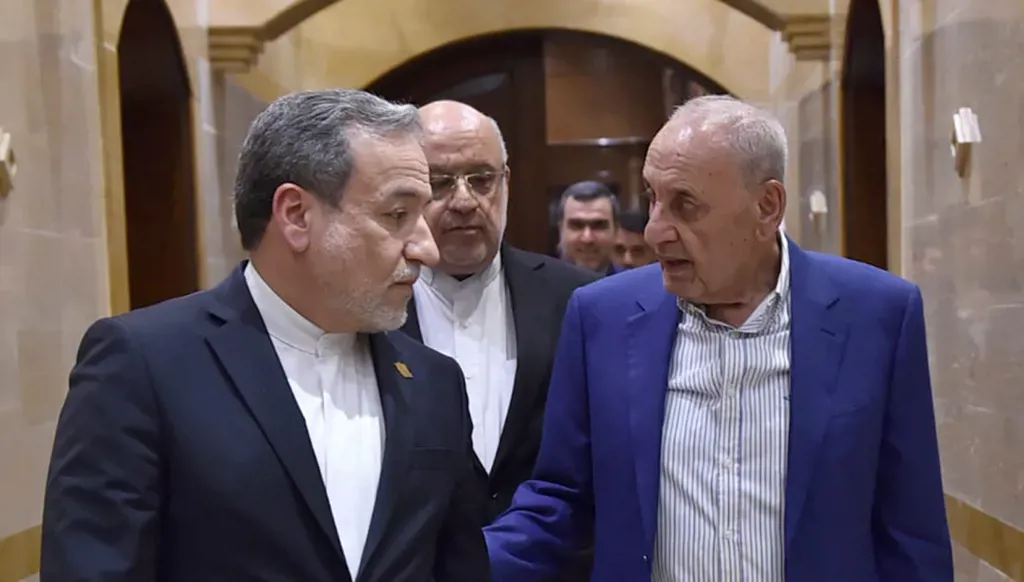
In this context, the visit of Iranian Foreign Minister Abbas Araghchi to Beirut raised attention.
The legitimate question is: How are visits between countries determined? Does the guest impose their presence, or is a formal invitation typically extended?
Salameh believes that there are international principles that determine visits between countries, known as customary protocol. In the recent visit by Iranian Foreign Minister Abbas Araghchi, he may have interpreted the statement made last month by Lebanese Foreign Minister Youssef Rajji as an invitation to hold the meeting in Lebanon.
It is reported that Rajji formally apologized in mid-December last year for not accepting the invitation of his Iranian counterpart to visit Tehran, instead proposing to hold their meeting in a third, neutral country.
At that time, Rajji addressed his counterpart through diplomatic channels with a written message in response to the invitation he received, stating that "any new beginning between Beirut and Tehran must be based on clear foundations, including respect for national sovereignty, non-interference in internal affairs, and a mutual commitment to the standards governing relations between countries."
Specific Rules
This clarification may have set the "formalities" of the visit before its substance, which ultimately took shape through Rajji’s reception of Araghchi, reflecting a political and economic engagement typically conducted between two states rather than merely between two parties.
Salameh notes that "the novelty this time is that the Iranian minister brought his family to reside in Lebanon without an invitation," emphasizing that visits conducted without a prior invitation cannot be considered in line with diplomatic protocol."
Under international norms, visits between countries are usually scheduled for a specific purpose, whether economic, security-related, political, or diplomatic-protocol in nature. Some of the main principles of official visits for officials include:
• Advance preparation: Coordination at the highest levels to develop a comprehensive program for the visit, including setting the agenda, determining expected discussions, and identifying the names and protocol levels of accompanying delegates.
• Accommodation arrangements: Organizing security, meals, and media ceremonies for the visiting delegation.
• Protocol and honors: Managing precedence, official ceremonies, and formalities.
Visits between countries are generally classified into three types: State Visit, Official Visit, and Working Visit, with the scale of ceremonies varying accordingly. Protocol departments in the countries involved coordinate with embassies to prepare the program and distribute it to the relevant authorities.
Disclaimer: The opinions expressed by the writers are their own and do not necessarily represent the views of Annahar.
العلامات الدالة
الأكثر قراءة