Israel, Turkey, and the Eastern Mediterranean: How new alliances are shaping regional power
From joint Israeli-Greek-Cypriot military drills to Turkey’s strategic pushback, the Eastern Mediterranean is emerging as a high-stakes chessboard of energy, security, and regional influence - with Washington playing a pivotal role.


شارك على
 مسنجر
مسنجر
 واتساب
 ثريدز
ثريدز
 بريد إلكتروني
 الطباعة
شارك على


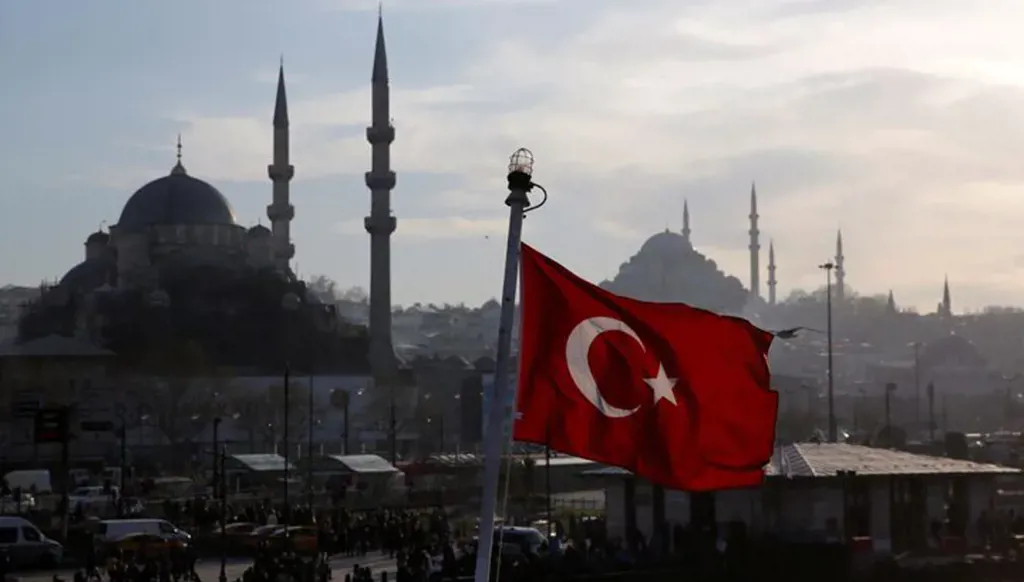


The “Jerusalem Summit” and the ensuing agreement for joint Israeli-Greek-Cypriot military exercises have put Turkey on high alert. Turkish media loyal to President Recep Tayyip Erdoğan have labeled this bloc the “Axis of Evil,” portraying the Eastern Mediterranean as a wider geopolitical battleground between Ankara and Tel Aviv - arguably even more tense than the Syrian front.
Israeli alliance to contain Turkey
Tel Aviv is working to form a new alliance framework based on a “3+1” model with Washington, creating an informal partnership in energy and security. This brings the three regional countries together with the United States and encompasses joint naval exercises, the sharing of defensive technologies, and coordinated counter-terrorism initiatives.
This Israeli initiative aims not only to challenge Turkey’s maritime claims under the “Blue Homeland” doctrine but also to reshape the region’s security and economic alliances, effectively sidelining or containing Ankara before any potential inclusion of Turkey in the emerging Eastern Mediterranean framework - on its terms, not Turkey’s.
In this context, Israeli PM Benjamin Netanyahu openly criticized Erdogan’s recent statements, declaring that “those who dream of reviving past empires should put such notions out of their minds.”
Tel Aviv’s bolstering of its military alliances marks a significant geopolitical shift in the Eastern Mediterranean, creating a pro-Western security framework centered on Israel and clearly aimed at containing Turkish influence, particularly in contested maritime zones where tensions remain high.
This cooperation strengthens Israel’s regional standing beyond the Gaza conflict, giving it strategic partnerships that help offset some of the international isolation stemming from its policies toward the Palestinians.
Including Cyprus further extends Israel’s strategic depth while complicating Turkey’s calculations in the region, particularly on energy exploration and maritime access issues.
Last September, Tel Aviv set up missile bases in Greek Cyprus, with plans reportedly underway to establish an airbase on the strategically important island. At the same time, the Israeli army expanded deployments at positions allowing it to target the Syrian capital with artillery.
Cyprus also holds strategic importance for Israel for economic reasons. Netanyahu has explicitly expressed his intention to revive the India-Middle East-Europe Economic Corridor (IMEC), a project paused during the Gaza war. Cyprus sits along the corridor’s route, which is designed to connect India to Europe via Greece - bypassing Turkey.
Since the Hamas attack on October 7, 2023, Israel has continued its military operations and expanded its regional influence, achieving key objectives in containing Iran in Syria and Lebanon. Today, Turkey stands out as Israel’s primary regional competitor and the main obstacle to its future strategic projects.
Amid recent tensions on the Greek-Turkish front, triggered by Ankara’s exclusion from the EU’s SAFE program, both Athens and Nicosia are carefully navigating a delicate balance: expanding regional alliances - particularly with Israel and Egypt - while preserving the relative calm that has prevailed in the Aegean over the past three years and keeping the prospects for a resolution to the Cyprus issue alive.
"SDF" and Tel Aviv's axes
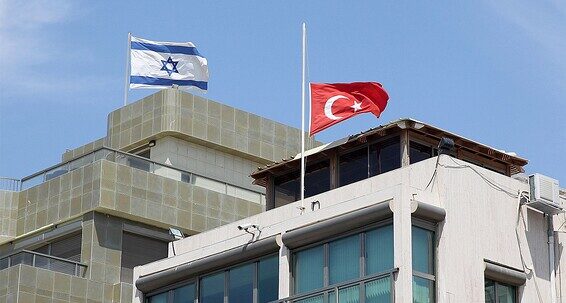
While Netanyahu declared from Jerusalem - alongside his Greek and Cypriot counterparts - that “this tenth trilateral meeting is the most important in terms of its outcomes,” Turkish Foreign Minister Hakan Fidan, speaking at a joint press conference with his Syrian counterpart in Damascus, stated that the coordination of the SDF with Israel remains the greatest obstacle to implementing the March 10 agreement.
In contrast to Israel’s India-Middle East-Europe Corridor, Turkey launched its own “Development Road” project - a more cost-effective alternative designed to link the Gulf with Europe and Central Asia solely via Iraqi and Turkish territories. However, the main challenges to this project stem from Iranian influence and persistent security threats in Iraq and Syria, which explains Ankara’s push for a political resolution to the Kurdish issue to safeguard the regional supply chain critical to its future plans.
Today, Ankara views the SDF as the main obstacle to resolving the Kurdish issue, fearing that a regional alliance between the SDF and the Druze in southern Syria - backed by Tel Aviv - could undermine its plans to link East Asia to Europe through the Middle East.
Turkey is actively seeking to limit Israeli operations in the region. On December 25, Israeli media reported that Ankara had begun efforts to establish and operate early-warning radar stations in Syria to monitor Israeli aircraft, a move that could hinder future Israeli air operations against Iran. The Turkish Defense Ministry framed this initiative as part of its broader regional security strategy, with the Turkish Defense Minister stating during a visit to Tehran on December 24 that “Iran’s security is inseparable from Turkey’s security.”
With these developments unfolding alongside Washington’s pivotal role in the Middle East - from Gaza to Syria and the Eastern Mediterranean - the meeting between Netanyahu and the U.S. president on Monday at Mar-a-Lago took on far broader significance than routine bilateral U.S.-Israeli relations. Trump’s deliberate praise of Erdoğan in Netanyahu’s presence suggested a possible mediation role for Washington, hinting at efforts to bridge tensions between Tel Aviv and Ankara in the coming weeks.
Rapid developments in the Eastern Mediterranean highlight a highly complex regional landscape, where security concerns intersect with energy projects and economic corridors, and alliances are continuously reshaped amid ongoing conflicts - from Gaza to Syria.

العلامات الدالة
الأكثر قراءة