Syria’s religious sites under threat: Tracking a surge in targeted attacks post-2025
From Aleppo to Homs, attacks on churches and mosques reveal a worrying pattern that tests both security forces and social cohesion, highlighting the symbolic and societal stakes of religious violence in post-Assad Syria.


شارك على
 مسنجر
مسنجر
 واتساب
 ثريدز
ثريدز
 بريد إلكتروني
 الطباعة
شارك على


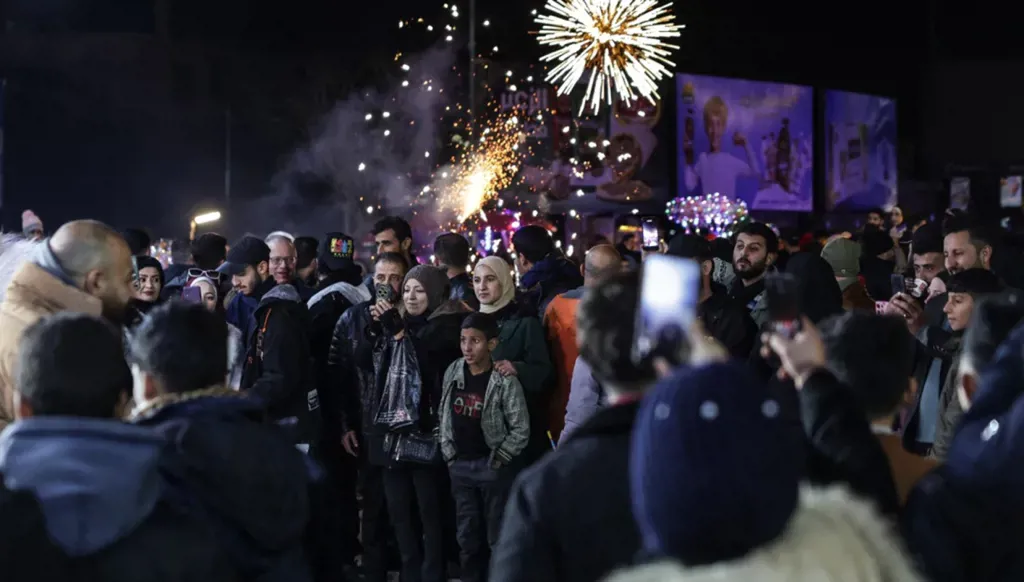


Aleppo ended 2025 with a suicide bombing during New Year’s celebrations. The attack killed a member of the security forces and injured several others. According to the Syrian Ministry of Interior, the intended target was not the security patrol but one of the churches in the Bab Al-Faraj area.
The attack came months after Syria’s interim authorities reported foiling attempts to target religious sites. Following the fall of the Assad regime in December 2024, the new authorities announced in January 2025 the arrest of a cell they said was affiliated with ISIS and had planned an attack on the Sayyidah Zainab shrine, a significant religious site for the Shiite Muslim community.
In the following months, Syria’s interim authorities repeatedly announced the foiling of plots targeting places of worship, particularly churches. In July 2025, a bombing struck the Mar Elias Church in Damascus. The Ministry of Interior later announced the arrest of a cell it said was responsible and linked to ISIS. In contrast, the group Ansar Al-Sunnah claimed responsibility for the attack, though the Ministry considered it an arm of ISIS rather than an independent entity, despite Ansar Al-Sunnah denying any pledge of allegiance.
Since then, there have been no public reports of further attempts to target places of worship. However, the Syrian Observatory for Human Rights has repeatedly noted that some churches remain at risk.
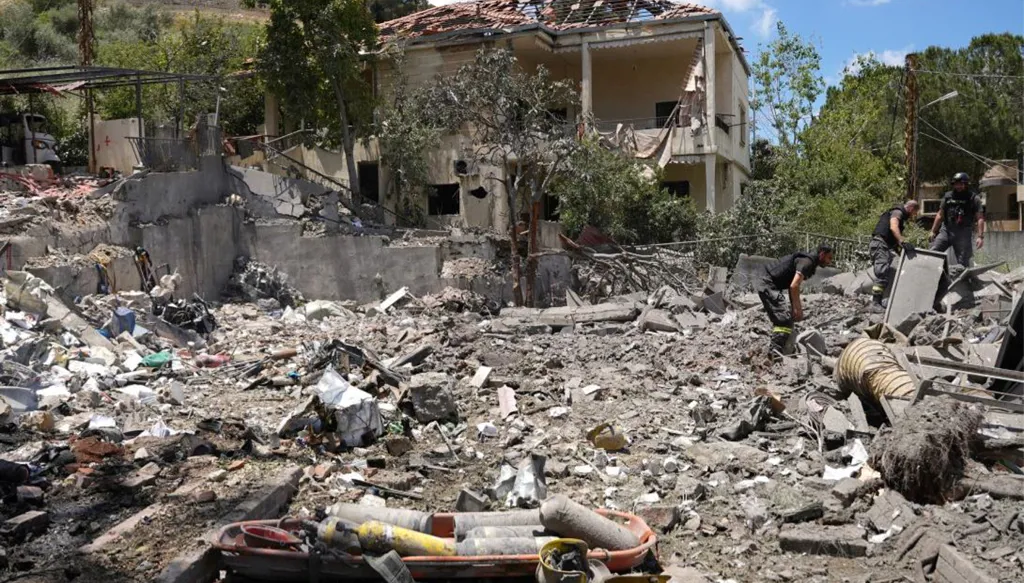
In the final month of 2025, Homs experienced a bombing at the Wadi Al-Dhahab Mosque, located in a predominantly Alawite area. Around the same time, Aleppo saw an attempted bombing of a church in Bab Al-Faraj, which reportedly killed a member of the security forces.
In a statement issued on Thursday following the Aleppo bombing, the Ministry of Interior said it had “information” about a plot to target New Year’s celebrations in several provinces - particularly Aleppo - through suicide attacks and assaults on churches and other public gathering places.
The official statement indicates that the attack on the church is part of a broader ISIS plan targeting churches and public gatherings, signaling a real threat at this stage - even though the organization has not claimed responsibility for any of the attacks mentioned by the Ministry of Interior.
Viewed as a chronological sequence, a key factor emerges that goes beyond the repeated acts of violence: the diversity of religious targets and the timing of the attacks within a relatively short period. The concern is not limited to a single location or community; rather, it is that places of worship - spaces of both symbolic and social significance - are being targeted, making the impact extend far beyond security concerns alone.
To understand this pattern, it is helpful to look at two past experiences as reference points - not as ready-made models for replication. In Iraq in 2010, attacks on churches and Christian clergy marked a shift in the nature of violence: operations went beyond causing casualties to send a message about the Christian presence and its place in the public sphere. At the time, the attack on the Church of Our Lady of Salvation in Baghdad was not seen as an isolated event but as part of a trajectory whose long-term effects later manifested in migration and a declining Christian population.
In Afghanistan, following the Taliban’s takeover, ISIS adopted a different tactic - different in form but similar in purpose - by targeting religious sites to strike at the community. The attacks aimed to embarrass the new authorities, inflame sectarian tensions, and undermine the nascent government’s ability to provide security, without engaging in a traditional military confrontation.
Applying these comparisons to Syria does not imply that the situation will follow the same trajectory as in Afghanistan, but it highlights a key point: In fragile transitional periods, places of worship can become high-impact targets. Attacks on them risk rapid social polarization while simultaneously testing the authorities on both security and societal levels.
The significance of this conclusion becomes clearer when examining the nature of the attacks as reported in official accounts. According to these reports, the churches were targeted through direct suicide operations, whereas the Wadi Al-Dahab Mosque bombing involved an explosive device. While this difference alone is not conclusive, it aligns with the broader understanding that suicide operations are often used to send more direct messages with heightened symbolic impact. These distinctions should be viewed as indicators rather than definitive conclusions.
In conclusion, what stands out is less any single incident than the potential emergence of a trajectory that shifts tension from the security sphere to the religious and social domains. In post-2025 Syria, this trajectory represents a high-stakes test - not only for the authorities and their institutions, but also for society’s capacity to prevent religious symbols from becoming arenas of open conflict.

العلامات الدالة
الأكثر قراءة