Hamas turns 38: Following in Fatah’s footsteps


شارك على
 مسنجر
مسنجر
 واتساب
 ثريدز
ثريدز
 بريد إلكتروني
 الطباعة
شارك على




Palestinian factions are rarely accustomed to reassessing their choices, rhetoric, and methods, as if they are beyond error or immune to criticism, despite being part of a national movement six decades old—one marked by suffering, sacrifice, heroism, failures, and setbacks.
This applies to the Hamas movement, on the occasion of its 38th anniversary, which was largely devoted to reaffirming its so-called principles and distinct identity, without reflecting on the specifics of its experience and rhetoric regarding governance, organizational structure, political choices, resistance, and regional alliances.
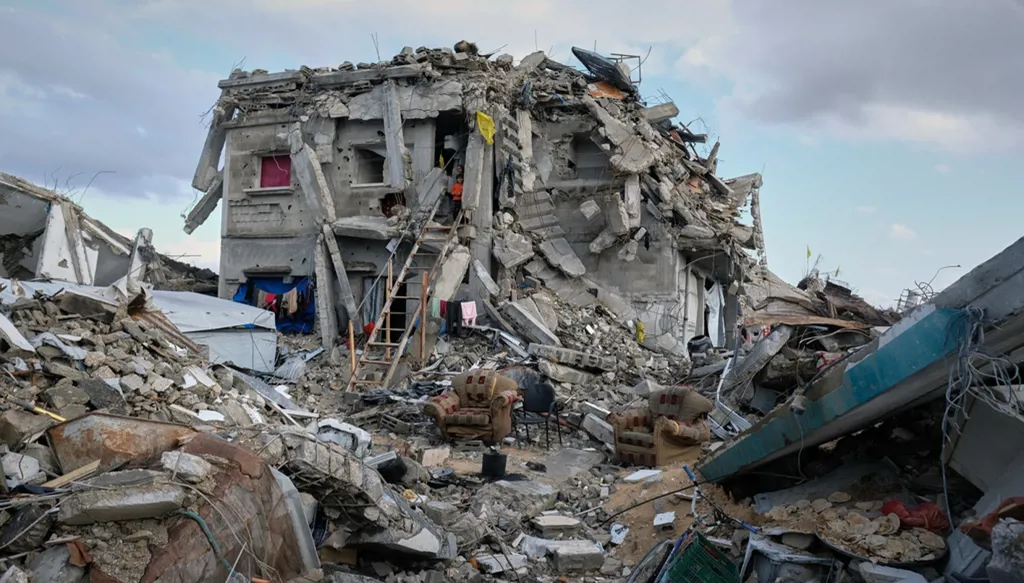
Even in its statement on the occasion, Hamas avoided acknowledging its responsibility for the ‘Al-Aqsa Flood’ operation (late 2023), an event that Israel used as a pretext to launch a brutal, ongoing genocidal campaign against the Palestinian people. This war has unleashed a new catastrophe on Gaza, potentially even more severe than the previous tragedies Palestinians have suffered since the establishment of Israel on their land.
Statements by Hamas leaders—including Khalil al-Hayya, Khaled Mashal, and Moussa Abu Marzouk—addressed the ‘flood’ operation only with pride, overlooking the immense consequences it triggered: the destruction of Gaza, the displacement of Palestinians, and leaving them vulnerable to both Israeli actions and dependence on international aid.
Moreover, those statements did not address the justifications for the "Al-Aqsa Flood" operation, including the release of prisoners, halting Israeli violations at the Al-Aqsa Mosque, lifting the blockade on Gaza, or ultimately driving out the occupation. Instead, the number of Palestinian prisoners has doubled, violations at Al-Aqsa have become a daily ritual for extremist Israeli settlers, and Gaza has been left in ruins after the blockade. Meanwhile, Israel has emerged as a dominant power over the Palestinians from the river to the sea—more so than at any previous time—and has strengthened its influence across the entire Arab East.
Hamas’ core problem in all of the above lies in its detachment from political reality, weighed down by illusions of united fronts, angelic interventions, and active participation from the Arab and Islamic worlds. It spoke of maintaining a balance of deterrence and shaking the ground beneath Israel’s feet—supposedly weaker than a spider’s web—while the opposite proved true at enormous cost. Notably, Hamas did not employ these slogans or claims merely for mobilization or morale; rather, it used them as the very rationale underpinning its decision to launch the "Al-Aqsa Flood" operation.
Thus, there is nothing new in the Hamas leadership’s denial of the realities in Palestine and the Arab East. For more than two years, it has continued to issue statements that obscure the consequences of its harmful choices, claiming, for example, that the Palestinian people have nothing to lose, that Israel has failed to achieve its objectives in the war, that Palestinian losses are merely tactical while Israel’s are strategic, and that Hamas has only lost 20% of its strength.
The biggest misconception is the claim that renewed international attention to the Palestinian issue—especially in Western countries with strong civil society and democratic values—was triggered by the "Al-Aqsa Flood" operation. In reality, this attention arose to condemn Israel’s brutal genocidal war against the Palestinians and to defend fundamental freedoms, as Israel attempted to portray any criticism of its aggressive and discriminatory policies as antisemitism.
What stands out most in Hamas leadership’s rhetoric today is its shift away from its founding principles. Once presenting itself as the defender of Palestinians—championing resistance, rejecting compromise, and denying the legitimacy of a state in the West Bank and Gaza—it now speaks of a long-term truce, willingness to relinquish authority, integration into official institutions, and acceptance of the Palestinian state program.
Even more concerning are two matters: First, Hamas leadership now portrays itself as a party contributing to stability and ensuring the security of any settlement, in exchange for retaining its weapons and maintaining its authority. Second, it seeks recognition from the United States as a legitimate negotiating partner and demands that Washington pressure Israel—overlooking historical realities and the nature of the US-Israel relationship, and ignoring the fact that Israel could not have acted as it did without extensive political, financial, military, and intelligence support from the United States.
The pressing question now is: What was the bloody, destructive, and costly Palestinian division since 2007 based on? Why did Hamas fail to recognize early on the impossibility of combining resistance with governance? Why did it rule Gaza unilaterally, even marginalizing its closest factional allies? And why does it now endorse a long-term truce with Israel, call for halting resistance, support the faction that embraced settlement, and with the Palestinian State in the West Bank and Gaza—positions it once firmly opposed?
Ultimately, the fundamental question remains: Why did Hamas have to reach this point so late—incurring enormous human, material, and moral costs—after such a catastrophic failure, when Fatah had reached a similar outcome thirty years earlier?
Disclaimer: The opinions expressed by the writers are their own and do not necessarily represent the views of Annahar.

العلامات الدالة
الأكثر قراءة




الأمن العام اللبناني ينفي... ما علاقة "حزب الله" والحرس الثوري الإيراني؟