Laura Frigenti: Financing the Future is Aligning Education and Culture for Economic Impact
"Annahar" met Laura Frigenti, CEO of the Global Partnership for Education, on the sidelines of "Momentum 2025" in Riyadh.


شارك على
 مسنجر
مسنجر
 واتساب
 ثريدز
ثريدز
 بريد إلكتروني
 الطباعة
شارك على


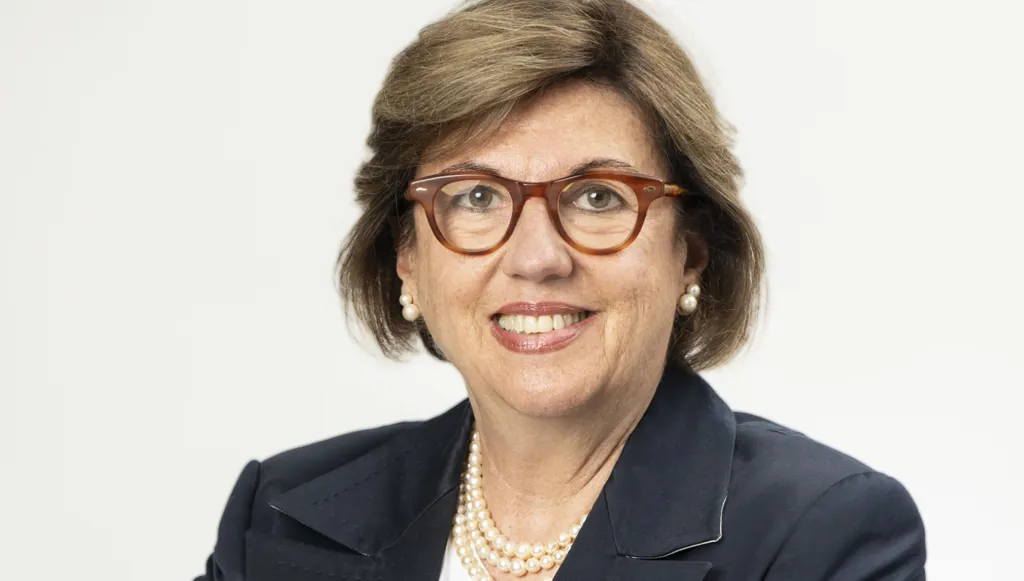


On the sidelines of "Momentum 2025" in Riyadh, "Annahar" met Laura Frigenti, CEO of the Global Partnership for Education, for a conversation that went beyond traditional education financing and into the heart of future economic growth.
The discussion explored how education funding mechanisms can be directly aligned with investment in the creative and cultural sectors—not as parallel priorities, but as a unified strategy to build a skilled, adaptable workforce capable of driving sustainable development.
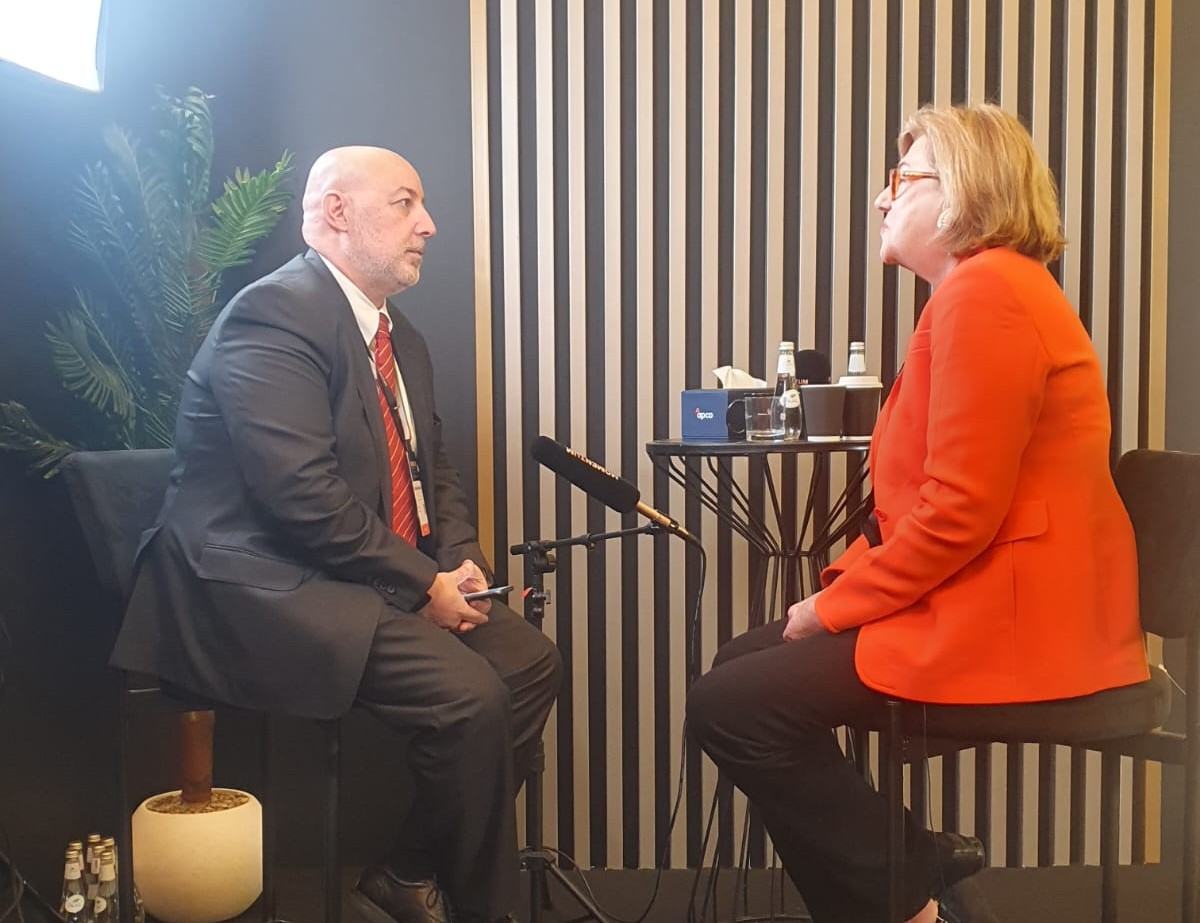
We also examined the tools and frameworks best suited to measuring the economic returns of large-scale cultural projects and why investing in culture is increasingly seen not as a cost, but as a catalyst for productivity, innovation, and long-term growth.
Here is the whole conversation:
How can your mechanisms for financing education be directly integrated with funding for the creative and cultural sector to ensure a workplace capable of driving economic growth?
So that is a fundamental question. I think that we all really see that education is a precondition for countries to grow and for the economy to blossom. That's because to make things happen, you need to have people with the right skills.
It is very important that what the education sector offers to the students is actually something that facilitates this immediate access. This is not, unfortunately, often the case. Very often curricula in school are a little bit too academically oriented and are a little bit obsolete.
And they do not really respond, for example, to the demand of the private sector that is the first immediate employer of 90% of the students that will get out of school. They will find a job in the private sector. So it is very, very important that the curricula are redesigned in such a way that they take into account the economic reality of that particular country and the opportunities that then will be given to the students that come out from schools.
What are the most effective metrics and tools for identifying and quantifying the direct and indirect economic impact of investing in large-scale cultural projects?
Well, I would say that the most important economic tool is if you calculate the benefits to society after the investment. And that more educated people are people that are very often going to get a better job in the formal sectors. And so they will end up paying taxes and contributing to the economy of the countries in a way that then has over, I don't know, an average of 40 years, which is the number of years that each of us generally works.
It has a very strong economic return to society. But then there are many other types of externalities. And I just want to say one thing that is very important: investing in girls' education.
Because the girls, as future mothers, make so many important decisions that are beneficial for society. They give their children better nutrition. They give those children access to health services.
They are more cautious in so many choices that then, for example, improve the health of the children and reduce the burden of disease, the cost of being sick, having to be treated in hospitals, etc. And there are so many other externalities that one can calculate.
The last question is about Lebanon: What innovative financing mechanism would you propose to support its vital educational institutions, ensuring their sustainability despite the current financial crisis in Lebanon?
Lebanon has divested from the education sector for quite some time. And we find that the education sector of a country that has been, I would say, a very important and strong player with a very educated population for many decades has now really gone down in terms of the quality of the education sector. As a lot is left to the goodwill of headmasters, of communities that are financing the school, and of families that support that.
That cannot be the pillar, the center pillar. So, the government really needs to go back to what the central law is, which is that the core of financing for education needs to come from domestic financing. But then Lebanon has many things that other countries do not have that can be exploited.
A very successful diaspora everywhere in the world that is very committed to helping the countries get back on their feet. So, you can think about all sorts of innovative instruments like investment from the diaspora, diaspora bonds, etc., that would actually provide some additional resources.
Lebanon has a very successful private sector that again needs to have a very strong interest in the fact that the education sector performs because the education sector will produce the skills of the future that the private sector needs to thrive and survive. So, thinking about co-financing from the private sector or direct investment from the private sector in certain parts of the education sector is also something that I see that in Lebanon is more feasible than in many other countries that do not have this many strengths in society.

العلامات الدالة
الأكثر قراءة