Ayman’s fight for work: The barriers facing Jordanians with down syndrome
Ayman Al-Shayeb’s struggle—and eventual success—in securing a job has ignited national discussion in Jordan about the labor market’s persistent exclusion of people with Down syndrome despite their ability and readiness to work.
The story of 27-year-old Ayman Al-Shayeb reflects the reality of people with Down syndrome in Jordan—especially those whose health conditions would allow them to work, yet are shut out of the labour market because of their condition, rather than evaluated on their skills and qualifications.
After his aunt, Asma Al-Saifi posted on Facebook a description of the successful conclusion of Ayman’s job search, the post received wide engagement from tens of thousands who expressed admiration for Ayman’s determination and will to overcome the challenges imposed by his Down syndrome. At the same time, the post became a space for exchanging opinions and viewpoints regarding how the labor market unfairly perceives this group.
Speaking to Annahar Al-Arabi, Al-Saifi says that Ayman, whose mother passed away five years ago, has two brothers and a sister who fully support him, alongside a loving community of non-family members. Al-Saifi adds that the idea of Ayman joining the labor market began years ago when she was visiting the United States, where she saw many people with Down syndrome working. After returning to Jordan, she told Ayman about what she had seen and encouraged him to work, an idea which greatly excited him.
That was in 2017, when Al-Saifi began an arduous journey to find an employer who believed in Ayman's abilities and who would not refuse to meet him just because he suffers from Down syndrome. Meanwhile, Al-Saifi decided to reach out to a well-known fast-food restaurant, but her request was ignored.
She insisted on following up and contacting a manager, where she explainedAyman's situation and convinced her that he was capable of working like anyone else.
After receiving approval from his supervisor, Ayman was overwhelmed with joy as he prepared for his first day of work. He continued in this position for several years, performing efficiently and earning praise from his supervisors, until he developed a desire to work in another field that would add new experience and expertise to his repertoire. This presented him with a new challenge: finding an employer who would agree to hire him.
In August 2024, Ayman started a new job at a café. His aunt pointed out that Ayman's first job in the restaurant opened the door for many of his peers to enter the job market after his story spread. She also noted that many people with Down syndrome are capable of working effectively because their condition is not severe,and they do not have other illnesses or disabilities. In addition, they receive support from their families and teachers during their studies.
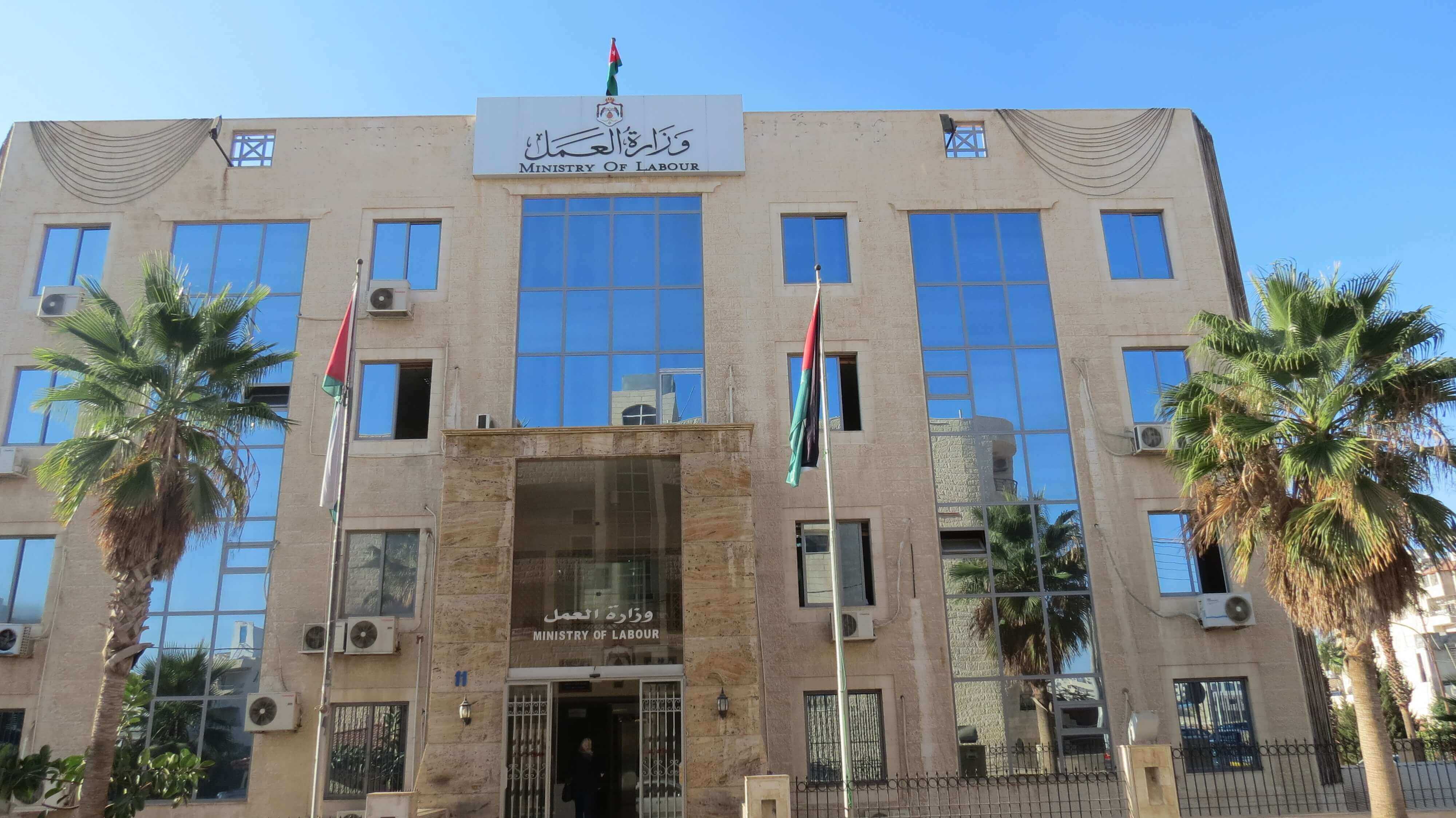
Ministry of Labor
Why does the job market reject workers with disabilities? There are no accurate statistics on the percentage of workers with Down syndrome specifically in Jordan, according to Razan Almomani, a journalist specializing in the labor and employment sector. She stresses the need for a unified database that collects detailed information on all working people with disabilities, including those with Down syndrome.
Razan believes that "acceptance of this group in the Jordanian labor market varies. Despite success stories such as Ayman's, the reality is that the Jordanian labor market's acceptance of people with Down syndrome varies. Some companies and institutions are making efforts to integrate them, while others still face significant obstacles."
She adds: “There is a range of legislation aimed at protecting the labor rights of people with disabilities, including those with Down syndrome, and encouraging their integration into society. According to the Law on the Rights of Persons with Disabilities, paragraph (e) of Article 25 requires government and non-governmental entities with no fewer than 25 and no more than 50 employees to employ at least one person with a disability. If the number of employees exceeds 50, up to 4% of vacancies must be reserved for persons with disabilities, as determined by the Ministry of Labor.”
Furthermore, Article 13 of the Jordanian Labor Law and its amendments stipulate, according to Almomani, that employers are required to send a statement to the Ministry of Labor specifying the jobs held by persons with disabilities and their respective wages, while the system for employing persons with disabilities requires every establishment with more than 50 employees to employ 4 percent of them with disabilities. The system also requires the employment of one person with a disability, if the number of employees in the establishment is more than 25 and less than 50.
However, according to Almomani, some employers believe that people with disabilities, especially those with Down syndrome, will be less productive than others and may make more mistakes. Some are afraid to hire them because they require special equipment, which increases operating costs. Some employers are afraid of being held legally responsible if any problems arise involving an employee with a disability.
Regarding Ayman specifically, she believes that despite the challenges he faced, he proved that he is capable of working and producing, that he has the skills and experience that qualify him for the job, and that practical experience is what matters to employers.
منتخب الرأس الأخضر يصنع المفاجأة في كأس العالم 2026 ويتأهل إلى دور الـ32 بعد إنهائه الدور الأول بثلاثة تعادلات مع إسبانيا وأوروغواي والسعودية... من هو هذا المنتخب؟



 مسنجر
مسنجر
 واتساب
 ثريدز
ثريدز
 بريد إلكتروني
 الطباعة