The café as a theater of politics and identity in 1950s and 1970s Beirut
Beirut’s cafés, once vibrant hubs of political debate, cultural exchange, and urban life, played a defining role in shaping the city’s social identity throughout the 20th century before gradually fading amid political turmoil and modernization.
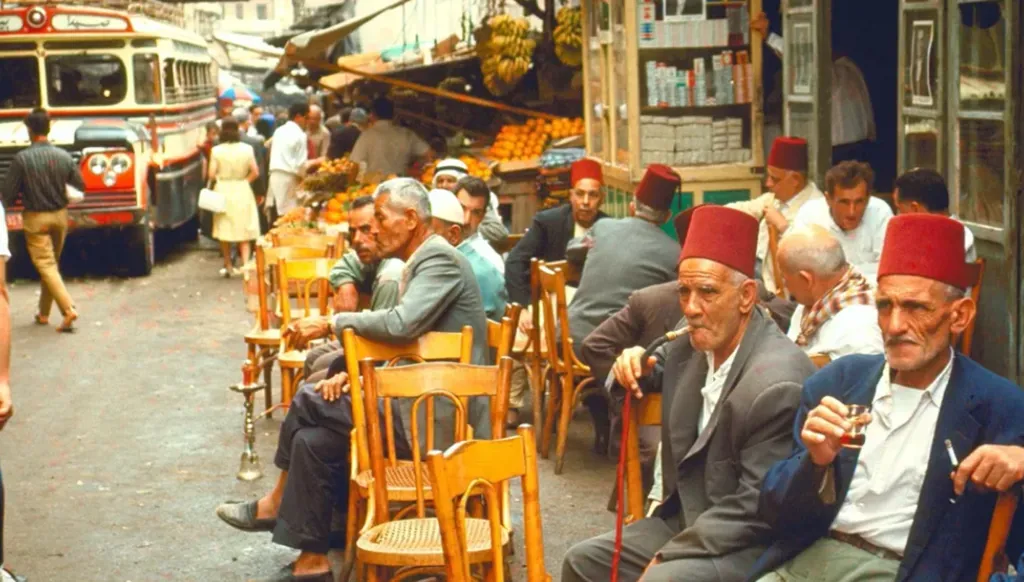
A popular café in Beirut in the mid-1960s. (Archive of Life magazine, USA)
Since the early 20th century, coffee shops have been a social and cultural feature of Beirut's urban history, serving as public spaces for human interaction and social expression.
The proliferation of coffee shops in Beirut was linked to the city's transformation under Ottoman rule and the spread of tea, coffee, and hookah cafés. This social model originated in Istanbul and spread to Arab cities within the Ottoman Empire's sphere of influence.
Beirut's cafés acquired a special character, combining heritage with modern urban practices. Over time, they transformed into popular institutions and played social, cultural, and economic roles beyond their apparent entertainment function.
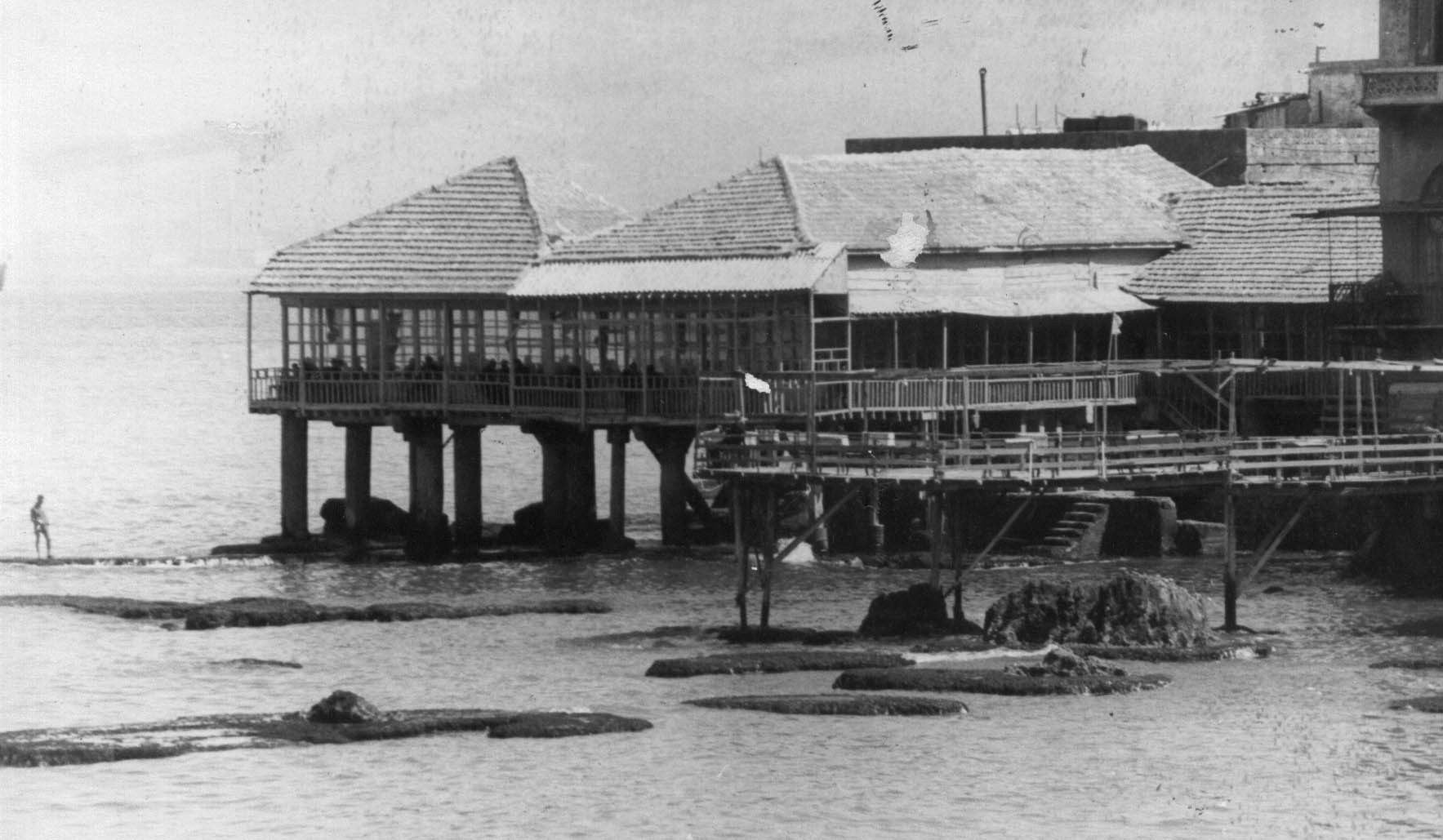
Bahrain Café. (An-Nahar Archive)
Rebellious students, exiled politicians, and influential journalists would gather at its tables to solve problems. Between the 1950s and 1960s, Beirut's popular cafés mirrored the city's transformations and vibrant social networks, shaping the image of the Arab capital for the press, intellectuals, and entertainers.
Hamra Street, at the heart of the scene, rose from a quiet neighborhood to become an urban lifeline that redefined Beirut life. In the late 1950s, the city’s artistic center gradually shifted from downtown to western Beirut, specifically Hamra and its surroundings. Cinemas experienced a renaissance during this time, intensifying the charm of the sidewalks and nightlife. Cafés proliferated and became platforms for open discussion and opinion-making.
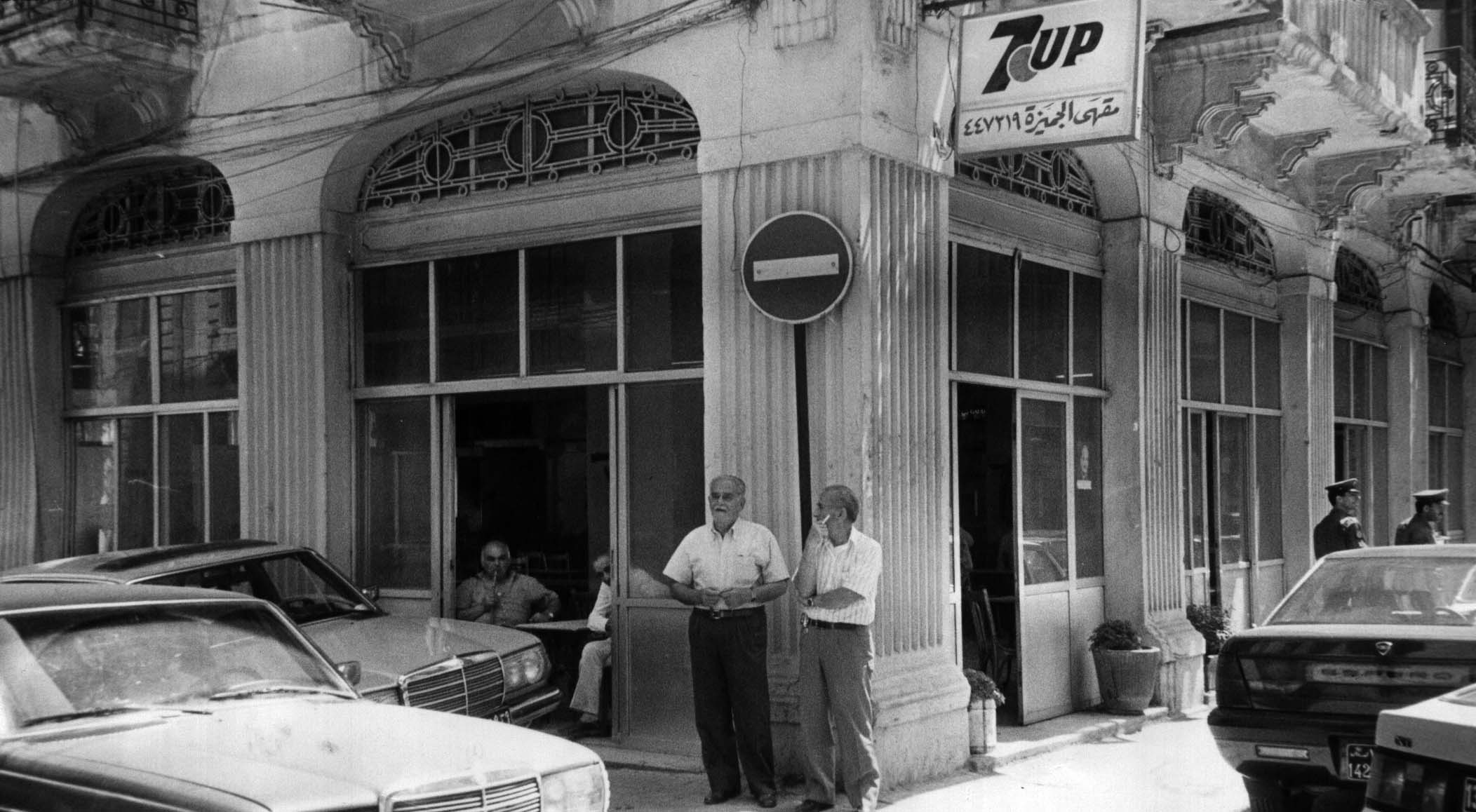
“Gemmayzeh Café.” (An-Nahar Archive)
The Horse Show, located on the corner of the street, was perhaps the most famous of these cafés and is considered the first modern sidewalk café in Hamra.
By the 1960s, the area had become Beirut's Champs-Élysées, with cafés, theaters, and halls attracting both the elite and the public. Following a visit to Beirut in 1969, Iraqi poet Muzaffar al-Nawab composed his first poem in classical Arabic there, and “Reading in the Rain Notebook” was born.
A few steps away, the Corniche offered a different view of Beirut: sitting by the sea. Cafés spread their wooden chairs and tables for sailors, merchants, travelers, city dwellers, and rural visitors. Notable cafés included the "Bahrain" Café, the "Hajj Daoud" Café, and the Al-Rawda Café. The Al-Rawda Café was established with the declaration of Greater Lebanon in 1920 and became a gathering place for intellectuals, writers, and theater artists in the 1960s and early 1970s. Beirut appeared as a network of large and small cafés spread between Hamra, Ras Beirut, Manara, and Burj Square (Martyrs' Square before the war).
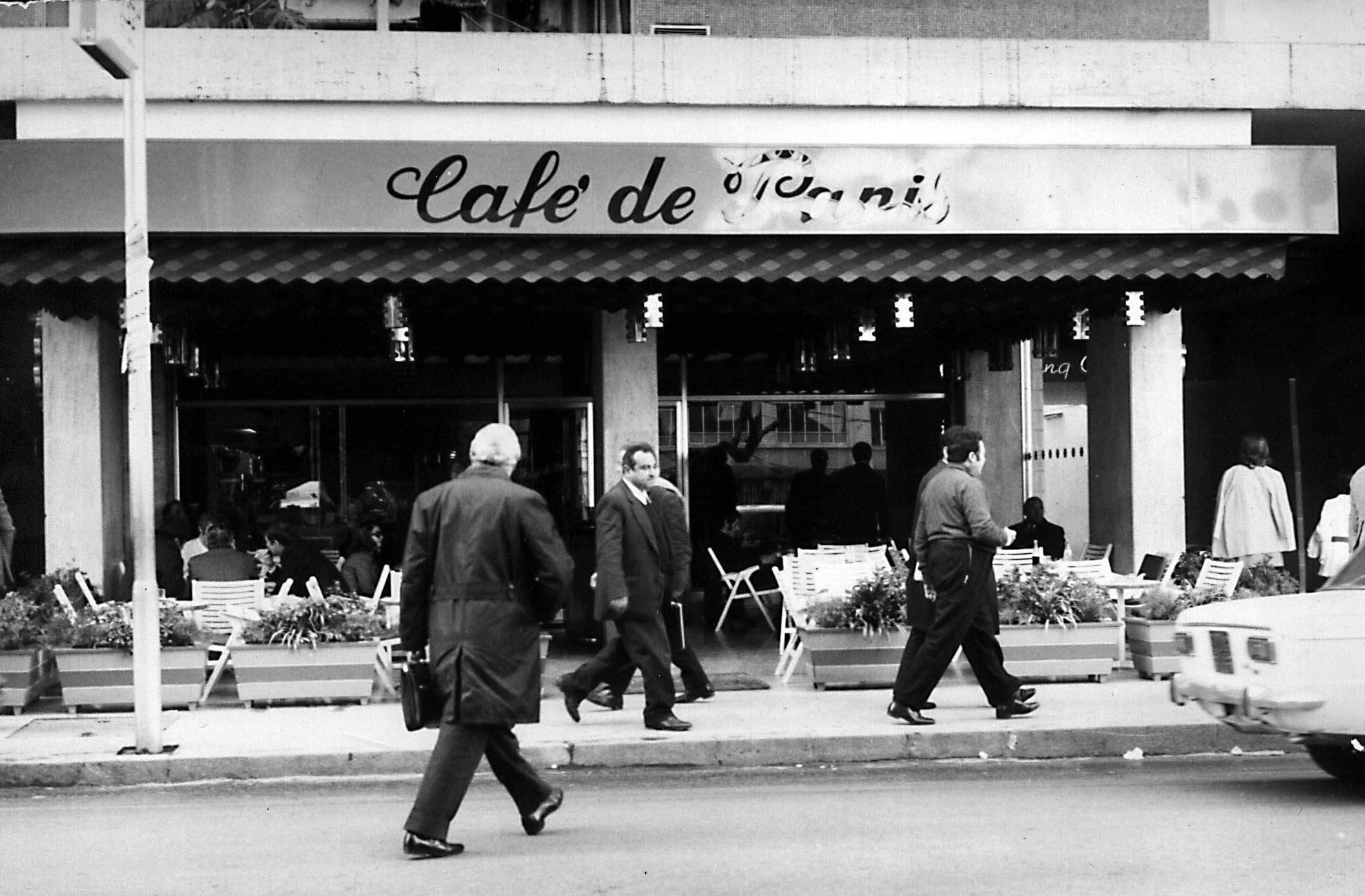
“Café de Paris.” (An-Nahar Archive)
This network, combined with what Samir Kassir called the city's "cosmopolitan"dimension after World War II, included a free market economy, growth in higher education, publishing, and journalism, as well as a "café culture" that served as a daily theater for Lebanese and Arab modernity. The café became a place where workers met writers, students met political activists, and employees met artists. It was a low-cost space with high symbolic density.
Beirut's urban structure, based on theaters, adjacent sidewalks, and tables, was the framework that transformed cafés, even the most popular ones, into public salons. These salons produced rapidly forming urban intellectual circles that interacted with everyday life.
Thus, urban transformation coincided with the emergence of the "sidewalk café," an open-street café. This occurred alongside the boom in movie theaters, making the city an integrated theater for social and cultural encounters.
Because they were semi-open spaces, cafés played a significant political role. The sidewalks of Hamra welcomed Arab exiles and activists. Some tables were transformed into makeshift "editorial rooms," much like the stories about the Dolce Vita café in the Raouche neighborhood, which brought together politicians, as well as Lebanese, Egyptian, and Syrian intelligence agents. Several coup plots were even hatched at its tables.|
In this context, the figure of the "storyteller" emerged in café culture, entertaining patrons by recounting tales of kings, jinn, and historical heroes. According to Samir Kassir's book History of Beirut, the storyteller's presence, as well as that of the shadow theater known as "Aragoz puppet" gradually faded with the establishment of theater halls, marking a sudden change in some customs.
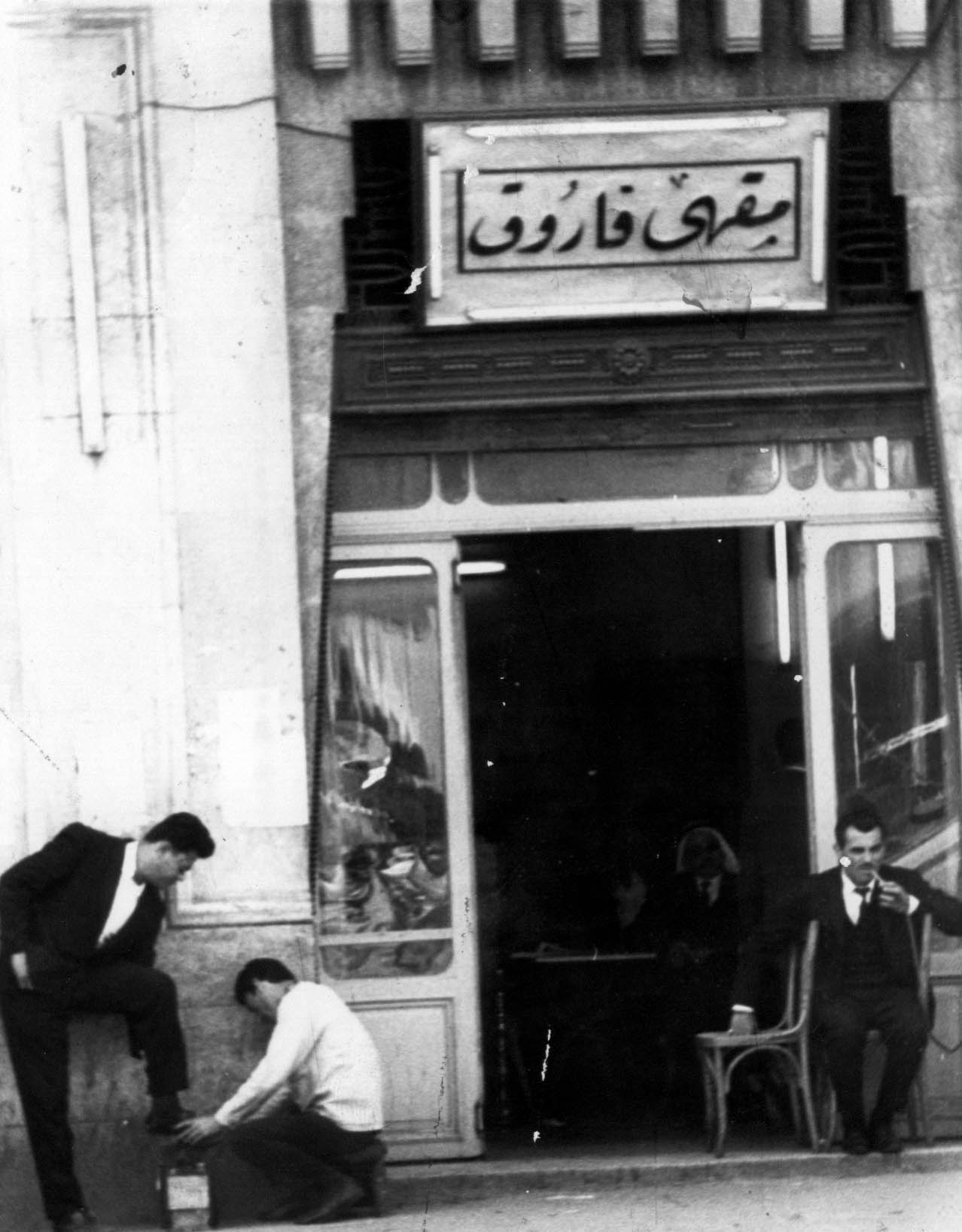
“Farouk Café.” (An-Nahar Archive)
Names such as "Kawkab al-Sharq" (Planet of the East), "Coffee Al-Azaz" in Burj Square, "Horse Show," and "Al-Wimpy" in Hamra often come to mind when thinking about Beirut and the Arab world. The power of the popular scene also lies in the abundance of lesser-known places where conservative and liberal segments of society could meet in the same space. This broad social geography illustrates how the cafés by the sea became interwoven into the fabric of the city, shaping Beirut's "sitting culture" and "breathing space."
In his book Beirut's Popular Cafés, anthropologist Chaouki Douaihy identifies four types of popular cafés: those in city center squares, those in narrow streets and alleys behind these squares, neighborhood cafés where residential activity predominates, and seaside cafés. He notes that, before the civil war, Beirut had more than 120 cafés; however, most of them disappeared due to changing social circumstances and customs.
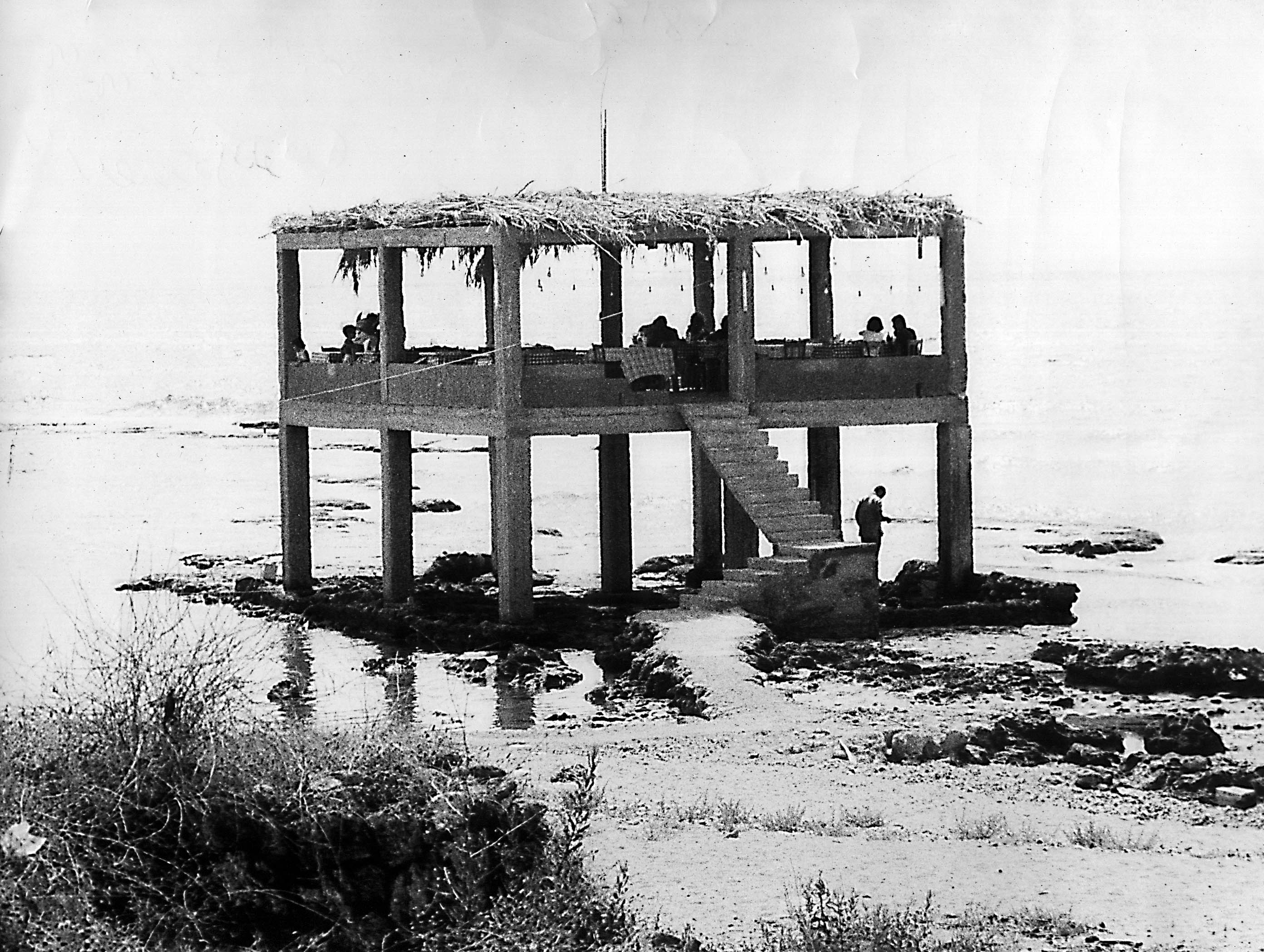
A seaside café. (An-Nahar Archive)
During the mid-20th century, Beirut's cafés became spaces for political influence and popular gatherings. According to researcher Ziad Sami Itani, the cafés in the Basta neighborhood supported President Saeb Salam and operated under his patronage and protection. In contrast, the Saliba Café in the Mazraa neighborhood enjoyed the support of Beirut minister Henry Pharaon. The Gemmayzeh Café, dating back to 1929, eventually became the campaign headquarters of Sheikh Pierre Gemayel.
By the early 1970s, cafés had reached their peak. However, signs of decline began to appear because of increasing political and security unrest. Examples of this unrest include the 1969 crisis and the 1973 clashes. Additionally, a wave of commercial modernization occurred with the opening of fast-food restaurants and modern entertainment venues. These new establishments attracted the younger generation, causing them to abandon the traditional café atmosphere.
While the features of old Beirut were still evident in its cafés by 1970, the end of this era was approaching with the outbreak of the civil war in 1975, which dealt a devastating blow to public spaces. Even the cafés that survived until the 1980s were forced to permanently close under the pressure of the political situation.
بين طريق الخطر وطريق العلم والمعرفة، أثارت الحادثة موجة واسعة من الجدل، ترافقت مع انتقادات طالت وزارة التربية والتعليم العالي، حيث وجّه كثر أصابع الاتهام إلى وزيرة التربية ريما كرامي على خلفية الإصرار على إجراء الامتحانات حضورياً.





 مسنجر
مسنجر
 واتساب
 ثريدز
ثريدز
 بريد إلكتروني
 الطباعة