Palestine’s education system under pressure: War, displacement, and a struggling digital classroom

Middle East 24-04-2026 | 15:51

Palestine’s education system under pressure: War, displacement, and a struggling digital classroom

From Gaza’s destroyed schools to West Bank movement restrictions and disrupted online learning during crises, Palestinian education faces unprecedented challenges shaping the future of hundreds of thousands of students.
Palestine’s education system under pressure: War, displacement, and a struggling digital classroom
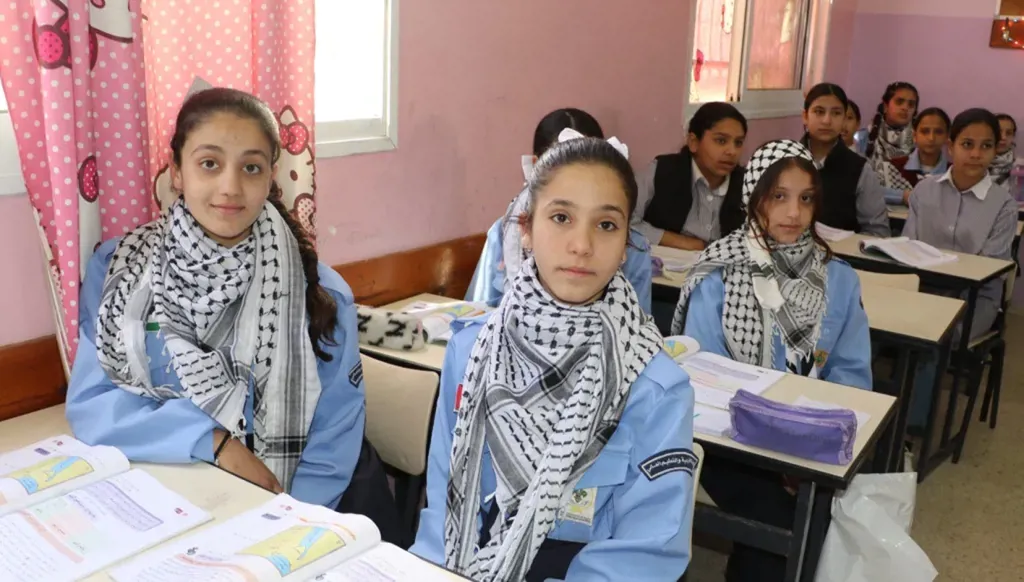
A school in the West Bank (Annahar).
Smaller Bigger


Palestine’s education sector faces enormous challenges, which have worsened following both overt and silent genocides that have weakened the educational infrastructure in recent years.


In the Gaza Strip, the situation is catastrophic, with 88 percent of schools destroyed, while the West Bank and Jerusalem are subjected to a silent war targeting curricula, buildings, and institutions—either through demolition orders or systematic assaults on teachers and students. One such victim was student Aus Hamdi Nassan, who was killed outside his school at the beginning of the week in the village of Al-Mughayyir, northeast of Ramallah, during a settler attack.


Between the destructive war waged by the Israeli army and the systematic settler attacks, the reality of education has turned into a tragedy, with consequences that may not be immediately visible, but will deprive students of regular education for years.


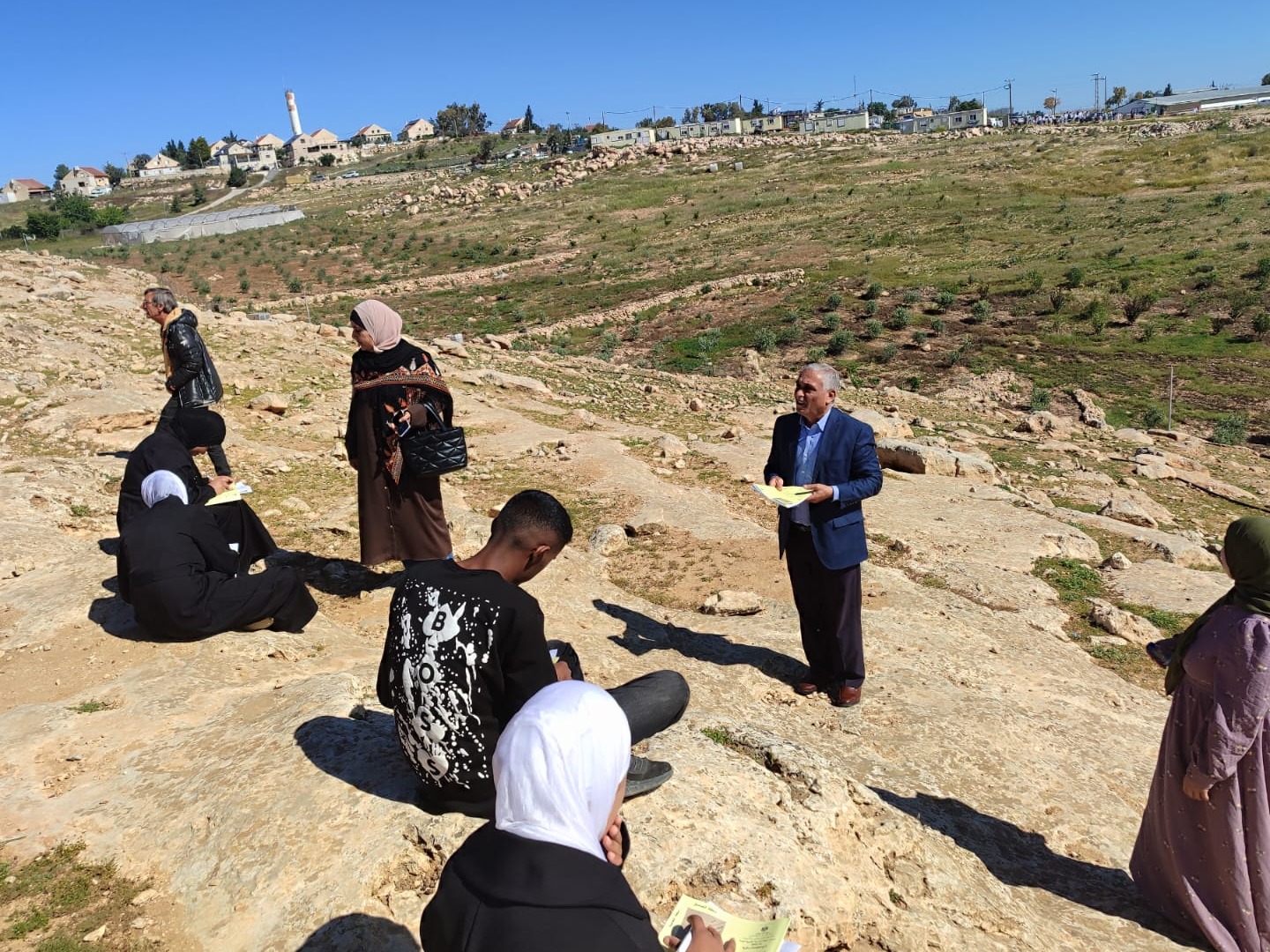
School in the open in the West Bank. (Annahar)


Immediate obstacles
 

War typically creates a reality filled with immense challenges, especially in occupied territory marked by ongoing cycles of conflict. One of the most prominent immediate obstacles is the restriction of movement between closed areas, barriers, and gates scattered across the region, fragmenting the West Bank, severing main roads, and involving repeated military incursions into cities and camps.


Targeting educational infrastructure has made it difficult for students to reach their schools, while students and teachers face harassment and arrests during their commutes or around schools as part of direct threats, affecting their focus and performance, and sometimes forcing some of them to drop out of school without returning.


These circumstances negatively affect students’ psychological stability and academic quality, as they suffer from constant tension and fear due to military escalation, which forces them to switch to online learning. Homes turn into electronic classrooms, which doubles the burden on families and impacts both the psychological well-being and academic quality of education.


In the West Bank, the educational process faces a real threat under these continuing conditions, endangering the future of thousands of Palestinian students. It is no longer limited to the mentioned factors but extends to deeper issues such as the withholding of funds, disrupting teachers' salaries, imposing radical changes on the Palestinian curriculum, and forcibly banning the Palestinian curriculum in Jerusalem schools. All these have made education in the occupied Palestinian territories a true challenge.


The situation worsened when the UNRWA had to suspend its operations after Israeli authorities banned its activities. UNRWA operates 96 schools in the West Bank and East Jerusalem, serving over 47,000 students.


Services may be further affected following a reduction in funding from major donor sources, which also includes a broader decrease in global humanitarian funding, raising concerns that this might impact traditionally high education rates among Palestinians.


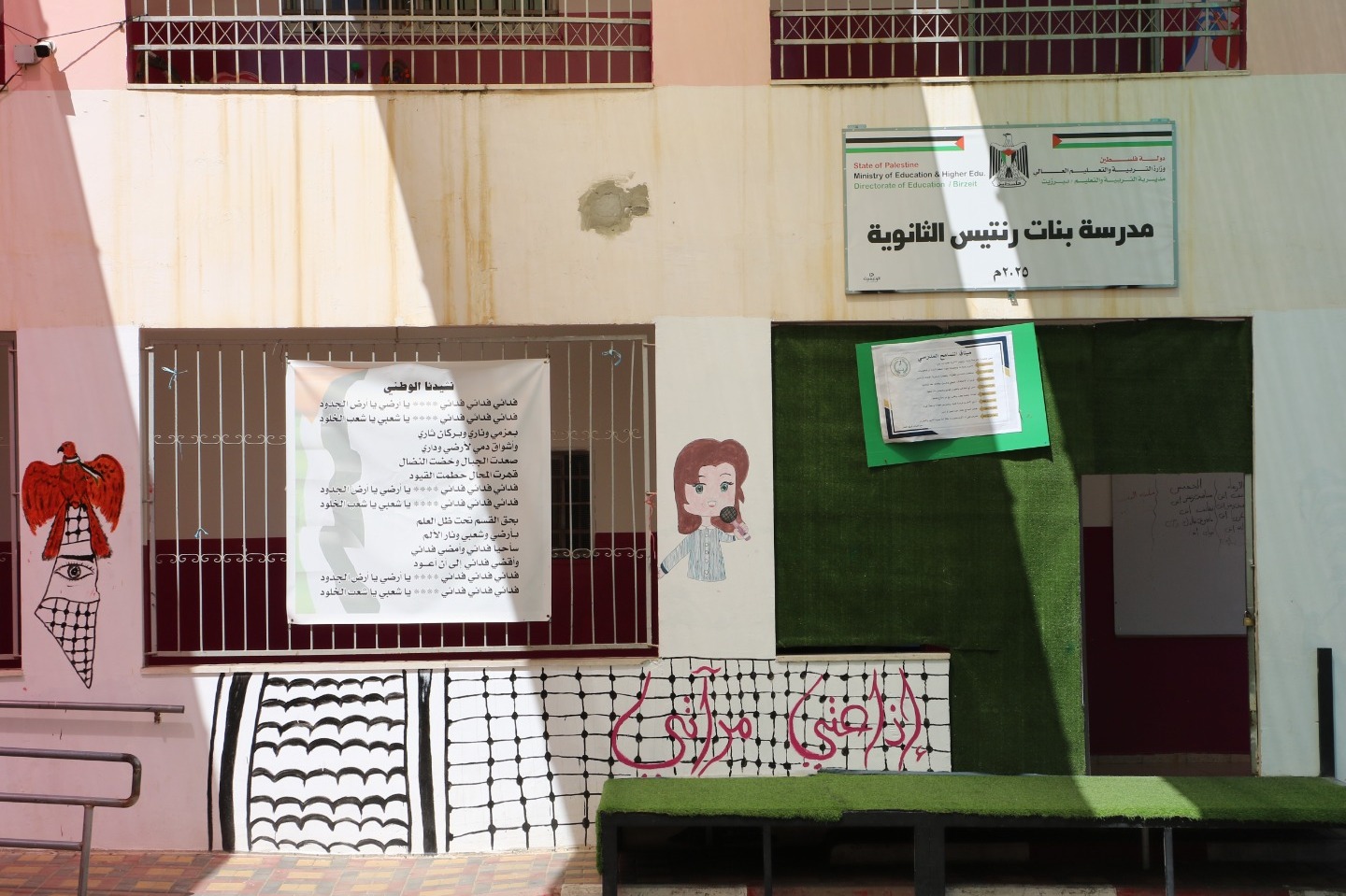
School in the West Bank. (Annahar)


Israeli occupation violations in numbers


The losses have exceeded all expectations, and the numbers are shocking, making the situation even more difficult. They are not limited to direct attacks on schools but extend to other hindrances facing the educational process.


Since the beginning of the war in 2023, Israeli violations have targeted the education sector in its various components, including schools and universities, which lost 18,877 students and educational staff, in addition to 33,652 wounded.


In both the West Bank and Gaza, 17,345 students have dropped out, 26,200 have been injured, 746 were killed, and 3,117 educational staff members were injured.


In Gaza alone, 17,237 students were killed, and the number of injured reached 25,000. In the West Bank, 108 school students were killed by Israeli army gunfire, 741 were injured, and 379 were arrested.


Meanwhile, in Gaza, the number of school staff killed was 741, with 3,096 injured, compared to five school staff killed in the West Bank, with 21 injured and 182 arrested.


As for universities, the total number of students and staff killed was 1,532, with 4,335 wounded. The number of student fatalities from Gaza universities was 1,271 and 2,683 injured, compared to 35 fatalities from West Bank universities, 231 injured, and 413 arrested. In universities, 226 educational staff were killed and 143 injured.


Iran war 


During the Iran war, according to educational supervision data, around 550,000 students received remote learning through the “Teams” application, which is the approved distance-learning system. However, this number fluctuates, reaching 600,000 if the first ten days of the crisis are included, during which Tawjihi (also known as the General Secondary Education Certificate Examination) students studied remotely.


Naturally, at least 90,000 students did not enroll for various reasons, especially since some schools located in Bedouin communities and the Jordan Valley do not have internet access for their students. Even among the 550,000 students, there was variation in attendance, and this figure is overall due to differences in school schedules depending on the days.


As for the number of schools and educational facilities in Palestine that were subjected to attacks or demolition during the war on Iran, it is reported that eight schools were affected: two during the war and six in the last two weeks.


One of them, Al-Maleh, suffered partial demolition, while five experienced attacks, as in the cases of Al-Mughayyir and Umm al-Khair, which have been under continuous violations for a week.