When exams meet instability: Rethinking educational fairness in times of crisis

Lebanon 24-04-2026 | 14:35

When exams meet instability: Rethinking educational fairness in times of crisis

In a country shaped by displacement, insecurity, and uneven realities, educators and experts question whether traditional exams can still reflect true academic justice—or if fairness itself needs redefinition.
When exams meet instability: Rethinking educational fairness in times of crisis
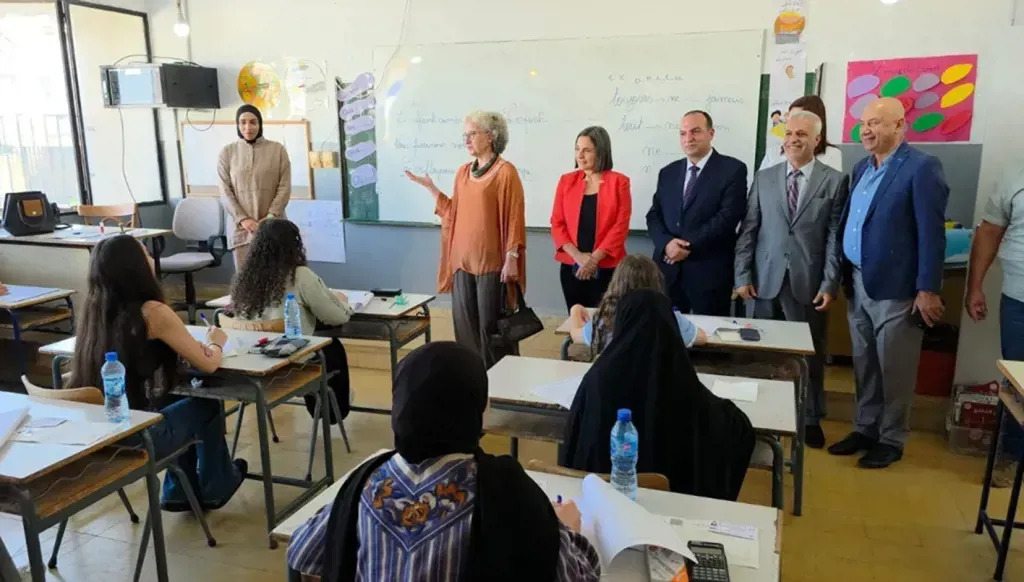
Education Minister Rima Karami during a tour of official exam centers in northern Lebanon last year (archive photo).
Smaller Bigger


In classrooms, not everyone sits at the same distance from fear. Some come from homes that are still standing but weighed down by the anxiety of daily news, while others carry memories of displacement, loss, or destruction. Everyone is trying to adapt to an educational reality that is supposed to be normal in an entirely abnormal context.


Among students living in relatively safe areas and others scattered between displacement centers or in dangerous or relatively safe towns, this pressure doubles with a new question imposing itself on the educational and national debate: Are students today truly qualified to take official exams amid so much psychological turmoil and instability? Or does educational justice itself need reconsideration, taking into account the different circumstances among students, not just their academic achievements?


At the heart of this scene, psychological aspects become essential for understanding the educational reality, not a secondary detail. Caroline Cordahi Tabet, a child and adolescent psychologist at Saint George Hospital, believes that the discussion should not be limited to whether or not to conduct official exams. Instead, it should extend to a deeper question related to the availability of conditions for educational justice and equal opportunities for all students.


Unequal Conditions
 

Cordahi explains that large segments of students have been directly affected by displacement, security instability, educational disruption, or living in shelters within public schools. These facts raise a legitimate question about the actual readiness of these students to take unified national exams under unequal conditions.


She points out that readiness for official exams basically assumes consistent learning throughout the year, an environment that allows for review and focus, equitable access to education and study materials, in addition to a minimum of psychological and living stability.


When these conditions are absent for a segment of students, equality in exams becomes merely formal and does not necessarily reflect true justice.


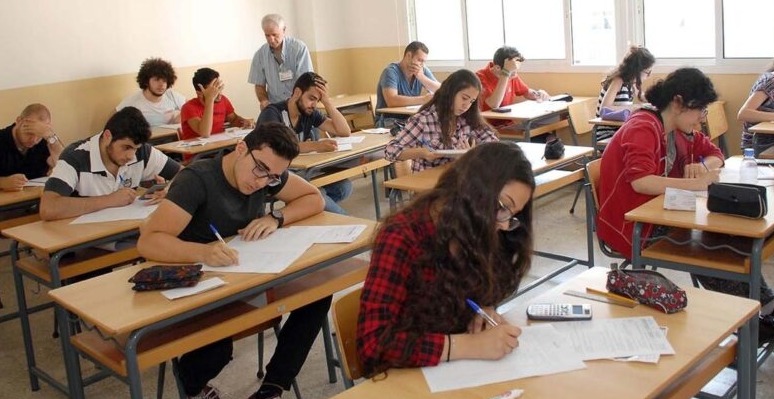
Students during official exams (Agencies)


How can students be helped?


Between a fragile truce and a reality imposing exam entitlements, students experience cumulative psychological pressures and silent battles within themselves, at an age where personality, dreams, and identity are still forming. In this context, the question arises: What can help students overcome this pressure?

Cordahi provides a range of practical guidelines, notably focusing on priorities in subjects, organizing study into short and regular periods, relying on solving previous models and questions, along with encouraging collaboration between colleagues and exchanging academic support.


She also emphasizes the importance of following Ministry of Education decisions from official sources and seeking support from teachers when facing academic or psychological difficulties.


On a broader policy level, Cordahi calls for addressing this situation from an exceptional perspective, based on reassessing the form and conditions of exams, given the significant disparity among students.


"Exceptional measures"


She proposes adopting flexible and exceptional measures, such as modifying some content, reconsidering dates when necessary, or providing special accommodations for affected students, in addition to exploring alternative solutions that ensure a balance between maintaining academic standards and achieving justice.


She also emphasizes the transition from the principle of formal equality to actual justice, as one cannot treat similarly a student living in a stable environment and another facing displacement or security threats.


Cordahi also highlights the necessity of integrating the psychological dimension into educational decisions, given the impact of pressures resulting from conflicts on focus, memory, and exam performance.


Cordahi concludes by saying that the issue in the Lebanese context is not limited to conducting exams or not. Instead, it revolves around ensuring that these exams do not become a tool to deepen existing gaps among students but rather a means to provide fairness.


This places the official bodies with the responsibility of making decisions that consider justice, human reality, and the students' right to fair evaluation.