

Europe at a strategic crossroads: Power, dependence, and the struggle for autonomy in a multipolar world


 Messenger
 Whatsapp
 Threads
 Email
Email
 Print
Print
 X
X
 Facebook
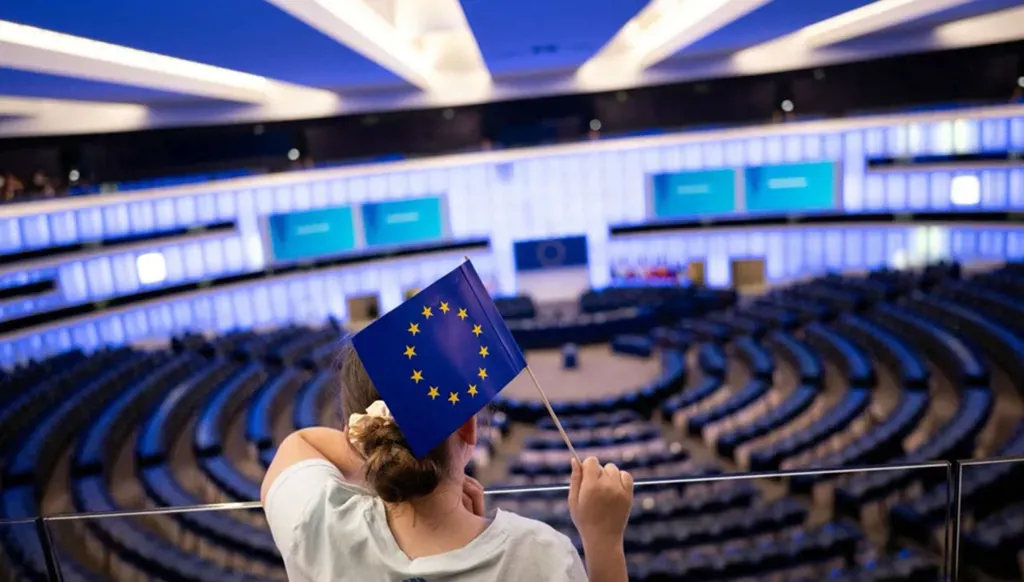


The term "Old Continent" has long been associated with Europe in a historical and cultural context, but today it reappears in a different form: not referring to Europe's "age," but to its weight in a rapidly evolving multipolar international system.
Amid the rise of the United States and China, and Russia’s return to a more confrontational role, Europe finds itself facing structural challenges that affect its ability to emerge as an independent pole. In a world being reshaped from the remnants of a unipolar system, Europe is no longer merely the “Old Continent” in a historical sense, but has become “old” in terms of strategic weakness and structural incapacity.
While Washington, Beijing, and Moscow compete to divide spheres of influence and redraw the global power map, Europe finds itself on the sidelines.
Europe out of the game!
The most prominent manifestation of this inability is evident in the military sphere, as developments over recent years have shown Europe’s continued reliance on the Atlantic umbrella, primarily the United States. The Russian war in Ukraine has exposed clear weaknesses in European defense capabilities, particularly in terms of military stockpiles and defense industrial production.
Despite increased military spending in several European countries, at Trump’s request, dependence on the United States persists in critical areas such as intelligence, missile defense, and nuclear capabilities within the NATO framework.
The war also showed that European armies are not fully prepared for long, high-intensity wars, prompting the European Union to launch initiatives to enhance joint defense production, though these remain in their early stages. This weakness is also evident in Europe’s inability to enter wars from a position of strength.
The situation in the Strait of Hormuz illustrates the extent of European incapacity, as the American president, when requesting their help, was essentially asking them to share part of the political cost of war, while knowing the true state of European military affairs.
Soft power is insufficient without hard power
Diplomatically, Europe has relied on what is known as “soft power” or “normative power,” meaning influence exercised through international law and multilateral institutions. However, rapid geopolitical crises, especially in the Middle East and West Asia, have revealed the limits of this approach in the absence of accompanying hard power tools. With escalating tensions in strategic maritime routes, as seen today with Iran in the Strait of Hormuz and previously with the Houthis in Bab al-Mandab, European interests remain vulnerable to developments over which they have no direct control, reflecting a gap between diplomatic ambition and executive capability.
Furthermore, many European positions grounded in international law appear to serve as a way to mask underlying incapacity.
Technological lag and digital sovereignty
On a level no less important than the military and diplomatic dimensions, and perhaps surpassing them, artificial intelligence emerges as one of the key determinants of power in the twenty-first century, both economically and militarily. In this field, the Old Continent is still lagging behind the United States. Major American companies such as Google, Microsoft, and Amazon dominate a large share of the cloud computing market in Europe, estimated at between 65% and 75%, with all that this implies in terms of a substantial loss of digital sovereignty.
Additionally, the overwhelming majority of advanced AI models are being developed in the United States, supported by significant venture capital investments that far exceed those in Europe. Conversely, the European innovation system remains fragmented, constrained by regulatory and funding limitations that reduce its competitiveness.
Energy and industrial challenge
On the energy level, which is a core issue as the backbone of the global economy, Europe has positioned itself ambitiously and ideally at the forefront of the shift toward a green economy. However, this approach faces significant industrial challenges. In the battery sector, which is pivotal for the future of electric vehicles, China dominates between 75% and 85% of global production and supply chains.
Conversely, European companies face growing financial and operational difficulties that affect their expansion plans. The tightening of environmental standards and rising energy costs have also placed pressure on European industrial competitiveness.
This reality does not mean that Europe has definitively exited the global power equation, but it stands at a historic crossroads. In a world moving toward competition among major poles, relying solely on value-based discourse will not be sufficient to ensure international standing.
Only investment in comprehensive power elements—technology, industry, and defense—can restore the continent to its position as an independent actor, rather than merely a follower in a rapidly reshaping global system.
Disclaimer: The opinions expressed by the writers are their own and do not necessarily represent the views of Annahar.