


 Messenger
 Whatsapp
 Threads
 Email
Email
 Print
Print
 X
X
 Facebook
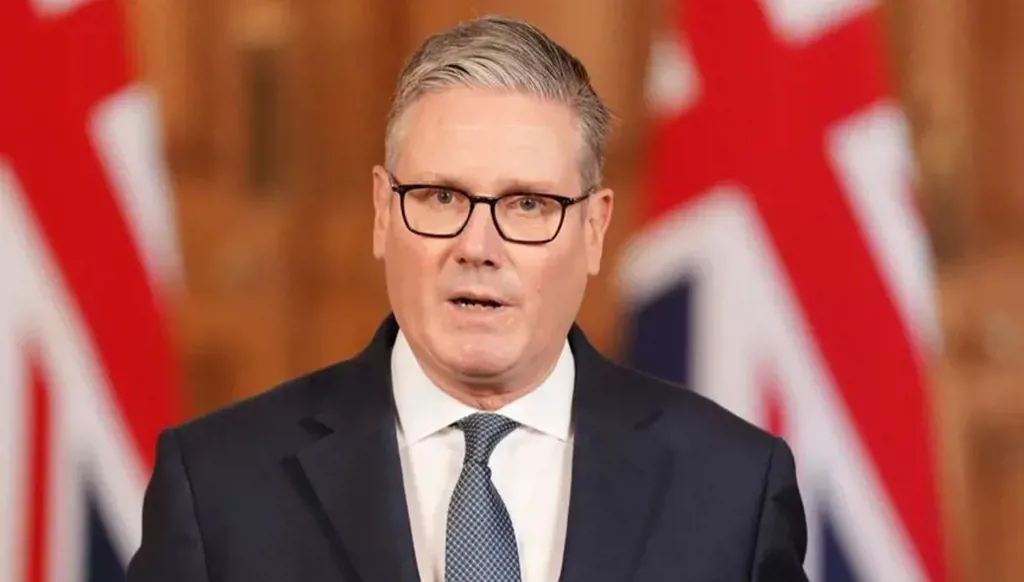


Nearly a decade after the Brexit referendum and six years after the decision was implemented, the question in London is no longer what Britain gained, but how much it is paying to remain outside the European Union.
A study published by The Independent indicates that more than half now support returning to the EU. This does not signal an emotional shift so much as it reveals a cost balance that has begun to tilt in a way that cannot be ignored.
The primary driver here is economic, not rhetorical or ideological. Since leaving, Britain has not collapsed, but it has lost the ease of movement within its largest neighboring market. Non-tariff barriers have increased, supply chains have slowed, and part of its financial passporting advantage into the continent has eroded.
The Office for Budget Responsibility estimates that trade volumes will be about 15 percent lower in the long term than they would have been had the country remained in the EU. The separation was not an immediate shock but a slow erosion: weaker growth, more cautious investment, and an economy that functions without its previous momentum.
This is where the shift in public mood begins, not nostalgia for Europe, but a reassessment of the cost of distancing from it.
Not just a wave of opinion
Economics alone does not explain everything. There is also a demographic dimension reshaping the landscape. The generation that voted to leave is shrinking, while the generation that grew up in an open European space tends to favor integration. This is not a passing trend in opinion, but a structural shift. What was decided in 2016 under the pressure of fears, migration, and sovereignty is now being reconsidered under the pressure of opportunity, employment, and mobility. Time here is not just a backdrop but a central actor.
Then comes the paradox: weak enthusiasm for intermediate solutions such as joining the customs union or the single market, alongside growing support for full membership. On the surface, this seems contradictory, but it extends the logic of Brexit itself. Committing to rules without influencing them means subordination without representation.
This long-standing sensitivity is not new; it was expressed early on by Charles de Gaulle, who saw London as a player between two worlds rather than a fully integrated part of the continent. The real paradox is not that some prefer a full return, but that trust in unclear, halfway solutions remains limited.
Proceeding with caution
At the political level, London is proceeding with calculated caution. Keir Starmer is not proposing a return to the European Union; instead, he treats it as an option that lies outside the realm of what is politically feasible for now. He understands that reopening the question of membership would revive the divisions of 2016, and that the shift in public sentiment has not yet turned into a clear political mandate.
Here, politics sets the pace: it neither rushes ahead nor provokes confrontation. The approach is therefore built around what is achievable, technical alignment, regulatory coordination, and reducing economic friction, without framing it as a path back to membership.
Yet the legal path stands as a hard reality. Under Article 49 of the European Union treaty, Britain would not return to its previous status but would apply as a new member state. This means that the advantages secured during the era of Margaret Thatcher and the opt outs negotiated under the Maastricht Treaty would not be restored. They would have to be renegotiated from scratch. Returning would not be a restoration, but a redefinition of the terms of belonging.
At this point, the picture is complete even before reaching Washington. Britain is rethinking its position because it is paying a continuing economic cost, because its social composition is changing, because halfway solutions fail to convince, and because its politics operates within the limits of caution. All of this is unfolding in a world that no longer moves at a steady pace.
Only here does the United States enter as a balancing factor. The special relationship has not collapsed, but it is no longer a stable anchor. From the era of Donald Trump to policy fluctuations across administrations, the issue is no longer America’s strength but the consistency of its direction. This does not push Britain toward Europe out of sentiment, but out of hedging, spreading risk rather than relying on a single center of gravity.
The question is no longer whether Britain will return to the European Union, but when the political cost of staying outside becomes higher than the cost of reconnecting. Between an economy exerting pressure through hard numbers, a society quietly evolving, a political leadership calculating its steps, and an ally whose rhythm keeps shifting, London faces a single equation: to redefine its place not through the slogan of sovereignty, but through the calculation of its cost.
Disclaimer: The opinions expressed by the writers are their own and do not necessarily represent the views of Annahar.