

A father digs through the rubble in Ain el Mreisseh searching for his daughter Zahraa



 Messenger
 Whatsapp
 Threads
 Email
Email
 Print
Print
 X
X
 Facebook
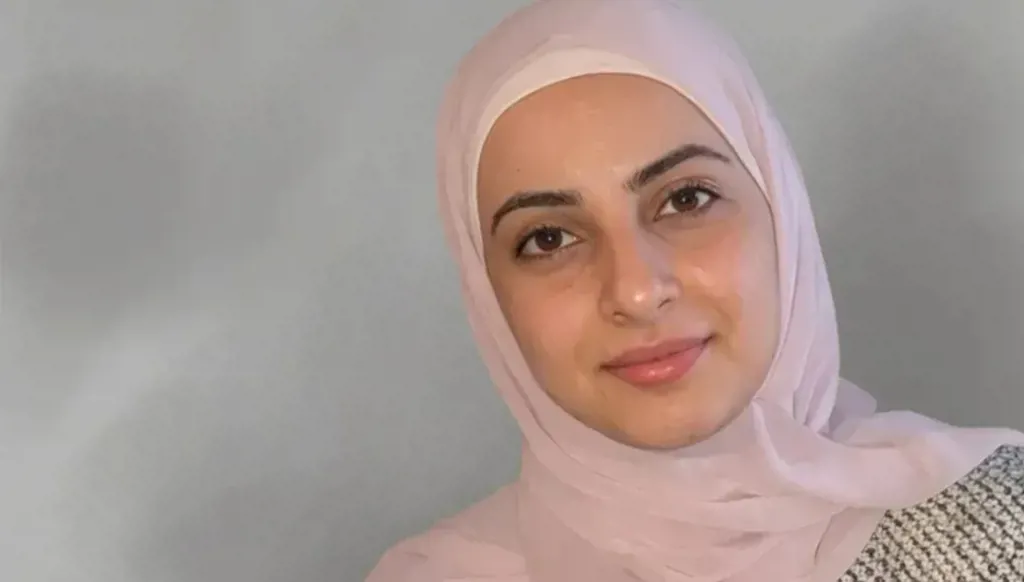


From the very first moment, Hajj Qasim Abboud, the father of Zahraa, stood beside the yellow bulldozer that was clearing rubble in Ain el Mreisseh in Beirut, the site of the Israeli strike that flattened a building to the ground on Wednesday 8 April last, while his heart was tightening with fear at the scene his eyes might eventually confront. He remained there, exhausted, as if life had drained out of him, clinging to a faint hope while the hours passed, carrying with them increasingly harsh possibilities.
Zahraa Abboud’s father reveals painful details
Hajj Qasim did not leave that space that had become his entire world. His feet remained firmly planted, and his hands kept moving stones one after another in search of her. Above the rubble, he stood calling out for help with everything he still had left in him, with his eyes, his emotions, and his exhausted body, continuing the search for Zahraa, the “little one of the house” and her father’s darling. He was looking for any trace of her, anything that might ease the weight of this shattered heart.
His blue eyes reflect the color of the waters opposite the strike site, while within them lies the pain of twenty-six years, now embodied in the features of his daughter Zahraa, who fell victim to the bombing on that ill-fated day. Since the moment of the strike, he has lost four kilograms of his weight, as if he had been living in rhythm with the “excavator” digging through the rubble, and with the stories of people still buried beneath it.
Between schoolbooks and photos of the building’s residents, Hajj Qasim’s hands kept searching for Zahraa. He stood in the very spot that witnessed her final moments, before the missile fell and brought everything down with it: his dreams and his joy at seeing her become a “bride.” He tells Annahar that she was “kind and full of life. I used to encourage her to travel to continue her studies, she had so many dreams… and today she has become a memory,” and a silent pain within him.
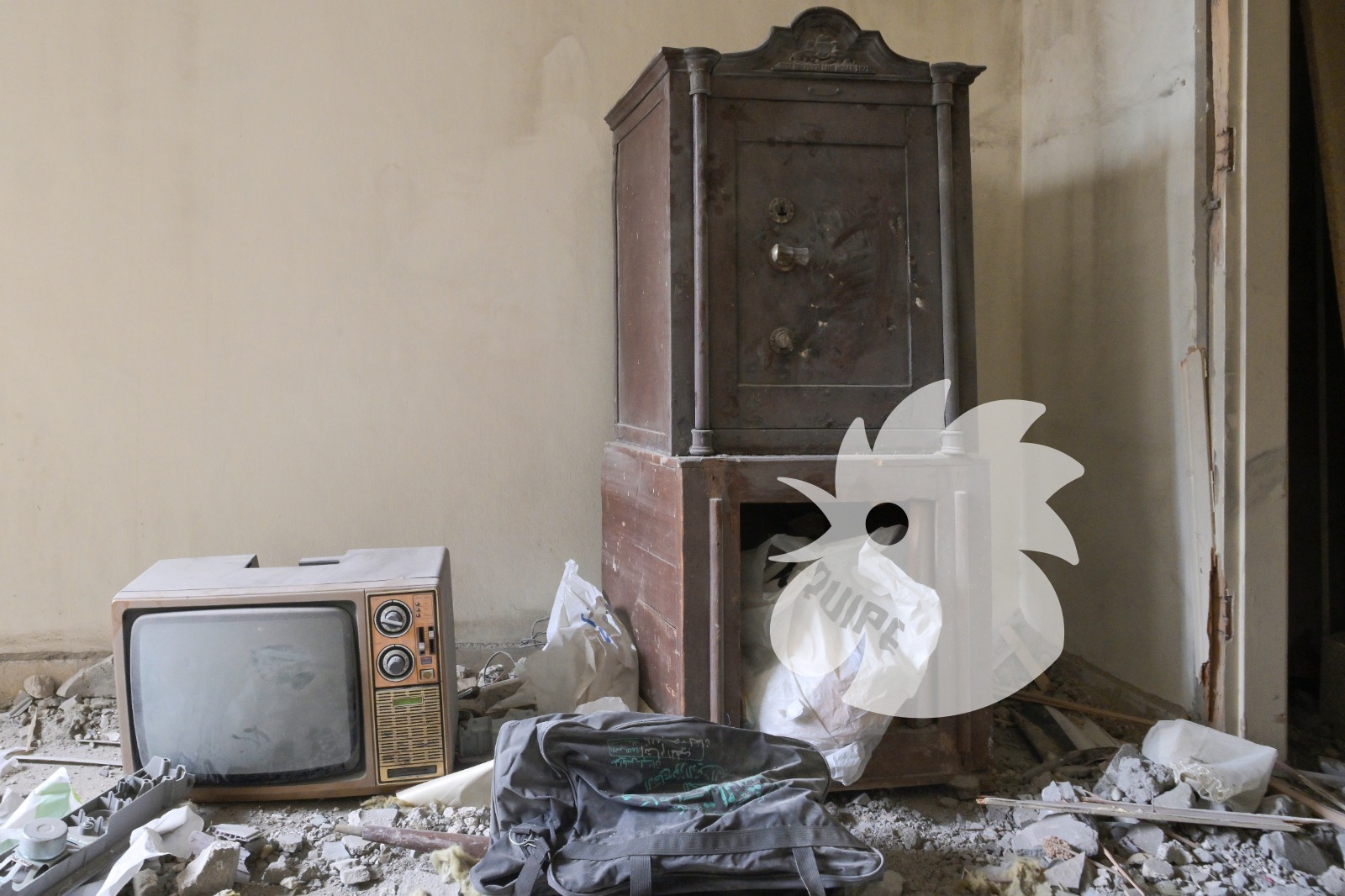
He admits, “I will keep passing by here… a part of me remained in this place, and I will not leave it even if this building is rebuilt. This spot will remain mine, because Zahraa was here.”
He recounts harsh details that capture the scale of the tragedy on what he calls “Black Wednesday.” What weighs most heavily on his heart is the time he lost, only to later discover that his daughter’s body, which was eventually found, had been in the hospital since the first day, without clear documentation of where it had been recovered from.
Meanwhile, he had been struggling with the rubble and dust, digging through that concrete space in the hope it would return something of her to him… remains, or anything that could point to her.

Hajj Qasim did not close his eyes for even a second for two consecutive days, and as the days passed he remained waiting, exhausted by fatigue. He stayed standing above the ruins of the building, tracing Zahraa’s path in her final moments. She had been in the bedroom at her aunt’s house, performing her prayers, before everything ended in an instant. He looks at that spot and says in a heavy voice, “In those minutes… everything ended.”
Why did he return to the site of the strike?
He returned to the place today, as if something within him was still trapped there. He explains, “Yesterday I smelled a scent on the first floor, where her aunt’s house was. I came back today to make sure nothing was left… and tomorrow I will carry my heart and take her to the town of Aanqoun to bid her farewell forever.”
Hajj Qasim cannot forget the nine days he spent here, digging through the rubble in search of his daughter, only to come across the remains of children and women who paid the price of that bloody day on 8 April 2026. None of the residents survived at the moment of the strike, except for his daughter Malak, who was destined to survive, without yet knowing the fate of her sister, who was twenty-six years old.
He understands that the resources in rescue operations were limited, and he hopes for greater support for rescue teams to develop their capabilities in search and recovery efforts.
Nevertheless, he insists on thanking everyone who stood by them during this ordeal. He knows that everyone made great efforts until the very last moment.
He concludes by saying, “May God never let anyone experience what we went through… it is something extremely hard.”