

Gulf security and Iran-Israel tensions: A dramatic narrative of escalation, allegations, and regional realignment


 Messenger
 Whatsapp
 Threads
 Email
Email
 Print
Print
 X
X
 Facebook
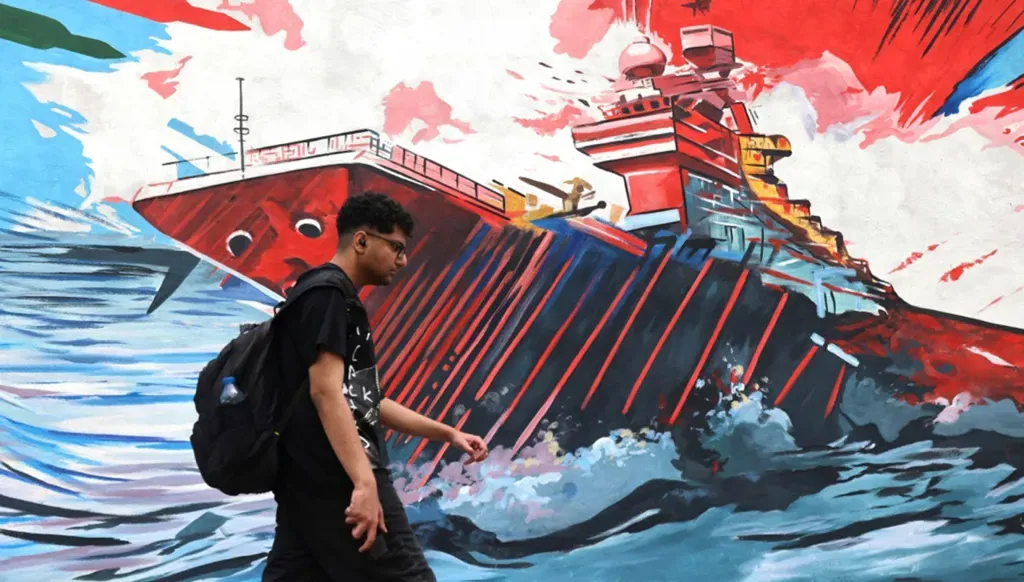


The assassination of the Iranian Supreme Leader was not a passing event, but rather the crossing of the last “red line” in the conflict equation, a moment when everything hidden was revealed, and plans that had been managed in secrecy came to light.
With this shift, the region moved into a broad confrontation between the United States and Israel on one side and the Iranian regime on the other. However, the course of the war revealed deeper realities than a mere military conflict.
Rather than focusing on the direct parties to the war, the Iranian terrorist regime expanded the escalation to the Gulf Arab states despite their opposition to the war. It used thousands of missiles and drones, clearly targeting civilian sites, contrary to its claims. The UAE was among the most targeted Gulf states, yet it set an example of readiness and stability, as life continued largely as normal despite the scale of the attacks.
This escalation not only revealed the nature of the confrontation but also exposed the depth of hidden threats after dismantling cells linked to destructive agendas within some Gulf states, indicating that what had been operating in the shadows suddenly came to the surface. The attacks reflected the extent of resentment the regime holds toward its Gulf neighbors, an issue that can no longer be concealed or softened.
One of the major revelations of this phase is that a regime unable to protect its leadership cannot claim the ability to safeguard a state or project, whether domestically or internationally. This sends a direct message to anyone who bet on or sympathized with it that rethinking strategies has become necessary, and that national loyalty is the real guarantee of stability.
In this context, there was a prominent failure in attempts to exploit sectarian dimensions within the Gulf states, as Shiite communities in the Gulf proved their true allegiance to their countries and their unequivocal rejection of any external intervention, enjoying rights and national status, which nullified one of the regime’s main bets on destabilizing internal stability.
The narrative that the regime tried to promote for years under the guise of supporting the Palestinian cause collapsed when it directed its weapons toward Arab and Muslim countries, exposing the contradiction between slogans and practices and significantly undermining its credibility with public opinion.
The war also redrew the map of positions, with the United States emerging as a key ally of the Gulf states alongside a limited number of countries that genuinely supported the region’s stability, while some parties remained silent or hesitant. Conversely, regional institutions such as the Arab League and the Organization of Islamic Cooperation appeared less significant than expected, necessitating a serious review of their role and effectiveness.
On the military level, the confrontation proved that noise does not create power and that intense attacks do not guarantee results, in contrast to the Gulf states’ ability to withstand pressure and maintain internal stability.
The important truth is that Iran is no longer what it once was. It has become a country exhausted by reckless policies and exposed by unfolding events, regardless of how it tries to present itself to the world. The painful reality remains that the Iranian people will bear the greatest cost for years to come as a result of choices in which they were not genuinely involved.