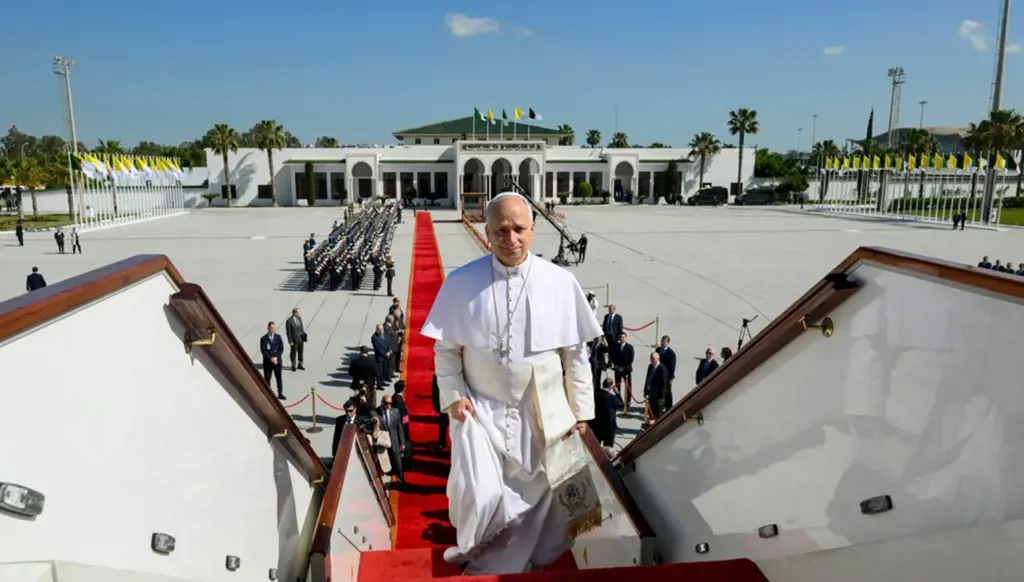
The visit of Pope Leo XIV to Algeria in recent days carried numerous messages from various parties. Most notably, Algeria conveyed—both domestically and internationally—a clear and confident message that Christianity is an integral part of its long history.
The Algerian authorities were keen to highlight the papal visit, especially as he reaffirmed upon his enthronement last year his close connection to the legacy of Saint Augustine, one of the fathers of the Catholic Church, who was born in Souk Ahras, Algeria.
The visit—the first ever by a pontiff to the country—offered Algeria an opportunity to project a new image, distinct from perceptions of isolation and the view held by many that its authorities are concerned only with oil and gas.
Algeria appeared to be seeking to follow in the footsteps of other countries in the region that realized years ago that near-total dependence on oil revenues does not ensure sustainable development and also confines them to a stifling stereotypical image.
Thus, it was understandable that some in Algeria saw the papal visit as an important initiative to enhance the country’s soft power and a tangible step toward embracing the diverse strands of Algerian history, within a framework of self-reconciliation and bridge-building with others.
Ghosts of the past
In this context, Algeria sought to distance itself from the specter of religious extremism that had long shaped its image, even as the papal visit—which included a tribute to nineteen monks and nuns killed by extremists in the 1990s—brought that memory back into focus.
Additionally, terrorists placed considerable hopes on carrying out a suicide attack not far from the capital to cast doubt on the authorities’ success in restoring the country’s security and stability since the end of the civil war. However, those hopes were thwarted, as the attempt failed both in practice and in its media impact.
The visit was also overshadowed by tensions with France, as the French president’s meeting with the pope on the eve of his trip to the Algerian capital raised concerns that Emmanuel Macron might be urging Leo XIV to intervene for the release of French journalist Christophe Gleizes, who is imprisoned in Algeria on charges of colluding with a separatist group.
The pope did not intervene in such a sensitive matter, which could have seriously disrupted the visit for the Algerian authorities. Instead, he appeared mindful of the heavy burden the Catholic Church carries due to its past association with French colonial history in Algeria. Leo XIV even paid tribute to Algeria’s war of liberation martyrs and chose to address Algerians in English rather than French—a gesture received with relief in Algeria.
This did not fully satisfy the French right, which, through its aligned media, continued to criticize the situation of the Christian minority in Algeria, particularly regarding their “right to proselytize”—a contentious issue that the Catholic Church in Algeria has approached with great caution.
Some French press commentary was not without hints of nostalgia for the colonial era, when the number of Christians in Algeria reached hundreds of thousands.
The Pope's messages
The pope also carried other messages. On his second visit to an Arab country and his third to a Muslim-majority country, he sought to emphasize the call for peace and coexistence among religions, as well as opposition to war, particularly in light of the ongoing conflict between the United States and Iran in the Gulf.
The pope drew on the ideas of Saint Augustine in his rejection of war, asserting that “Augustinian standards” rule out war except in cases of responding to aggression or defending the weak. In a challenge to the positions of American evangelicals, he stated before his arrival in Algeria that “God rejects war… and no one can use God to justify it.”
The pope’s stance angered U.S. President Donald Trump, who engaged with Leo XIV in a heated verbal exchange. However, the position of the head of the Catholic Church ultimately demonstrated that religion, any religion, has an important role to play in building bridges between peoples and extinguishing the flames of conflict and animosity, even when extremists try to fan them.
Disclaimer: The opinions expressed by the writers are their own and do not necessarily represent the views of Annahar.



 Messenger
 Whatsapp
 Threads
 Email
Email
 Print
Print
 X
X
 Facebook