

Macron–Salam talks in Paris: Can a fragile ceasefire save Lebanon from deeper conflict?
As Emmanuel Macron meets Lebanese PM Nawaf Salam at a critical turning point, global attention turns to whether diplomacy can stabilize Lebanon after weeks of war, Hezbollah’s escalation, and rising regional tensions.


 Messenger
 Whatsapp
 Threads
 Email
Email
 Print
Print
 X
X
 Facebook
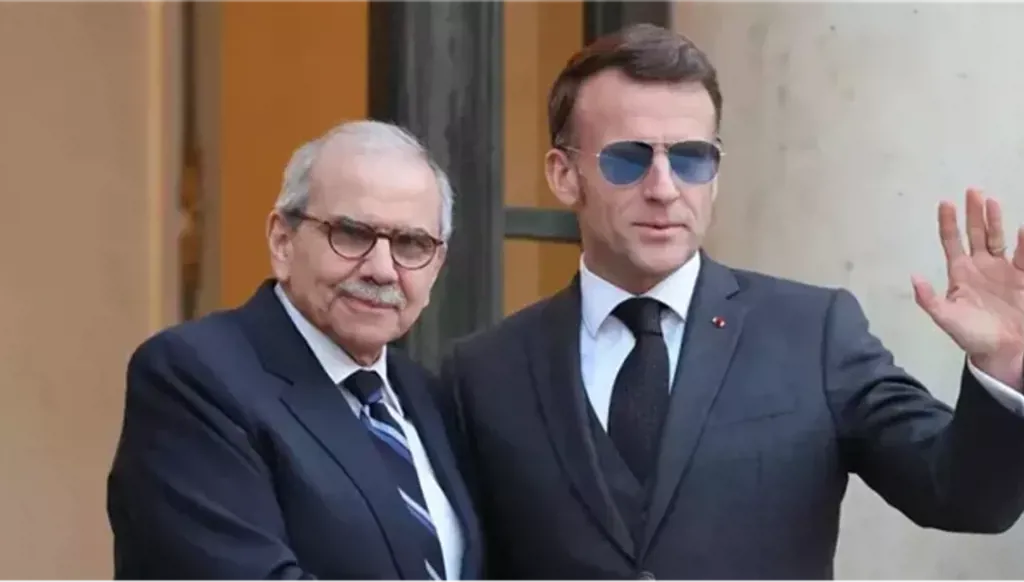


Hours before the arrival of Lebanese Prime Minister Nawaf Salam at the Élysée Palace in Paris, where he is set to be received this evening by French President Emmanuel Macron, sources at the French presidency told accredited press that the Macron–Salam meeting is taking place “at a critical stage, after Hezbollah dragged Lebanon into war and attacked Israel, thereby joining the regional conflict.”
The sources added that Hezbollah’s actions were a strategic mistake that drew Lebanon into a broader war. They noted that a temporary ceasefire has now been reached following weeks of intense Israeli military operations and Hezbollah’s attacks on northern Israel—developments that have significantly exhausted Lebanon.
French officials recalled President Macron’s efforts and his communications with U.S. President Donald Trump regarding Lebanon, underscoring the importance of stabilizing the country so that it does not pose a future threat to its neighbors, can live in peace, and is able to control its territory and exercise its sovereign responsibilities. They added that Macron’s commitment to this mobilization has been very strong since the start of the war.
The challenge now, according to French officials, is whether the ten-day ceasefire can be extended and, during this critical period, whether Lebanese authorities can be supported in launching a more sustainable path toward stability.
Officials at the presidency said that France is supporting the Lebanese army to enable it to ensure security wherever necessary across the country. In this context, they confirmed that the Support Army Conference, scheduled for March 5, remains on the table, and that Macron will discuss with Salam the appropriate timing to ensure it is effective, particularly given how significantly the situation has changed.
They also affirmed that France will remain alongside Lebanon following the withdrawal of UNIFIL, within a framework to be developed with Lebanon and other partners. Discussions on this matter have already begun, with France leading consultations with its partners.
Furthermore, military sources at the French presidency confirmed that contacts between the Lebanese army and UNIFIL are good, and that coordination between them faces no problems. They added that if there is consideration of normalizing relations between Lebanon and Israel, it is essential to preserve the unity and integrity of Lebanese territory. They noted that Israeli officials indicate they will remain in the south as long as the Hezbollah threat persists, stressing that this threat also affects the Lebanese government.
However, French presidency officials said that this process requires Israel not to maintain a long-term presence in Lebanese territory, with the aim of preventing Hezbollah from resuming attacks on Israel and forcing it into a defensive posture. They acknowledged that the situation remains complex, and that reactivating the mechanism could help secure and sustain the ceasefire.