

The fragile Middle East truce: How non-state actors are reshaping regional power dynamics


 Messenger
 Whatsapp
 Threads
 Email
Email
 Print
Print
 X
X
 Facebook
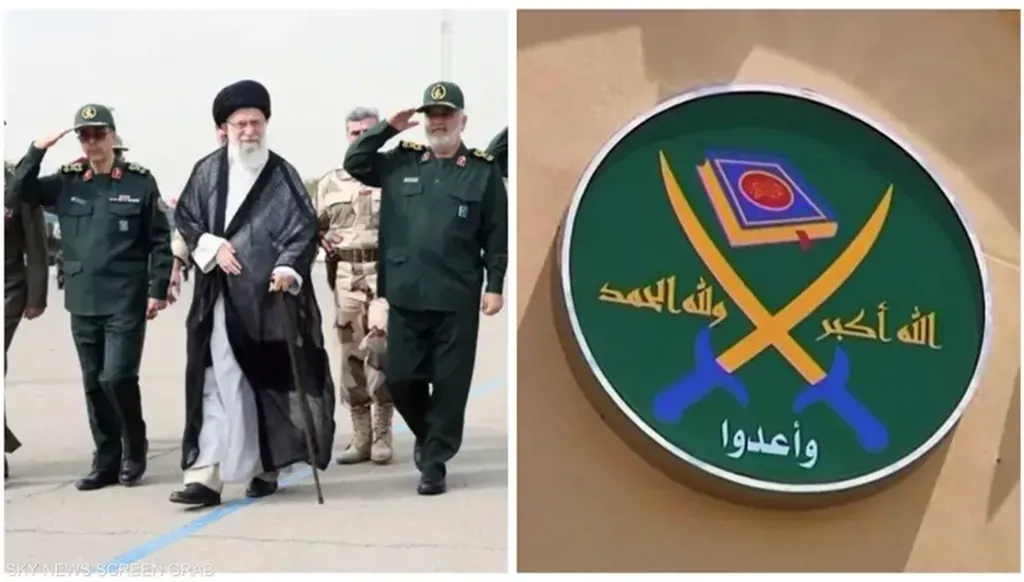


In a regional context characterized by a relative truce following successive waves of escalation, most notably the Iranian aggression against the Gulf states and its complex repercussions, the initial impression is that the situation appears to be moving toward a temporary containment of crises.
However, a deeper analysis reveals that this truce conceals more complex dynamics beneath the surface, particularly regarding the behavior of non-state actors, beyond the Iranian-backed armed groups established across Arab countries, which have become a crucial element in the equations of regional stability.
Different models
At the forefront is the Muslim Brotherhood organization as a model of a cross-border organization, guided not by considerations of national sovereignty but by priorities of survival and repositioning. This was clearly reflected in its approach to wartime realities, with the absence of clear national stances regarding Iranian aggression against the Gulf states, and even instances of open support for a state whose ideology is supposedly in contradiction with and rejects the religious foundations of its governance system, in contrast to a growing critical discourse directed at Arab policies. This divergence cannot be understood in isolation from an opportunistic logic that places the organization’s interests above considerations of Arab national security, reflecting a structural imbalance in priority setting.
This pattern is not limited to the organization as an organizational framework but extends to movements that intersect with it ideologically or politically, foremost among them the Hamas movement, which represents a practical example of alliances of necessity. The movement, driven by its military and financial needs, has strengthened its channels with Iran in recent years, without a clear reassessment of the position of this relationship within the broader Arab security system, as demonstrated during Iranian aggression, with the absence of critical stances reflecting a preference for tactical calculations over the requirements of strategic balance.
Amid the political discourse surrounding that war, the distinction between pragmatism and opportunism became blurred, despite the fundamental difference between them.
Pragmatism refers to rational flexibility in engaging with reality to achieve interests, without detaching from a value framework that governs this flexibility and maintains state stability.
Opportunism, however, represents a deviation from this balance, where narrow self-interest becomes an absolute goal that justifies shifting positions and violating values, as clearly exhibited in the behavior of extremist organizations that employ opportunism to achieve their objectives even at the expense of state security and stability, while pragmatic states adopt flexible policies aimed at maximizing their interests within the boundaries of responsibility and sovereignty.
Therefore, conflating the two concepts grants destructive behaviors a false cover, while in reality, the difference between them is the difference between managing interests with values and exploiting them without constraints.
On a parallel level, the media space has played a pivotal role in reshaping the general narrative to serve the positioning of these organizations, through systematic attempts to reframe them as a targeted or defensive party, coinciding with field movements such as demonstrations in front of Arab diplomatic missions, while the facts indicated clear aggression against Arab states.
This disparity between narrative and reality reveals the selective use of events within a propagandistic framework aimed at reproducing symbolic legitimacy. The intense activity of digital platforms and online networks associated with these currents, engaged in campaigns targeting relations between Egypt, Saudi Arabia, and Gulf states by exaggerating differences and recycling partial narratives, cannot be overlooked.
Direct challenges
This behavior falls within what can be described as “cognitive warfare,” aimed at undermining trust within the Arab bloc, especially during a highly sensitive period coinciding with direct security challenges. This may explain why Egypt, Saudi Arabia, and the UAE have, for years, adopted an approach reflecting a more complex understanding of the nature of the threat, making engagement with the Muslim Brotherhood no longer merely a political disagreement, but part of a broader strategic assessment that views the group as a non-national actor capable of repositioning and building shifting alliances, even when such actions are at odds with state security and stability. Hence, the shift from containment policies to a more decisive approach based on deterrence and multifaceted confrontation can be understood.
From a broader perspective, these developments reflect a structural conflict between two different models: the national state model based on sovereignty and borders, and the model of cross-border actors who treat these borders as variables that can be overcome.
In this context, some of these groups become pressure elements within broader regional equations, and their interests may temporarily intersect with forces seeking to expand their influence, even through confrontational tools that affect Arab security. The problem does not lie in circumstantial conditions or fluctuating media discourses, but in a flexible intellectual and political structure that allows the redefinition of alliances and rivalries according to a utilitarian logic, enabling these organizations to engage with various parties if they provide resources or influence, even at the expense of state stability.
In sum, the current phase indicates that regional pacification, despite its necessity, does not necessarily mean addressing the roots of tension as much as it delays its escalation. The challenge is no longer limited to managing relations between states but extends to dealing with non-state actors operating according to a logic different from that of the state.