

Lebanon after the war: Ruins, memory, and the struggle to rebuild lives and a nation


 Messenger
 Whatsapp
 Threads
 Email
Email
 Print
Print
 X
X
 Facebook
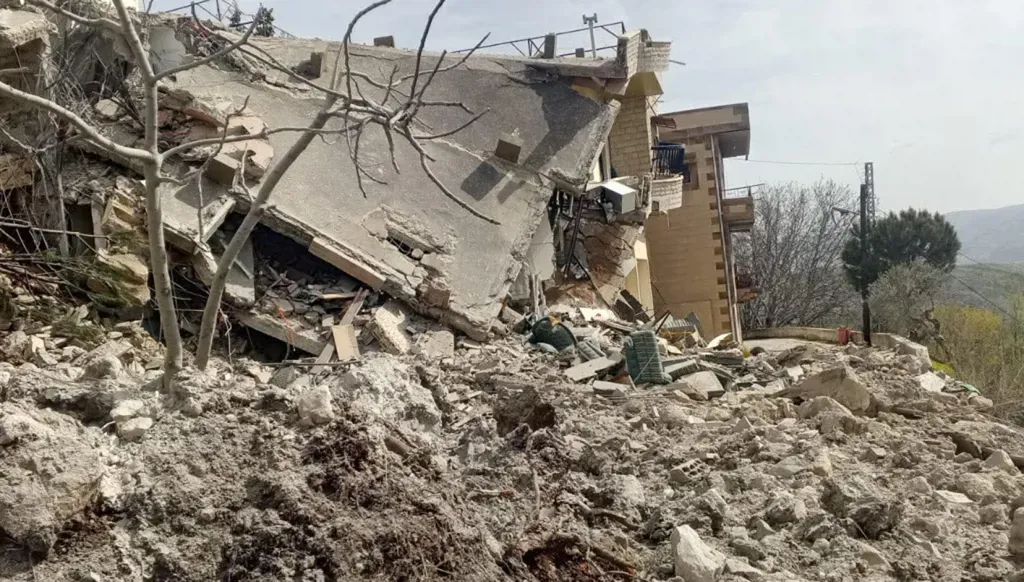


In the neighborhood where my feet tread before reaching the house, sorrow mingles with anger—anger that is directed in several directions. Here lies the playground of childhood, the sweet memories, the land, existence, and heritage. Most importantly, here are the people: sad faces, confused, anxious eyes. Here, tears are shed.
Indeed, the collective presence, even amidst the ruins, and the evident social solidarity in helping others offer some consolation and encourage cautious optimism. However, complex questions occupy the mind and intellect—existential questions arising from difficult experiences on all levels. They are questions about what comes next, that is, the future. Perhaps the future is the greatest dilemma, for the past is gone.
Nehme, who emigrated to Senegal to build a beautiful house where he spends his summers with family and relatives, asked me to send him pictures and videos of his house that had collapsed. He follows what happened through social media, after his son Khalil avoided sending him live images. He knows very well what happened, but nostalgia drives him to request more views. I sympathized with Khalil and chose, from the first day, not to be the source of bleak images.
Aida is angry, and we stand by her anger. She is a victim of a war she did not choose, like all victims of wars that drag people into their devastation. It is not enough that the state has taken her lifetime savings after forty years of teaching, leaving her with a retirement salary that does not exceed a few dollars.
Rose, the neighbor, says she no longer has a place among the neighbors, as she lacks the means to renovate and return to her home.
Yara reconsiders her initial decision, born of anger, not to renovate.
Amira, the closest neighbor, could not bear to visit her home after displacement “broke” her back, and her doctor has forbidden her from moving for now.
Jessica, a photography enthusiast, cleans her camera lens with tears and hides her face from us.
As for Sister Colette, who runs the Sacred Hearts Sisters' school that was heavily damaged, she stands in front of the homes, her eyes brimming with tears. She is from Chouf but has become “one of us,” sharing our joys and sorrows.
I reach my home, and all the scenes and questions buzz in my head. I avoid visible reactions. Within me, there is a bit of joy because my mother passed away a few months ago and did not see the destruction of the family home.
She was staying in Beirut recently, but she used to reside in Mashghara, or rather, Mashghara resided in her. Tony, my younger brother in spirit, races against time, busy clearing the rubble and beautifying the scene before we arrive, hoping not to fall into depression. He is sturdy, supportive, and ambitious.
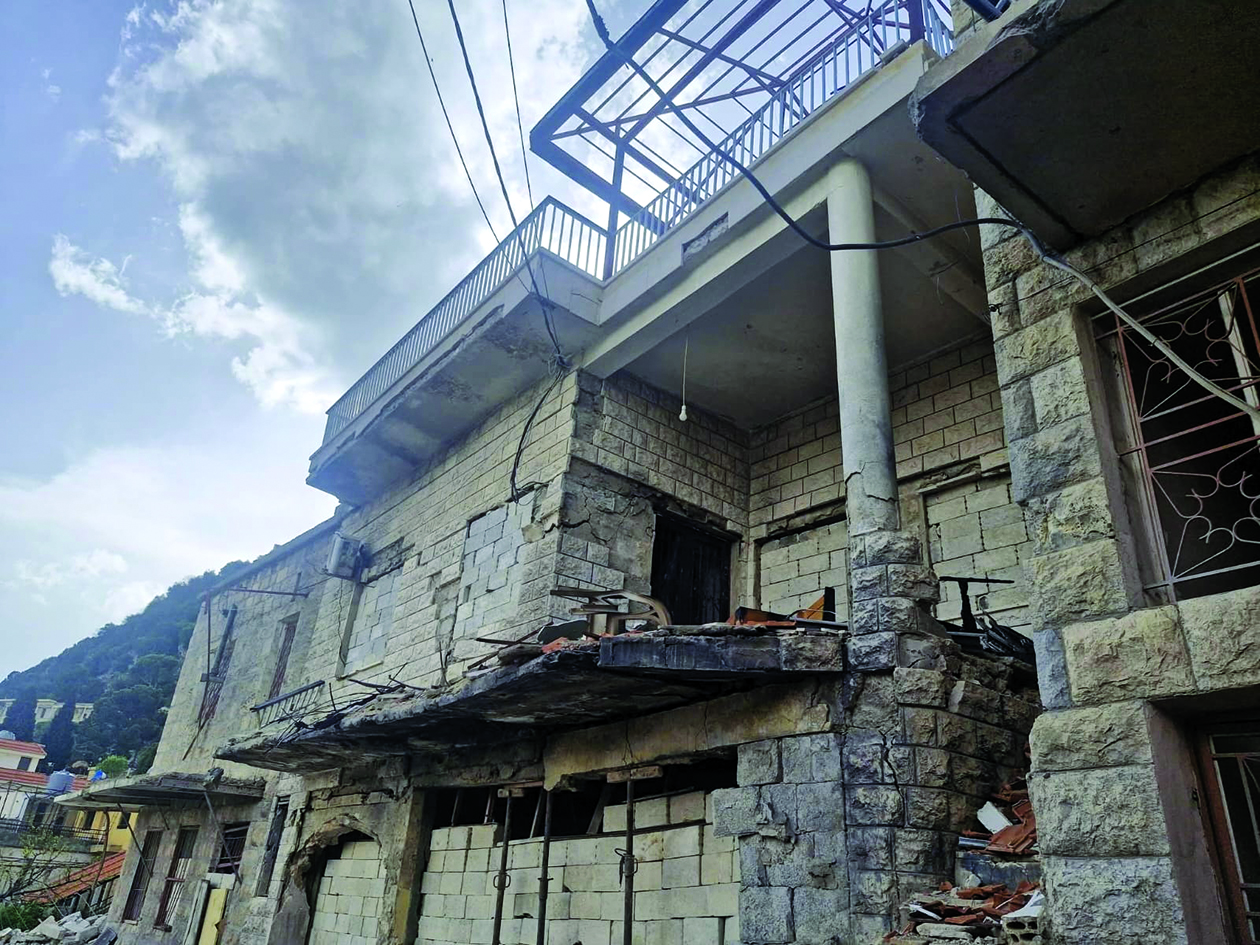
It is the first view after the war. True, the mere return is a “victory,” or any similar term that conveys the meaning. But it is a sad outlook. It holds hope, anticipation, and determination to rebuild and renovate, or at least, in this phase, closing homes, doors, and windows with stones and nylon until matters become clearer, as people do not feel entirely assured of the situation, in a country that constantly serves as a battleground for others’ wars, and its children get dragged into this deadly slide, seemingly learning nothing from it, though as the popular saying goes, “Repetition is the mother of learning.”
At home, I observed the scattered photos on the ground—the sweet memories of when the family used to gather here. I couldn’t bring myself to pick any of them up. I let them go with the workers to the trash. I have some of them that I took earlier. I don’t want to kneel to pick anything up. We will not kneel. We will resist in each of our ways.
But the difficult question of what comes after is not only in my town but at the level of the whole country. For the first time, I observe those around me—this amount of frustration everywhere. Lebanese people see that whenever an opportunity arises for recovery, there are those who thwart it and stifle it in its cradle.
Repairing the stones may be possible if funds are available, but what about the people? Who restores what is in the souls? Even those celebrating victory need treatment. The mental health of the Lebanese is not well; they are living in a state of denial. The national health is more difficult, and its healing is more complex. God rest the soul of President Rafik Hariri, who used to say repeatedly, “The country is moving,” but the country currently is “not moving,” or as if it is walking to its doom.
We cling to hope, certainly. We love life, without doubt. But we seek what is expressed in the biblical verse: “That they may have life and have it more abundantly.” We aspire to a better life and a better homeland.