

Iraq’s shiite alliance stalls on PM choice as internal divisions deepen


 Messenger
 Whatsapp
 Threads
 Email
Email
 Print
Print
 X
X
 Facebook
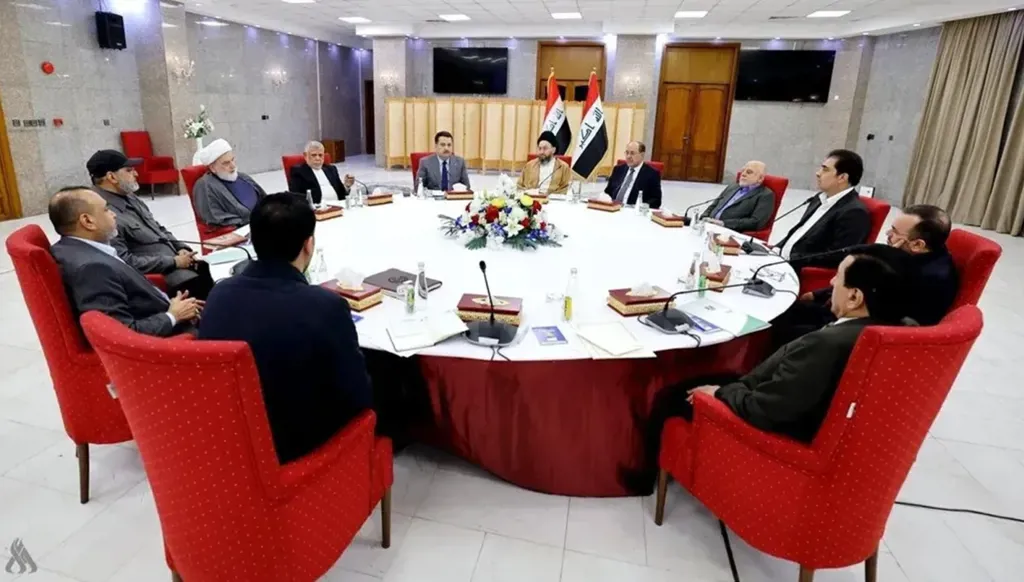


This political deadlock has repeatedly pushed Tehran to intervene urgently. According to informed sources speaking to Annahar the commander of the Quds Force of the Iranian Revolutionary Guard, Esmail Qaani, carried out an unannounced and secret visit to Baghdad in the past few hours in a rapid move that lasted only a few hours. During the visit, he met several leaders of the Coordination Framework, some of them in private.
The discussions, according to the sources, focused on the crisis of selecting the prime minister and the need to quickly resolve the matter by agreeing on a figure who would secure an internal majority. The talks also reflected a clear Iranian interest in preventing further escalation of divisions within the ruling Shiite forces, and in steering toward an option that would ensure unity among their ranks amid the sensitive developments unfolding in the region.
According to Coordination Framework member Uday al-Khadhran, speaking to Annahar the decision to postpone the Framework leaders’ meeting that was scheduled for Saturday evening came as a result of escalating disputes and differing views among its member forces over settling the issue of the candidate for the prime ministership.
He noted that the meetings and consultations held ahead of the scheduled session failed to bring positions closer between the political sides, with each faction within the Framework still insisting on its own candidate. He added that no side currently holds the sufficient majority to pass its candidate through an internal vote among the 12 Framework leaders.
New postponement and hopes for a final resolution
He adds that “the current division has prevented reaching a final agreement, which led the leaders to decide to postpone the meeting once again, in order to allow more time for political forces to hold new understandings and attempts to bring viewpoints closer together.”
He continues that “some parties will seek over the next two days to persuade other forces to join their position, in order to form a clear majority within the Coordination Framework, which would allow the nomination to be settled and the decision passed during the upcoming meeting.”
Al-Khadhran also stresses that “the prime ministership file remains the most prominent obstacle in the Framework’s negotiations, amid continued competition between several proposed names, with some forces insisting on their candidates and refusing to make concessions at this stage. The next meeting will be largely decisive, as it is expected either to reach a final agreement on a consensus candidate or to resort to an internal voting mechanism to resolve the ongoing dispute that has lasted for some time.”
The repeated failure of the meetings reflects the scale of divergence within the Coordination Framework, and also raises serious questions about its ability to manage the next phase. This comes at a time when internal and external pressures are increasing to end the current state of hesitation and reach a political settlement that would prevent the crisis from spilling out of the alliance’s internal corridors into state institutions and Iraq’s broader governance landscape.