

The debate on direct talks between Lebanon and Israel after the unfulfilled Trump call


 Messenger
 Whatsapp
 Threads
 Email
Email
 Print
Print
 X
X
 Facebook
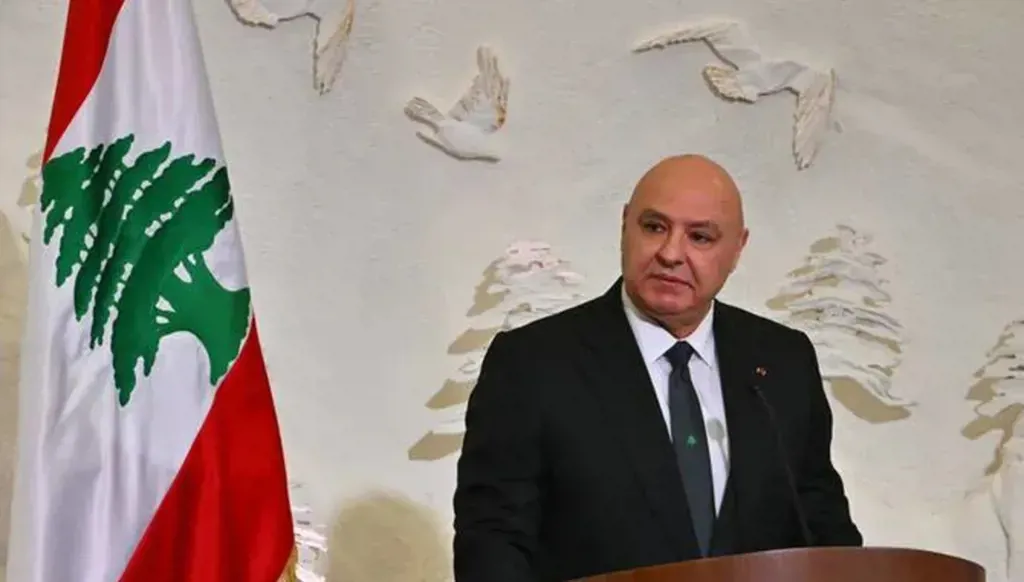


In the early hours of yesterday, the main event in Lebanon was a post by President Donald Trump during the night on the platform “Truth Social,” in which he announced that a call would take place on Thursday between the “leaders of Lebanon and Israel,” meaning between Lebanese President Joseph Aoun and Israeli Prime Minister Benjamin Netanyahu.
Of course, a debate erupted across the country between supporters and opponents, while President Aoun and the presidential circles remained silent on the matter until information circulated at midday yesterday indicating that President Aoun preferred not to contact Netanyahu for reasons he explained to US Secretary of State Marco Rubio during a call in which he apologized for not participating in a conversation with the Israeli prime minister. The reasons are well known, at least that fighting is still ongoing in the south, and direct negotiations between Lebanon and Israel have not yet begun.
Nabih Berri shifts the clock
Earlier, Speaker of Parliament Nabih Berri announced that he is in daily contact with the Iranian side, and that he spoke at length yesterday morning with the speaker of the Iranian parliament and the main negotiator facing the Americans in the Islamabad talks, namely Mohammad Bagher Qalibaf. Berri asked him to include the condition of a ceasefire in Lebanon at the core of the talks with the Americans. In this sense, the Speaker of Parliament and leader of the Amal Movement was readjusting his position, returning to alignment with Hezbollah and Iranian influence in Lebanon.
Our information indicates that the contact between President Joseph Aoun and Benjamin Netanyahu could have taken place without major complications if the Israeli offensive in the south had stopped through a truce, even a temporary one, and if direct negotiations had started in Washington, at least for one or two sessions. However, the reality known to the Americans and even the Lebanese side is that Israel does not want an immediate truce. Rather, it is trying to buy time to settle the battle in the city of Bint Jbeil, which is considered one of the most important towns south of the Litani River and carries significant political and military symbolism for Hezbollah and its narrative tied to the fight against Israel.
Israeli expansion on the ground
It was important for Israel to buy time in order to expand the scope of its incursion north of the town of Khiam in the eastern sector of the south, in addition to advancing westward along the coast toward the outskirts of the city of Tyre, which is considered the most important city in the area in demographic, political, economic, and historical terms. From this perspective, Israel refused to offer anything to the Lebanese side before exploiting the element of time to achieve gains on the ground.
As for Lebanon, with the presence of broad segments of Lebanese society that support reaching a deal sponsored by the United States with Israel, whether in the form of a long term security agreement or a peace agreement that would align Lebanon with other Arab states that may move toward peace with Israel in the foreseeable future, there is a clear division regarding the relationship with Israel. However, certain taboos are beginning to fall one after another, including direct negotiation and the possibility that, at a suitable moment, a direct call could take place between the Lebanese president and the Israeli prime minister. There is also the possibility that Lebanon could in the future sign a peace agreement with Israel. This is a gradual but real shift.
President Trump’s attempt to open a first direct contact between the Lebanese president and the Israeli prime minister failed. However, Donald Trump’s surprise announcement of the call, and the ensuing debate inside Lebanon, produced new realities in the internal political landscape, beginning with the sidelining of most objections to direct negotiations between Lebanon and Israel in Washington. Even the supporters of the party, who had been fiercely attacking President Joseph Aoun for initiating Lebanon’s participation in direct talks that would not have taken place in the past, shifted their anger away from the negotiations and focused instead on the idea of a phone call itself.
From this perspective, the issue is likely to consolidate a new reality based on the fact that the idea has now entered the arena of public discussion, political confrontation, media debate, and popular discourse. This means that a call between Aoun and Netanyahu was very close to happening, and observers understand that Aoun’s refusal to take part in the call was not absolute or final. An apology for not participating in such a call does not mean it will not happen in the future, whether in the near or medium term. In this sense, merely raising the idea and the debate surrounding it will give Lebanese society time to gradually become accustomed to it in the future.
As for President Joseph Aoun, he is temporarily denying President Donald Trump an immediate diplomatic victory, but he will be compelled to implement his commitments at the negotiating table, particularly regarding restricting weapons to the state’s authority, meaning disarming Hezbollah within a timeframe that Washington wants to be short.
In the meantime, developments on the ground and their outcomes will continue to set the Lebanese Israeli agenda and its priorities. President Aoun’s decision to decline the call may strengthen his internal political position in Lebanon and give him greater room to maneuver in his relationship with Hezbollah, allowing him to exert pressure on it in the relatively near future to end the cycle of endless wars and settle the fate of unauthorized weapons.
From this perspective, this may not be a missed opportunity, but rather a new one that could soon emerge after the approval of a temporary truce and the entry into a phase of confronting Hezbollah with harsh realities.
Disclaimer: The opinions expressed by the writers are their own and do not necessarily represent the views of Annahar.