Tehran without its leverage: How Iran’s proxy architecture is being tested across the Middle East

Opinion 15-04-2026 | 10:12

Tehran without its leverage: How Iran’s proxy architecture is being tested across the Middle East

As regional alliances evolve and conflict dynamics change, Iran’s long-built proxy system faces unprecedented strain.
Tehran without its leverage: How Iran’s proxy architecture is being tested across the Middle East
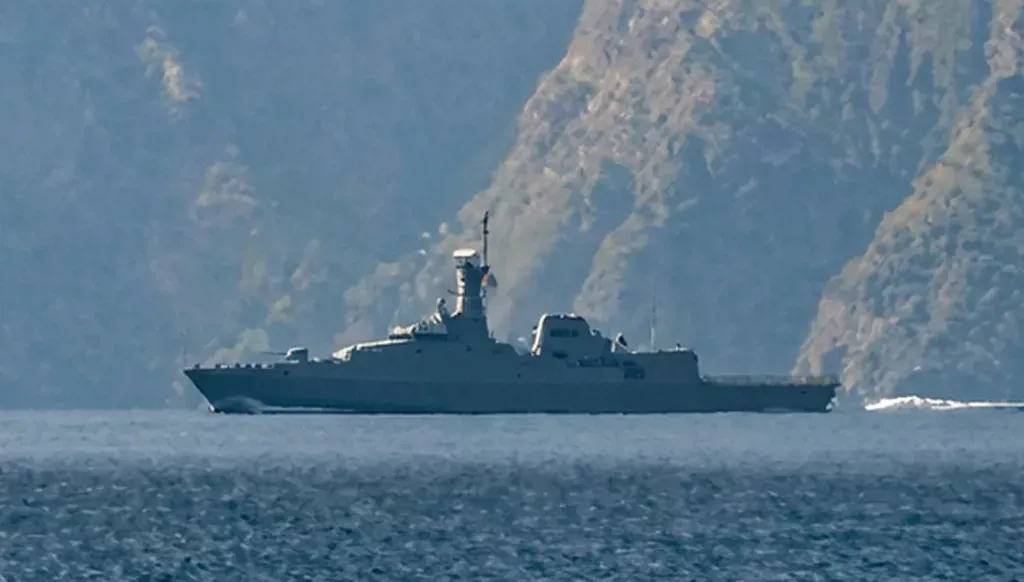
Strait of Hormuz. (AFP)
Smaller Bigger


Those remaining within the Iranian regime have no objective beyond self-preservation. Does Hezbollah in Lebanon recognize this, or does it remain beholden to the Revolutionary Guard, which has come to embody and dominate the Iranian regime?


The direct negotiations between the “Islamic Republic” and the “Great Satan,” held in Islamabad and mediated by Pakistan, revealed that the regime’s primary priority is its own survival. It continues to refuse to acknowledge that its ability to endure is now limited and that, ultimately, it has no choice but to carry out the required steps.


Sooner or later, it will do so, as no other options remain. The Revolutionary Guard, which negotiated with the American side represented by Vice President J.D. Vance, still does not recognize that everything in the region has changed—beginning with the fact that Iran is now fighting its battles on its own territory rather than on the territories of others. This marks a significant, even radical, shift. Iran’s wars are no longer taking place in Gaza. Nor are they unfolding in Syria, Iraq, Lebanon, or even Yemen, where the Houthis have opted for a policy that can, at the very least, be described as cautious.


Loss of all wars


Iran arrived in Islamabad bearing the weight of losses from all the wars it had fought on the sidelines of the Gaza war, which began on October 7, 2023, when Hamas launched the “Al-Aqsa Flood” attack. The assault targeted Israeli communities in the areas surrounding Gaza.


Only time will reveal the extent of Iran’s involvement in this attack, which undoubtedly reshaped the Middle East and beyond.


Regardless of the level of coordination between the Revolutionary Guard and Hamas on all aspects of the “Al-Aqsa Flood,” Iran did everything it could to assert itself as the dominant power in the region and to claim that the key to expanding or containing the Gaza war lay in its hands. This belief marked the beginning of the end for the Iranian regime, which ultimately entered into direct negotiations with the Donald Trump administration.


What indicates that the Iranian regime is living in a post–Gaza war illusion is that the cards it once held are no longer valid. Lebanon, which refused to serve as an Iranian pawn in the Islamabad negotiations, has been lost. The mere acceptance of Lebanon entering direct negotiations with Israel signals that the country rejects being under an Iranian mandate.


Before that, Iran lost Syria, following the fall of the Alawite regime led by Bashar al-Assad and his flight on December 8, 2024.


Lebanon has changed, and Syria has changed. The “Islamic Republic” refuses to acknowledge this, just as it refuses to admit that Iraq—where it still exercises influence through the “Popular Mobilization Forces” militias—has also changed. This shift is underscored by the fact that Nouri al-Maliki is no longer able to serve as prime minister, simply because Donald Trump placed a veto on him.


The Strait of Hormuz is not a card


The Revolutionary Guard–dominated regime in Iran still needs time to grasp that the Strait of Hormuz is no longer a viable card, and that attempting to blackmail the world by restricting navigation through it will, sooner or later, backfire on Iran itself.


Negotiations in Islamabad took place as bombs rained down on Lebanon, especially on sites in the south and, before that, in Beirut. The Israeli army continued its advance inside Lebanese territory. All the Iranian talk about boycotting negotiation sessions with the Americans without a ceasefire in Lebanon was merely rhetoric that only Hezbollah fell for.


What is important is that the party understands that it has lost much of its value in Iran. The party was once the crown jewel of Iran’s expansionary project and had an influential voice in Tehran. The future of the party is no longer of interest to Iran, especially since it is now under the direct command of the “Guard.” The concerns of the “Islamic Republic” lie elsewhere.


The question that arises in the coming phase, whether Iranian-American negotiations resume or not, is the future of the regime itself. The question is whether it remains a viable regime, yes or no. Is it still possible to rehabilitate the regime without abandoning the proxies it has supported, starting with Hezbollah in Lebanon, the sectarian militias in Iraq, and the Houthis in Yemen?


Disclaimer: The opinions expressed by the writers are their own and do not necessarily represent the views of Annahar.