

Pope’s visit to Algeria revives the legacy of Saint Augustine and Roman-era heritage
Amid high-level symbolism and renewed cultural debate, the visit has reignited discussions on Algeria’s Roman past, the intellectual legacy of Saint Augustine, and the country’s role in shaping early Western philosophical and literary traditions.


 Messenger
 Whatsapp
 Threads
 Email
Email
 Print
Print
 X
X
 Facebook
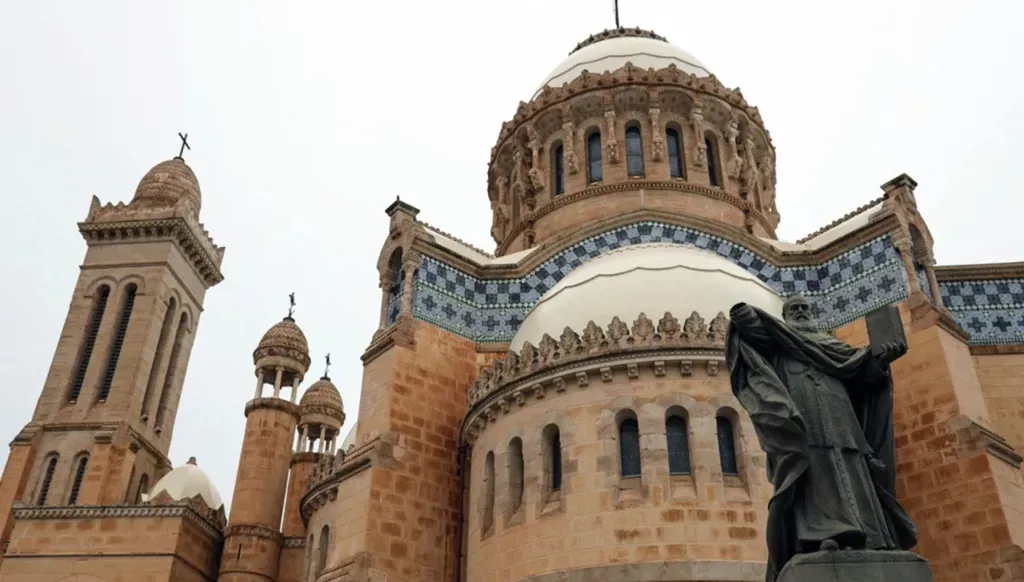


The Algerian authorities considered the visit of Pope Leo XIV to Algeria, which began on the 13th of this month, a major event that enhances Algeria’s soft power. It highlights, on one hand, Algeria’s openness to interfaith and intercultural dialogue and its recognition of Christianity, and on the other hand, it strengthens the good relations it maintains with Italy and with the Vatican and its Catholic Church, which is considered the oldest spiritual institution in the Western world and whose long history can be traced back nearly 2,000 years. It also notes that it currently has more than 1.4 billion Catholic followers worldwide.
Significant Symbolism
In this context, Algerian specialists in the Roman era believe that the Pope’s choice of Algeria carries many layers of symbolism for the Algerian authorities. For this reason, shortly after the Pope’s arrival in Algeria, these authorities began implementing the rich visit programme, including an exceptional reception for Algerian President Abdelmadjid Tebboune in recognition of his spiritual stature and his positions in support of global peace.
In this regard, Professor of Political Science and International Relations at the University of Algiers, Dr. Saeed Salama, stated in an interview with the daily newspaper “Echourouk El Youmi” that the specificity of the Pope’s visit to Algeria lies in its selectivity, noting that papal visits around the world remain limited, which gives any destination he chooses a particular weight and significance.
The Pope’s visit to Algeria, and its emphasis on the spiritual and intellectual importance of Saint Augustine, sparked extensive positive discussion across various official and private media outlets as well as social media platforms. Algerian intellectuals, including historians and figures engaged in philosophy, literature, architecture, culture, and religion, have called for reopening the historical record of Roman-era civilization in Algeria and for introducing younger generations to the content of this history, which lasted from the 1st century BC to the 5th century AD.
They also urged linking this history to the transformations of Algerian identity over time, especially since it is rich with national resistance movements, architectural and theatrical monuments spread across Algeria, and world-renowned literary works such as The Metamorphoses of Apuleius, referred to by Saint Augustine of Hippo as The Golden Ass, widely regarded as the first novel in the history of world literature, written by the Algerian writer and philosopher Apuleius.
It also includes the profound philosophical debates of the 4th century AD between Saint Augustine and Manichaean philosophy, based on the principle of dualism between good and evil, as well as his exchanges with a philosophical current known in intellectual records as the Donatist movement, which called for the moralization of justice and equality among human beings.
Saint Augustine’s Era
In this regard, a number of historians of thought, literature, art, and philosophy in Algeria have noted that the time has come to reopen the file of Saint Augustine’s era, in order to publish and study the key features of his intellectual legacy and analyse his philosophical works, such as Confessions, which introduced autobiography and the daily personal dimension for the first time into the history of Western abstract philosophical reflection, and The City of God, in which Augustine philosophically and spiritually theorized the ethics of justice and peace in both earthly political life and spiritual life.
Alongside the above, there are also urgent calls for the need to correct the errors of many biased historians and writers who question the Algerian identity of Saint Augustine, who was born to a Berber mother in the Algerian city of Souk Ahras, as well as the belonging of other writers and philosophers of Algerian origin who carried “Numidian” era names, such as Tertullian, Apuleius, Maximus of Madaura, Martianus Capella, and Marius Victorinus.
Disclaimer: The opinions expressed by the writers are their own and do not necessarily represent the views of Annahar.