Strait of Hormuz crisis: Trump’s blockade on Iran sparks global oil shock and rising war fears

Opinion 13-04-2026 | 15:44

Strait of Hormuz crisis: Trump’s blockade on Iran sparks global oil shock and rising war fears

Tensions between the U.S. and Iran escalate after failed Islamabad talks, with a naval blockade pushing oil above $100 and raising fears of global economic fallout and renewed conflict.
Strait of Hormuz crisis: Trump’s blockade on Iran sparks global oil shock and rising war fears
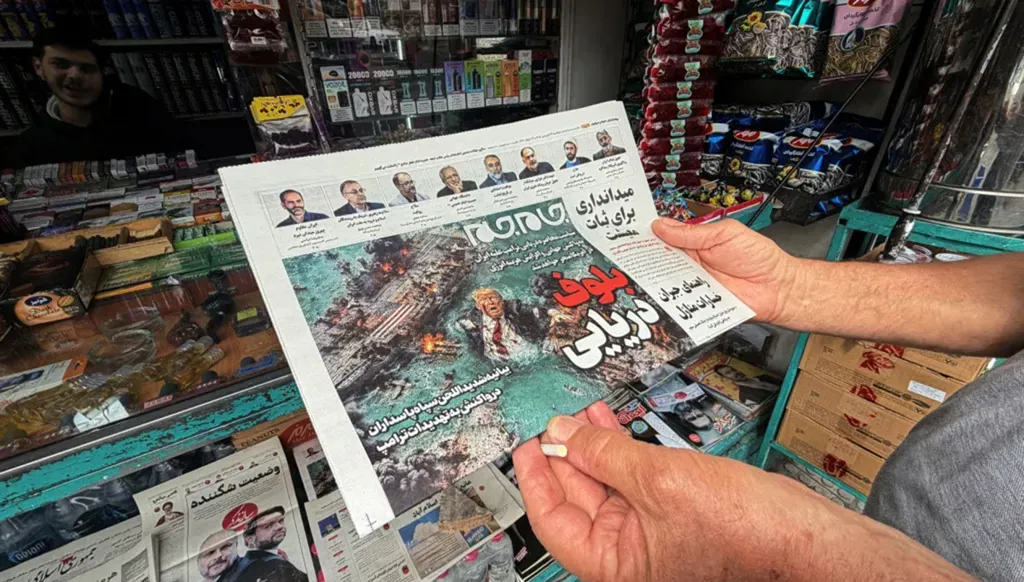
A man looks at the front page of the “Jam-e Jam” newspaper in Tehran, which features a cartoon of Trump drowning in the Strait of Hormuz under the headline “Maritime Trick.” (AFP)
Smaller Bigger


Barely hours had passed since U.S. Vice President J.D. Vance returned empty-handed from negotiations in Islamabad with the Iranian delegation led by Parliament Speaker Mohammad Bagher Ghalibaf, when President Donald Trump issued an order to close the Strait of Hormuz and impose a blockade on Iranian ports in the Gulf and the Gulf of Oman.


The American procedures, which began at 10 a.m. Eastern Time, caused new turmoil in global energy and financial markets, given their high risk of rekindling war with Iran, especially as the Iranian army responded with a strongly worded warning, stating, “If the security of the Islamic Republic of Iran’s ports in the waters of the Gulf and the Arabian Sea is threatened, no port in the Gulf and the Arabian Sea will be safe.”


Negotiation pressure on the edge of explosion


Trump and Iran are both skilled at playing on the edge of the abyss. Therefore, there remains a faint hope that the purpose of the American measures is to exert pressure on Iran to bring it back to the negotiating table in the coming days, especially since the 15-day truce is still in effect and could be extended to allow diplomacy a chance.


Axios reported that mediators “will continue talks with Washington and Tehran to bridge the gaps and reach an agreement to end the war.”


The purpose of imposing the blockade on Iranian ports, as Trump himself claims, is to apply the experience of the American blockade of Venezuelan ports in the second half of last year, which ended with Operation “Absolute Resolve” that led to the arrest of Venezuelan President Nicolás Maduro, the appointment of his vice president Delcy Rodriguez as his successor, and her announcement of a new chapter in relations with the United States.


However, the reality suggests that Iran and the Middle East are far more volatile than Venezuela and the Caribbean. Through the naval blockade, Trump aims to cut off Iran’s oil revenues, which it has continued to secure through exports to China, even during the forty days of the recent war, and which may have generated more income than in an entire year due to surging prices.


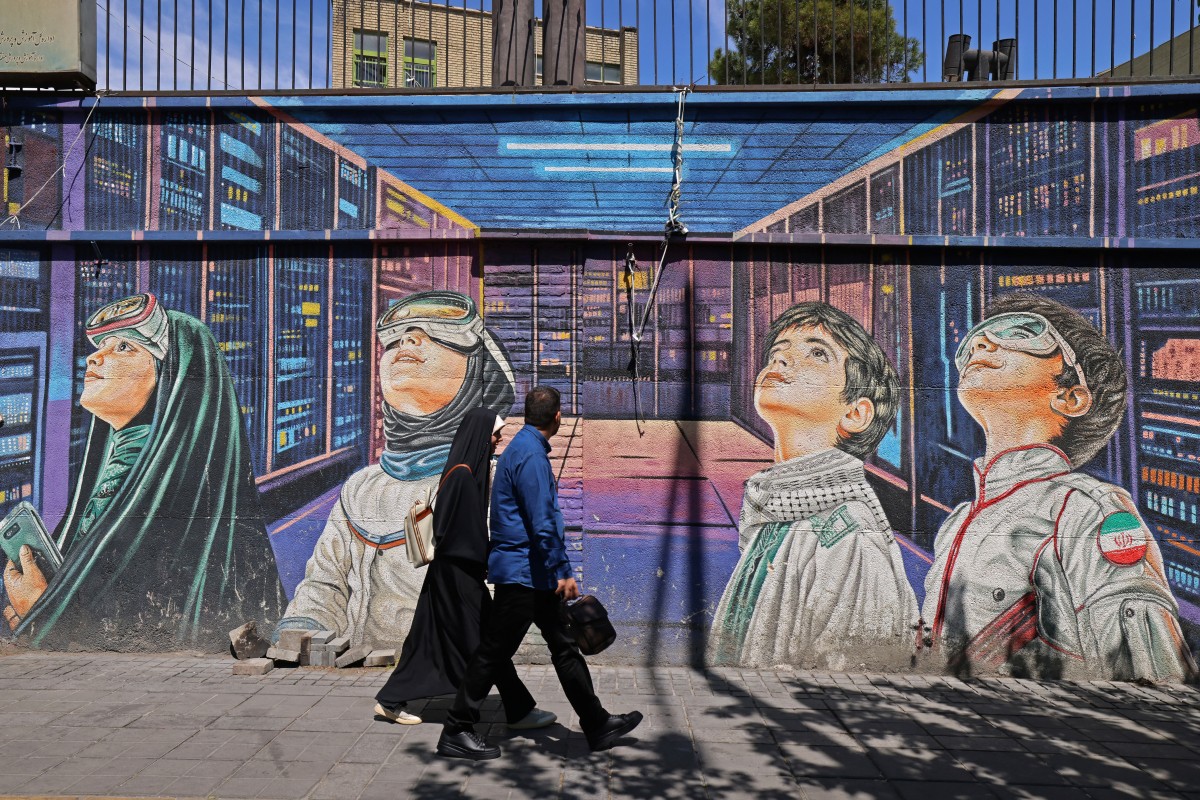
Two Iranians walk by a mural on a roadside in Tehran. (AFP)


Global economic cost and risks of escalation


But blocking Iranian ports and closing the Strait of Hormuz by the U.S. Navy would mean depriving global markets of about 1.6 million barrels of oil per day. This expectation immediately pushed prices above the $100 mark, while American stocks experienced a decline.


The bet is now on who can endure more damage: Iran or the global markets. Factories in several Asian countries have begun reducing production to save energy, while fuel stations have started rationing, and shortages of aviation fuel have been recorded at some Asian and European airports, amid expectations of a contraction in GDP in several countries.


In this context, a notable position was expressed by the Chinese Foreign Ministry, which urged all parties not to disrupt navigation in the Strait of Hormuz, and announced Beijing’s readiness to work with all sides to safeguard energy security and ensure the stability of supplies.


If Trump seeks to prevent Iran from using the Strait of Hormuz as a bargaining chip in future negotiations, he simultaneously risks reigniting the war and entering a prolonged conflict. Reuters has quoted experts as saying that the blockade amounts to a large-scale military operation with no clear timeframe, which could prompt Iran to respond and place tremendous pressure on the already fragile ceasefire.


Washington and Tehran exchanged accusations over the failure of the Islamabad negotiations. Trump said the main reason was Iran’s refusal to make a clear commitment to abandon its pursuit of nuclear weapons, while Tehran argued that the U.S. delegation put forward extreme demands.


For the first time, Trump acknowledged that gasoline prices in the United States could continue to rise until the midterm elections in November, at a time when Republicans fear losing both houses of Congress due to inflation.


To preempt this scenario, some suggest that the measures announced by the American president, along with his statement that he “doesn’t care” whether Iran returns to negotiations or not, are part of a negotiation tactic aimed at forcing adversaries to reconsider and soften their positions.


Disclaimer: The opinions expressed by the writers are their own and do not necessarily represent the views of Annahar.