

Lebanon’s decision on weapons ban in Beirut and Netanyahu’s political framing


 Messenger
 Whatsapp
 Threads
 Email
Email
 Print
Print
 X
X
 Facebook
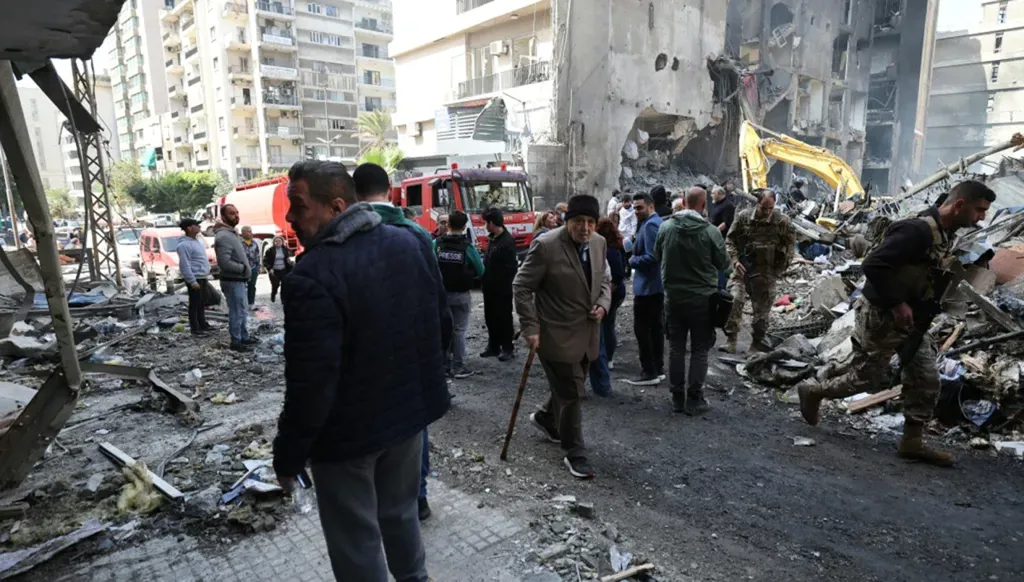


Israeli Prime Minister Benjamin Netanyahu took advantage of his Lebanese counterpart Nawaf Salam’s announcement of the cabinet decision to ban all illegal weapons in the Beirut governorate, incorporating it into a statement approving the immediate launch of direct negotiations with Lebanon “under fire”.
Many did not understand what led Netanyahu to celebrate the decision announced by Salam, especially since it is considered one of the weakest sovereign decisions taken by the Lebanese government since August 5 last year. Did the Israeli prime minister need a pretext to say that he was heading into negotiations with a “capable” Lebanese authority, just hours after a new statement issued by the Israeli army in which it attacked the Lebanese army and accused it of lying about its earlier claim that it had completed the process of disarming south of the Litani River? Or was he looking for justification to cover the sudden air strikes by his air force on several locations in Beirut, under the pretext of targeting middle ranking leaders in Hezbollah?
In any case, Netanyahu celebrated the Lebanese decision, despite having previously disregarded a more important decision issued by the Lebanese government on March 2, in which the Lebanese army was tasked with immediately beginning the disarmament of Hezbollah across all of Lebanon and ordering it, along with other Lebanese military institutions and agencies, to arrest anyone moving around with an unlicensed weapon anywhere in Lebanon.
Sovereign retreat of the government
Indeed, the Lebanese government’s decision issued on April 9 regarding Beirut represents a major retreat from its previous decisions and confirms that it needs to reschedule its ambitions to align with its presumed capabilities.
On August 5 last year, the Lebanese government asked the Lebanese army to prepare a detailed plan aimed at disarming all illegal weapons, including the weapons of Hezbollah, across all of Lebanon before the end of 2025. However, one month later, it diplomatically backed away from this decision when it welcomed a plan drawn up by the Lebanese army that did not match the set deadline, as it focused its efforts in a first open ended phase on areas south of the Litani River.
With the beginning of 2026, the Lebanese army announced that it had completed its deployment across the entire area south of the Litani River, except for points occupied by Israel. It also stated that before moving to the second phase, which extends to south of the Zahrani River, it needed to consolidate its achievements.
The situation remained unchanged until March 2, 2026. On the night of March 1 and 2, Hezbollah, in retaliation for the assassination of the Iranian leader Ali Khamenei, launched a barrage of rockets toward northern Israel. This barrage triggered an immediate Israeli response, and in reaction Israel opened the Lebanon front, announcing the collapse of the ceasefire agreement it had reached with Lebanon through American mediation on November 26, 2024. That afternoon, the Lebanese cabinet convened and decided to request the army leadership to immediately implement the decision to disarm illegal organizations across all of Lebanon, and tasked it along with other Lebanese security agencies with arresting anyone moving with an unlicensed weapon and referring them to trial.
Naturally, this decision was only partially implemented. Arrests were made of a group that was moving between areas while carrying weapons, once they reached military and security checkpoints, but the Lebanese army disregarded the disarmament order on the grounds that such a step requires consensus.
Accordingly, the government’s decision to ban weapons in the Beirut governorate, or what is known as administrative Beirut, appears to be a very modest fragment of the government’s previous decisions.
Despite this modest scope, can this decision actually be implemented?
The most well known Beirut precedent took place on September 25 last year, when Hezbollah held a gathering in the Raouche area despite a ban issued by the competent authorities, who found no one to enforce their decisions, neither in the army nor in the Internal Security Forces.
So why did Netanyahu celebrate? Was it because withdrawing from negotiations that he entered into, albeit reluctantly, is easy? Or because an authority that is powerless in the face of Hezbollah will not stop him from continuing, through his military, to carry out his plan?
Certainty will not be far away.
Disclaimer: The opinions expressed by the writers are their own and do not necessarily represent the views of Annahar