

Why Gulf inclusion is essential to any Iran agreement


 Messenger
 Whatsapp
 Threads
 Email
Email
 Print
Print
 X
X
 Facebook


Eric Alter
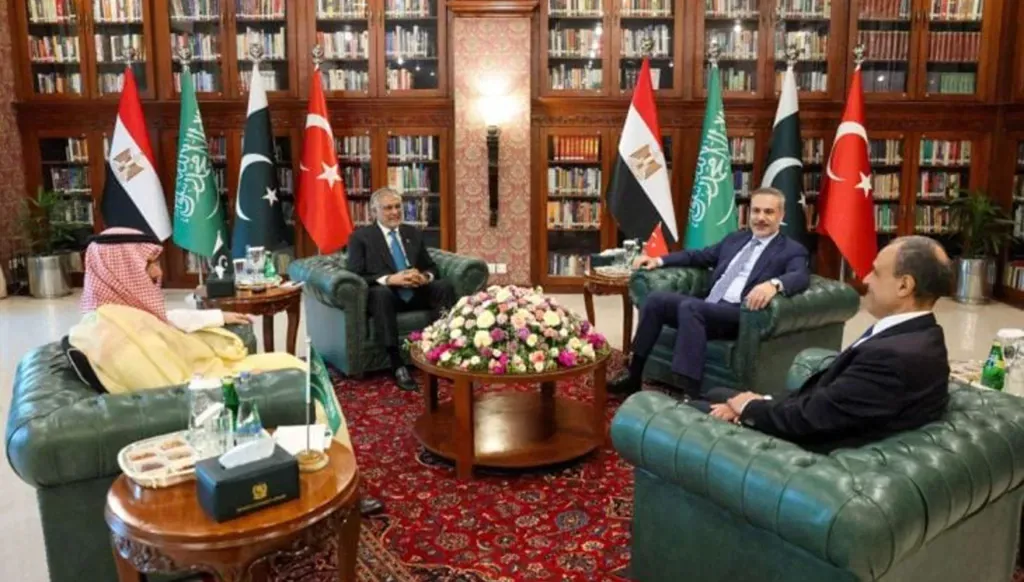
Foreign ministers from Saudi Arabia, Turkey, Egypt, and Pakistan held a meeting in Islamabad at the beginning of this week to discuss ways to reduce escalation in the ongoing war against Iran. At the same time, Iranian missiles and drones continue to target United States bases deployed across the Gulf region. On March 27, one of the attacks resulted in injuries to 12 American military personnel, including two in critical condition, after the Prince Sultan Air Base in Saudi Arabia was targeted.
Since the outbreak of the war in late February, 50 civilians have been killed on the territory of Gulf states, most of them migrant workers from South Asia who are not part of this conflict. On March 5, the Qatari air force intercepted two Iranian Sukhoi 24 bombers that were on the verge of targeting Al Udeid Air Base and Doha International Airport. Although these countries are at the heart of the conflict, diplomatically they continue to observe developments from a distance while other parties make the decisions that will shape the next phase.
This scenario reflects a recurring pattern in regional dynamics, as Gulf countries did not obtain an actual seat at the negotiating table when the Joint Comprehensive Plan of Action was formulated in 2015 between the United States and Iran, and today their representation is limited to symbolic roles. This repeated marginalization does not appear to be the result of diplomatic oversight but rather a deliberate choice.
Washington has conveyed to Tehran a 15 point proposal through Pakistani channels, based on a clear equation: lifting sanctions in exchange for imposing restrictions on the nuclear program, limiting missile capabilities, ending support for proxy groups, and ensuring freedom of navigation in the Strait of Hormuz. In return, Iran’s response requires recognition of its full sovereignty over this vital passage, through which nearly one fifth of global oil supplies flow, and which serves as a key economic lifeline for Gulf states. However, Gulf participation in these processes remains limited and consultative, despite being the most affected by the consequences of this issue.
Gulf leadership has never focused on Iran’s centrifuges to the same extent as Washington does. Instead, its priorities center on the missile arsenal and drone fleet, in addition to the network of proxy militias that Tehran has built and consolidated over two decades in Iraq, Syria, Yemen, and Lebanon. Any agreement that ignores these direct threats cannot be considered a genuine peace deal, but rather, at best, a temporary truce that paves the way for a new round of escalation.
While the American effort to reach a quick agreement is understandable, given that coordinating positions among Gulf Cooperation Council states could prolong negotiations, agreements that marginalize the most exposed parties cannot endure for long. The Gulf states are not merely observers of this crisis, but its primary target, as Iran has designed its arsenal and regional networks to assert dominance over the Gulf, not to target United States territory or European capitals.
Gulf intelligence agencies have, over the years, closely monitored the activities of the Iranian Revolutionary Guard Corps and the financing mechanisms of proxy groups with high precision. United States security institutions rely on this expertise more than official statements often reflect, which means that excluding Gulf states from the negotiation process would leave any final agreement heavily dependent on Iranian guarantees alone, a foundation that cannot provide lasting regional stability.
The Most Important Partner
There is no doubt that Gulf states have been, and remain, Washington’s most important partner in the region. At the same time, however, they are increasingly expressing doubts about its long term intentions. They are expanding their energy partnerships with China and exploring options to acquire air defense systems from Russia and Europe. Excluding them from the diplomatic process would accelerate their shift toward other geopolitical alternatives.
If Washington proceeds with imposing a binding agreement without genuine involvement of its Gulf partners, Gulf capitals are likely to treat it as a temporary truce that must be adapted to, rather than a strategic commitment worthy of political or diplomatic defense.
A lasting agreement cannot be reached without involving Gulf states from the earliest stages. This means linking the gradual lifting of sanctions to Iran’s commitment to clear and verifiable standards, with the participation of official Gulf representatives alongside major powers in joint monitoring mechanisms for the nuclear program, missile program, and activities related to proxy groups.
European countries insisted in 2015 on phased verification mechanisms, recognizing that implementing any agreement becomes nearly impossible without real acceptance from the states most exposed to the threat, as those living under daily risk are best positioned to detect violations at an early stage.
In the Middle East, agreements rarely fail due to minor technical disputes. Instead, their collapse is most often caused by the absence of effective enforcement mechanisms. When Gulf leaderships participate in shaping regulatory frameworks and assume responsibility for monitoring and oversight, they gain a genuine stake in ensuring the agreement’s sustainability and compliance by all parties.
Today, Washington faces a clear choice: either pursue a quick settlement or invest in building a comprehensive agreement that ensures sustained compliance from the most affected parties. These are two paths that are difficult to combine. The Gulf has been within Iran’s targeting range before these negotiations began, and it remains so today. Excluding its leaders from the negotiating table does not ease the diplomatic task; rather, it may pave the way for a new round of conflict.
Dean of Graduate Programs at the Anwar Gargash Diplomatic Academy.
Disclaimer: The opinions expressed by the writers are their own and do not necessarily represent the views of Annahar