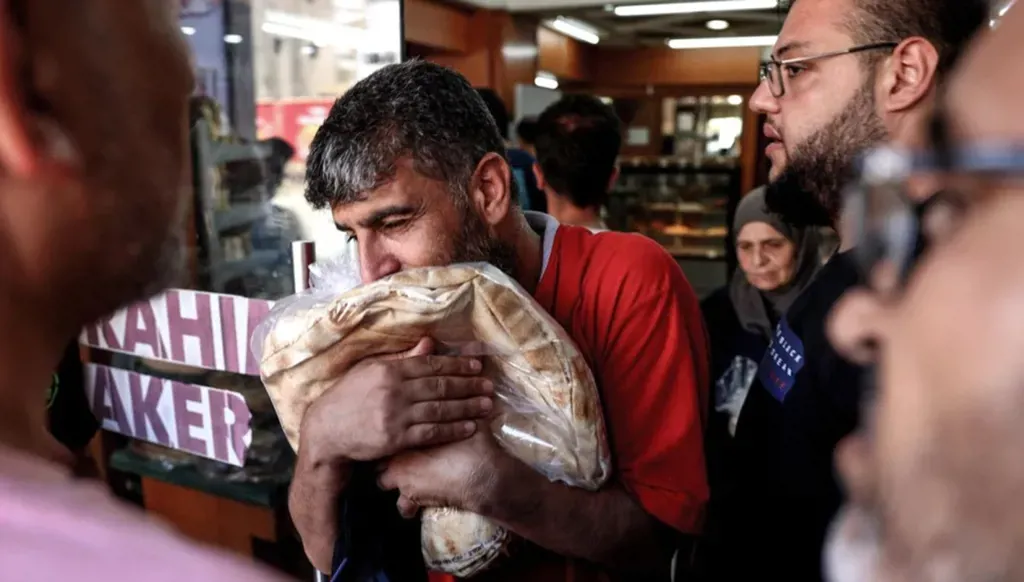
Lebanon has been going through an unprecedented economic and social crisis for the past seven years. (Agence France-Presse)
On every anniversary of the Lebanese war, the same questions are revisited: Why did it break out? Who is responsible? And how can it be avoided? But nearly half a century after the war began, through subsequent local political and security turmoil, as well as confrontations with Israel and regional wars, the more pressing question has become not only political but also largely economic: How can Lebanon build a resilient economy that does not falter every time local and regional stability is disrupted to varying degrees?
The issue is no longer the outbreak of conflicts as much as it is the fragility of the Lebanese economy in the face of them. Lebanon, in the form we have known it since the end of its civil war in 1990, relied heavily on a stability-dependent model: a large banking sector, financial inflows from abroad, and service sectors linked to tourism and consumption. This model was unable to survive in a region where shocks recur, collapsing at the first major test.
To understand this dilemma, we must return to the trajectory of the economy through wars. Before 1975, Lebanon had a vibrant services economy and a prominent regional financial standing. However, with the outbreak of the civil war, economic activity contracted severely, and Lebanon’s financial and commercial standing eroded, while during the 1980s, the Lebanese lira experienced a sharp deterioration, losing most of its value.
After the war ended, Lebanon experienced a reconstruction boom in the first half of the 1990s, with high growth rates. But this growth was based on borrowing, with public debt rising from low levels in the early 1990s to about $40 billion in 2005 and then to about $90 billion before the financial crisis in 2019, making the economy vulnerable to any shock.
The confrontations with Israel highlighted this structural weakness. In the July 2006 war, direct losses were estimated at about $3.6 billion, with economic contraction nearing 7 percent that year. In the recent escalation since 2023, the World Bank estimated material damage at about $3.4 billion and economic losses at about $5.1 billion, while the latest estimates suggest that recovery and reconstruction could cost up to approximately $11 billion, with the Lebanese economy contracting by about 7.1 percent in 2024, reflecting the continued vulnerability of the economy to security shocks.
Struggling Lebanon. (AFP)
But the major turning point came with the financial collapse in 2019. Lebanon lost about 64 percent of its nominal GDP between 2018 and 2023, dropping from about $55 billion to just about $20 billion, in one of the world’s most severe economic crises since the 19th century, according to the World Bank. Monetary poverty rose to about 44 percent of the population, while multidimensional poverty exceeded 80 percent, according to United Nations estimates.
Today, the numbers reveal a fundamentally different reality. In 2024, remittances amounted to about $6.8 billion, according to the Central Bank of Lebanon, making them one of the most significant sources of national income. Conversely, Lebanon’s commodity exports amounted to about $3.8 billion, according to international trade data, indicating that remittances now clearly exceed exports.
Most importantly, a significant portion of these exports is directed to Arab countries, led by the United Arab Emirates, which alone accounts for about 27 percent of Lebanese exports. Other Arab markets such as Egypt, Iraq, Jordan, Qatar, and Syria absorb an additional significant share, confirming that Lebanon’s natural economic space is primarily Arab.
Hence, thinking about “Lebanon Tomorrow” becomes an exercise in redefining the economy, not in restoring what has fallen. The reproduction of the pre-2019 model is no longer possible, neither financially nor politically, nor even regionally. The alternative lies in transitioning to an economy that is different in nature: a networked, transnational economy that relies on the Lebanese diaspora as a productive structure, not merely as a source of remittances.
The Lebanese diaspora, especially in the Gulf countries, forms an extensive human and economic network operating in vital sectors, from engineering and medicine to media and technology. With significant transformations in Gulf economies, an opportunity arises for these talents to transition from the role of individuals to partners in production.
However, this transformation requires reorganizing the relationship between the homeland and the diaspora. Instead of consumer financial inflows, these resources can be converted into productive investments through joint funds, business networks, and collaborative platforms linking Lebanon with its extended economy in the Arab world.
Simultaneously, Lebanon needs to reposition itself within the Arab economy. Instead of a seasonal role based on tourism and traditional services, Lebanon can transform into a partner in productive sectors such as food industries, education, healthcare, and digital services, leveraging its human capital.
But all this remains incomplete without the most important transition: moving to a “resilience economy.” In a region where wars intersect with the economy, building a model that assumes stability is no longer realistic. What is required is an economy capable of functioning amid crises, not only after they end. This means strengthening adaptable sectors such as technology and remote work, developing agriculture and manufacturing to reduce import dependence, and supporting local initiatives to lessen reliance on the state. It is a transition from an economy that waits for stability to one that manages risk.
Ultimately, the Lebanese experience reveals that the most dangerous aspect of wars is not their occurrence, but the inability of the economy to withstand them. Lebanon, as it stands today, no longer has the luxury of waiting. Its only option is to reinvent itself as a transnational economy, Arab in its extent, based on its external human networks.
Perhaps Lebanon can prevent future wars within and upon it, but it certainly cannot prevent them in the region. And for the first time in decades, it is indeed able to build an economy that does not collapse whenever wars erupt in the region. This, in itself, is not a detail. It is the first condition for any possible survival.
Disclaimer: The opinions expressed by the writers are their own and do not necessarily represent the views of Annahar.



 Messenger
 Whatsapp
 Threads
 Email
Email
 Print
Print
 X
X
 Facebook


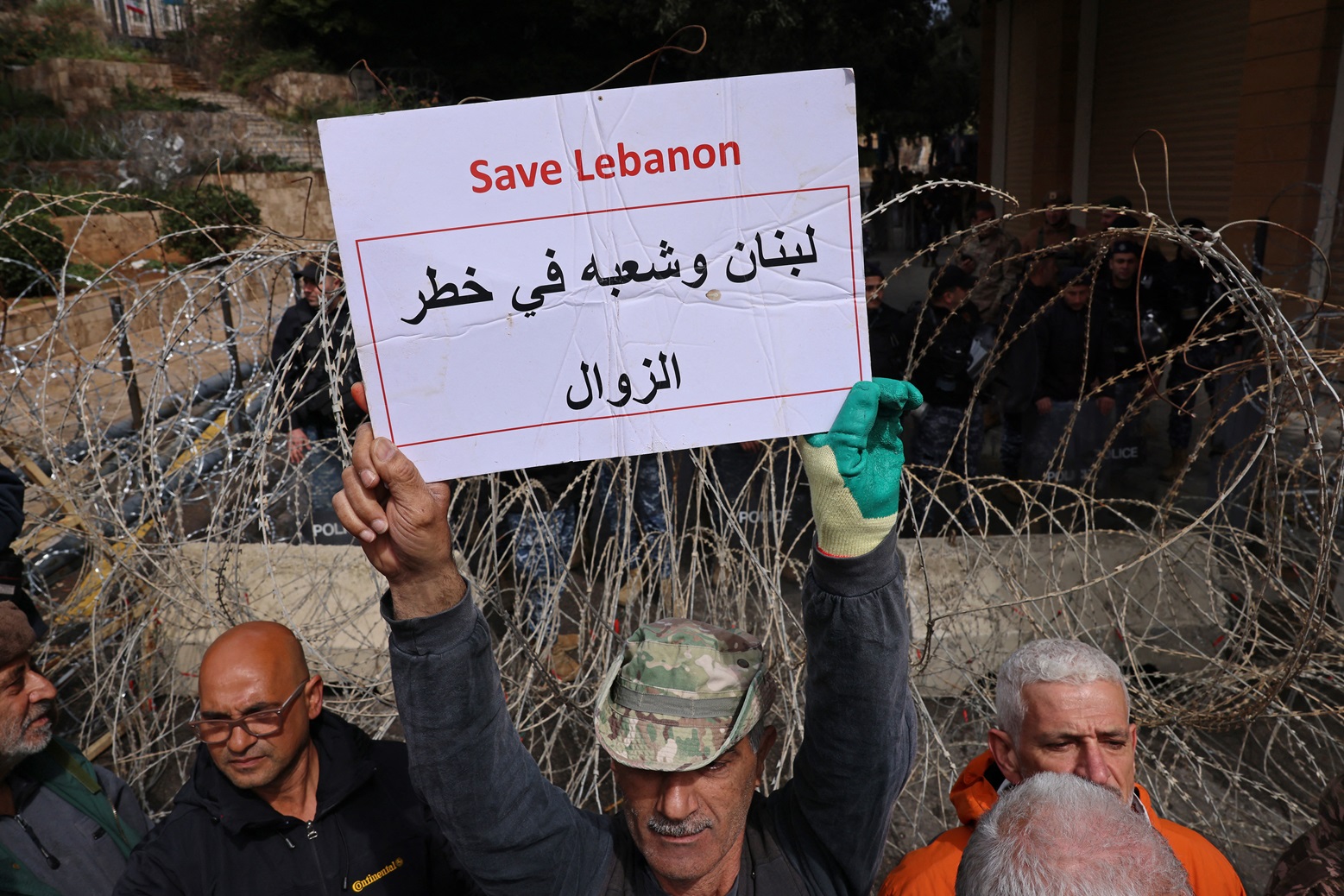 Struggling Lebanon. (AFP)