




 Messenger
 Whatsapp
 Threads
 Email
Email
 Print
Print
 X
X
 Facebook
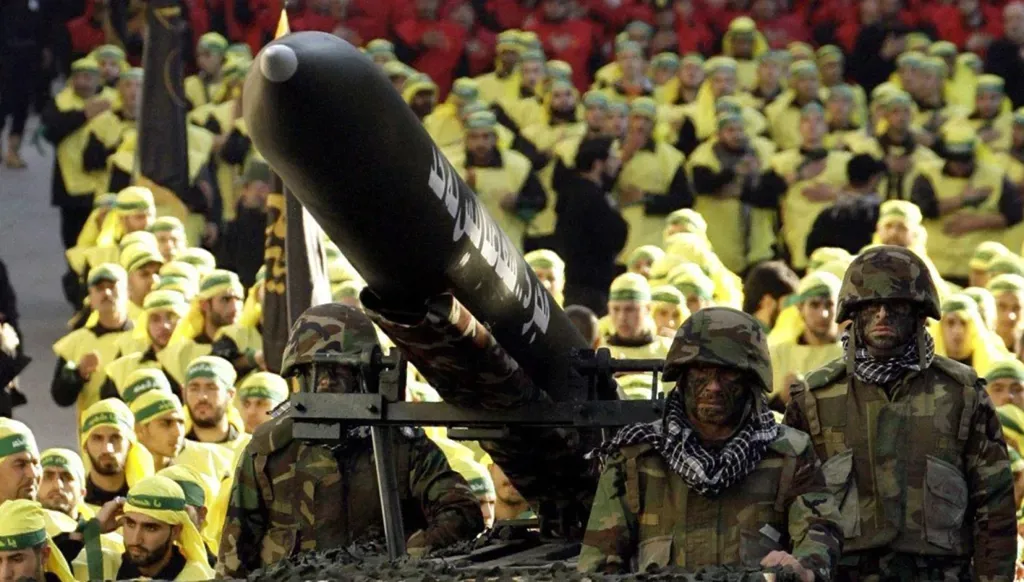


Whether or not future developments show Lebanon being included in a US Iranian ceasefire agreement mediated by Pakistan, this will not change the harsh and deeply painful realities that have long shaped Lebanon’s ongoing crisis. The country remains trapped in a fundamental dilemma that decades of so called peace since the Taif Agreement have failed to resolve. That agreement was meant to end the Lebanese war in theory, but it did not prevent the possibility of its return.
Lebanese people could never have imagined, even in their worst fears, that today, fifty one years after 13 April 1975, one of the most defining dates in Lebanon’s history of war and disaster, they would once again face a situation resembling a nightmare of renewed conflict. This conflict has revived fears of state collapse and fragmentation under the influence of an armed force that is loyal primarily to Iran and does not place Lebanon’s destruction in its calculations. For the first time, the country has been confronted with a stark equation that either the weapons of Hezbollah remain or the state and Lebanon as a whole survive. This is because for thirty years Hezbollah’s weapons have been closely linked to preventing the completion of a fully functioning state, whether described as a normal state or a deep state that controls all its institutions.
The most serious reality accompanying Iran’s support war launched by Hezbollah on 2 March 2026 is that it resembles the situation that triggered the Lebanese war in April 1975. In both cases, weapons outside state control violated Lebanese sovereignty, destabilized the country, and fueled both internal and external wars on Lebanese territory. At that time, the crisis resulted from a buildup that led to the Cairo Agreement, which legalized Palestinian armed presence in Lebanon and allowed them to operate freely in the south in what became known as Fatah Land.
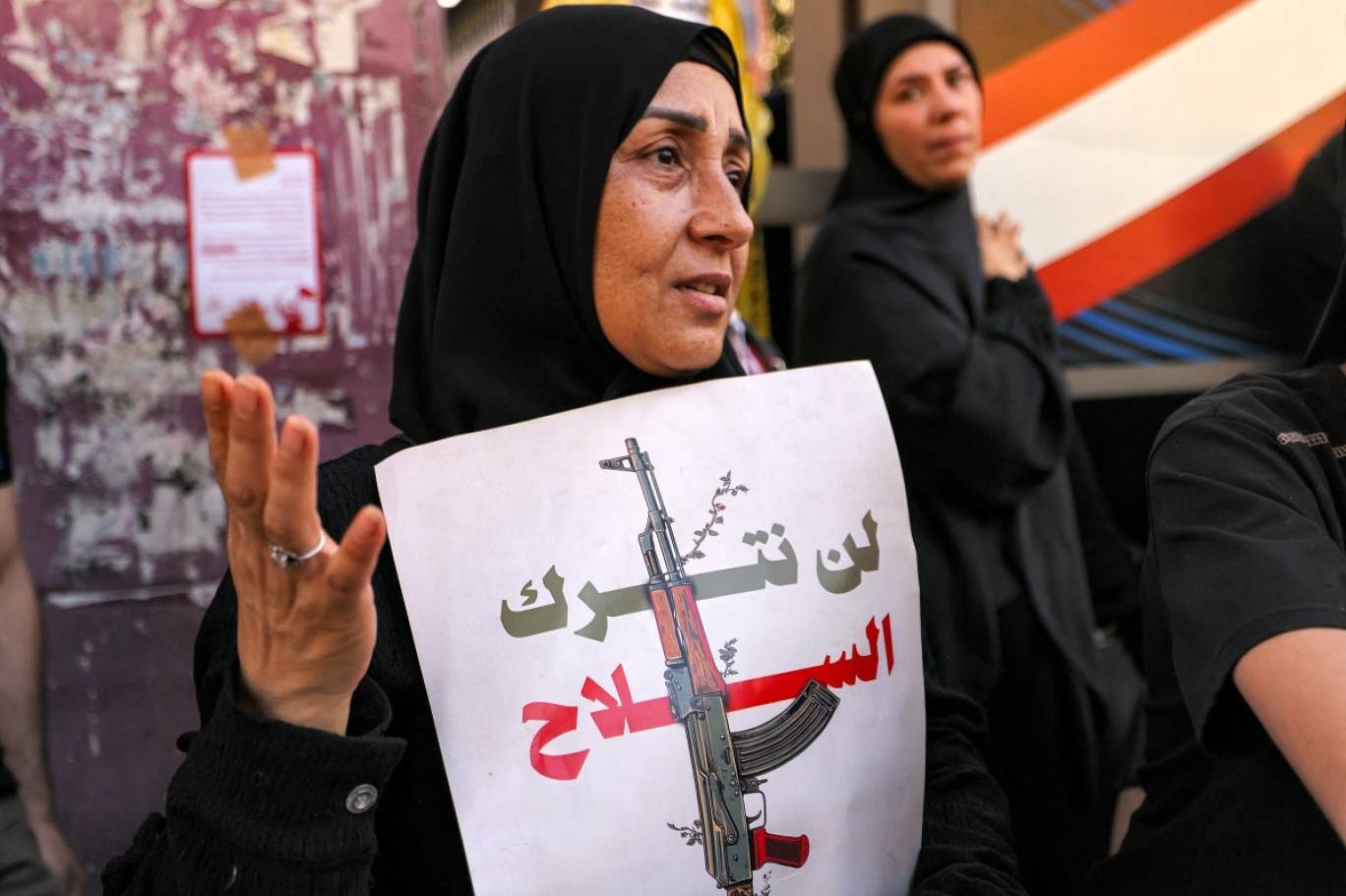
It is a mistake to think that the danger of the repercussions of the Hezbollah weapons issue is limited only to preventing the Lebanese state from having the sovereign freedom to decide on war, peace, and negotiations. Accumulated experience has shown that the inability to prevent sectarian and religious strife because of these weapons is an even more dangerous outcome than being drawn into Iranian “on demand” wars.
Although the bloody incident of the armed Hezbollah takeover of West Beirut on 7 May 2008 represented the most dangerous moment after the Taif Agreement in terms of exposing civil peace to collapse, the evidence, doubts, and suspicions in the file of the party’s involvement in assassinations were no less dangerous in weakening the fabric of social and security stability. The reliance on a discourse of threats and the practice of political and media intimidation have also turned these patterns into a form of intimidation arsenal in themselves.
This intimidation reaches its peak in observing the effect of raising the threat of civil war and sectarian strife as a scare tactic against the government, the presidencies of the republic and the government, the state as a whole, and especially the army, following the historic decisions taken by the current leadership regarding the exclusivity of weapons in the hands of the state, and the army’s beginning to implement this decision south of the Litani.
Perhaps no one can ignore a painful truth, which is that Hezbollah’s weapons have defeated the aspirations of the Lebanese for a decisive state that does not fear intimidation and does not yield to threats. Instead, the war ignited by the party under Iranian Revolutionary Guard guidance has led to the dispersal of the army, prevented the state from negotiating, and undermined internal and external confidence in the state.