Iran’s post-war narrative battle: Claims of victory amid military strain and regional tensions

Opinion 10-04-2026 | 12:41

Iran’s post-war narrative battle: Claims of victory amid military strain and regional tensions

As talks begin in Islamabad, competing claims of victory, military setbacks, and regional stability shape a tense post-war reality.
Iran’s post-war narrative battle: Claims of victory amid military strain and regional tensions
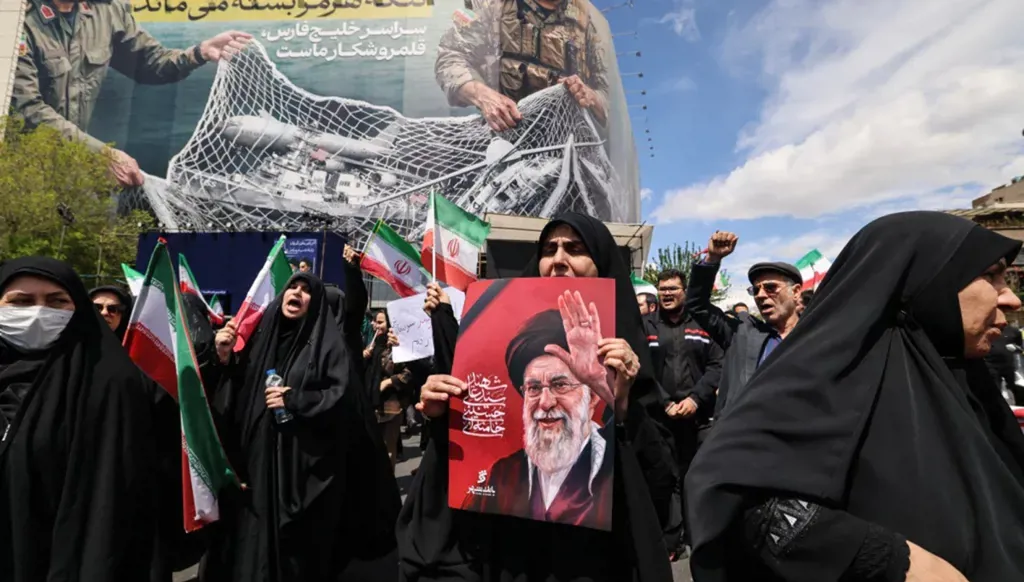
Flags and images of the late Supreme Leader Ayatollah Ali Khamenei were raised at a gathering in Tehran’s Revolution Square after the ceasefire announcement. (AFP)
Smaller Bigger


We will not anticipate the results of the first round of U.S.-Iranian negotiations held in Islamabad today, but it must be noted that the current battle is one of narratives. Iran is strongly focused on trying to impose a "victory" narrative at a time when forming an image of an Iranian victory—claiming missile launches and a temporary success in averting the regime's fall—is difficult. Besides the missile launches that began vigorously but then declined, their actual momentum was limited to neighboring countries instead of the lost momentum against Israel.


It cannot be said that the Iranian military establishment achieved remarkable successes, whether at the level of the Iranian navy, which was completely destroyed and sank deep in the Arabian Gulf, or at the level of air defenses and the air force, which disappeared from the screen in the early hours of the war.


As a result of the disappearance of air defenses and the air force, American and Israeli aviation succeeded in "occupying" Iran's skies, particularly over Tehran and major cities from Tabriz and Isfahan to Bandar Abbas and Mashhad. Practically speaking, aside from the incident of shooting down an American F-15 fighter jet south of Isfahan and the subsequent rescue of the pilots, flying over Iranian territory was a leisure trip for both Americans and Israelis alike. All Iranian propaganda will not succeed in changing the humiliating image of the Iranian army and the Revolutionary Guards, which proved for the second time after the 12-day war that Iran's skies were occupied twice in less than a year.


This is a bitter truth, and it cannot be hidden by propaganda copied from the era of bygone dictatorships. However, what prompts us to pause and think critically about this deplorable state of the Revolutionary Guards and the Iranian armed forces is that the operation to rescue the American pilots turned into a realistic test for a landing, penetration, and occupation operation of Iranian territory in a vital area. The operation took place relatively close to Iran’s second-largest city, Isfahan, and the American forces succeeded in isolating a geographical area in Iran completely from the military and security authority of the regime, meaning they managed for several hours to detach a small area of Iranian land from the rest of the country and engage with Revolutionary Guard forces without losing any personnel during the mission.


Accordingly, this incident was a tangible test for an American ground campaign aiming to seize vital sites in the sprawling country. This has led many observers to consider the test a very worrying experience for the Iranian regime, especially since Israeli and American drones had previously carried out military operations inside major cities like the capital, Tehran, targeting Basij forces in the streets. However, what caught the attention of observers was that a significant number of these drones were launched from inside Iranian territory, meaning that the Americans and Israelis were able to establish permanent military bases within Iran. This is a serious violation of Iranian national sovereignty and is based on the U.S.-Israeli military superiority over the Iranian military machinery.


Furthermore, the Iranian regime discovered that its missile attacks toward Gulf Arab states did not destabilize these countries, which generally dealt with the threat with high efficiency. Life remained almost normal in the Gulf Cooperation Council countries, and these countries managed to largely contain the effects of the missile and drone attacks and maintain their political, economic, and social stability, preventing Tehran from achieving the ongoing goals of the attacks, the most prominent of which was spreading chaos by trying to hit these countries' economic infrastructure.


The Iranian side will enter the negotiation room in Islamabad heavily wounded. It will prepare for major concessions by raising propaganda ceilings intended for internal consumption in Iran itself, based on the premise that the important thing is to show a victory image, even if the regime is suffering greatly from a major historical defeat whose consequences will emerge in the medium and long term. It will concede several conditions, foremost among which is linking "arenas" to its agreement with America.


It’s true that the pillars of the Iranian regime consider the failure of the U.S.-Israeli alliance to overthrow the regime a major victory in itself that they believe deserves celebration. Despite Iran’s military, economic, and financial strain, and its skies and land being violated for forty consecutive days, the regime’s survival so far is seen as its greatest achievement. This is the case in Iran: the regime is more important than the country—more important than the air the beleaguered Iranian citizen breathes.