

Lebanon demands state control over weapons amid Israeli escalation
Amid deadly attacks in Beirut, Lebanon is taking decisive steps to secure state control over weapons, safeguard civilians, and seek international action under the Taif Agreement.


 Messenger
 Whatsapp
 Threads
 Email
Email
 Print
Print
 X
X
 Facebook
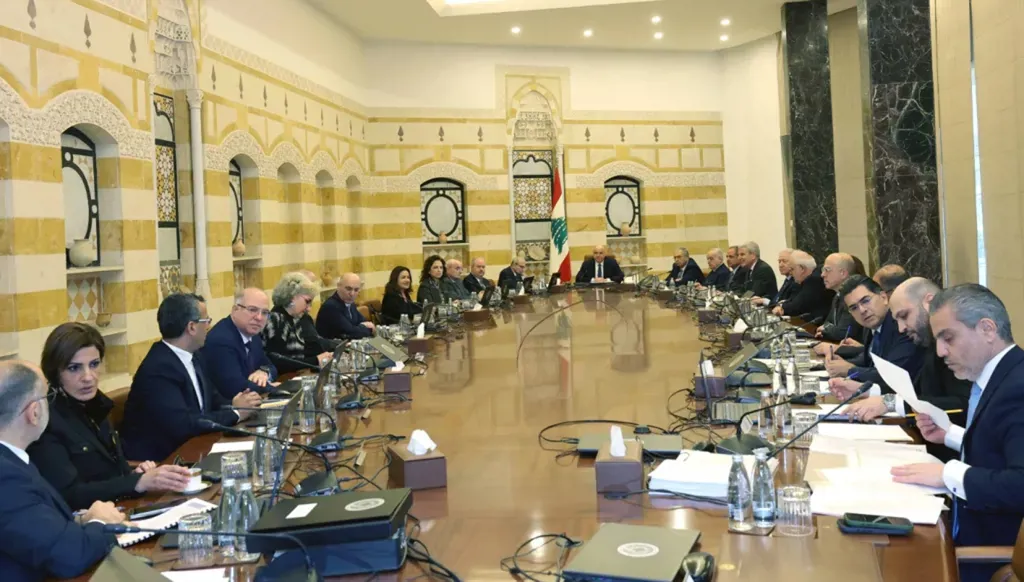


Following a day of bloodshed in Beirut and other areas of Lebanon, the country announced its strict stance on limiting weapons in the capital to legitimate forces, while simultaneously taking urgent action at the United Nations Security Council to file a complaint against Israeli escalation.
Between these two paths, security and political, the Council of Ministers convened in Baabda in an attempt to respond, amid a scene defined by rising danger and increasing pressure on Lebanon.
The government session was launched under the chairmanship of President Joseph Aoun with a minute of silence for the victims of Israeli massacres in Beirut and other Lebanese regions.
Prior to the session, there was a bilateral meeting between Presidents Aoun and Nawaf Salam at Baabda Palace. It was reported that the Ministers of Economy, Amer Bisat, and of the Displaced, Kamal Shehade, were absent from the session.
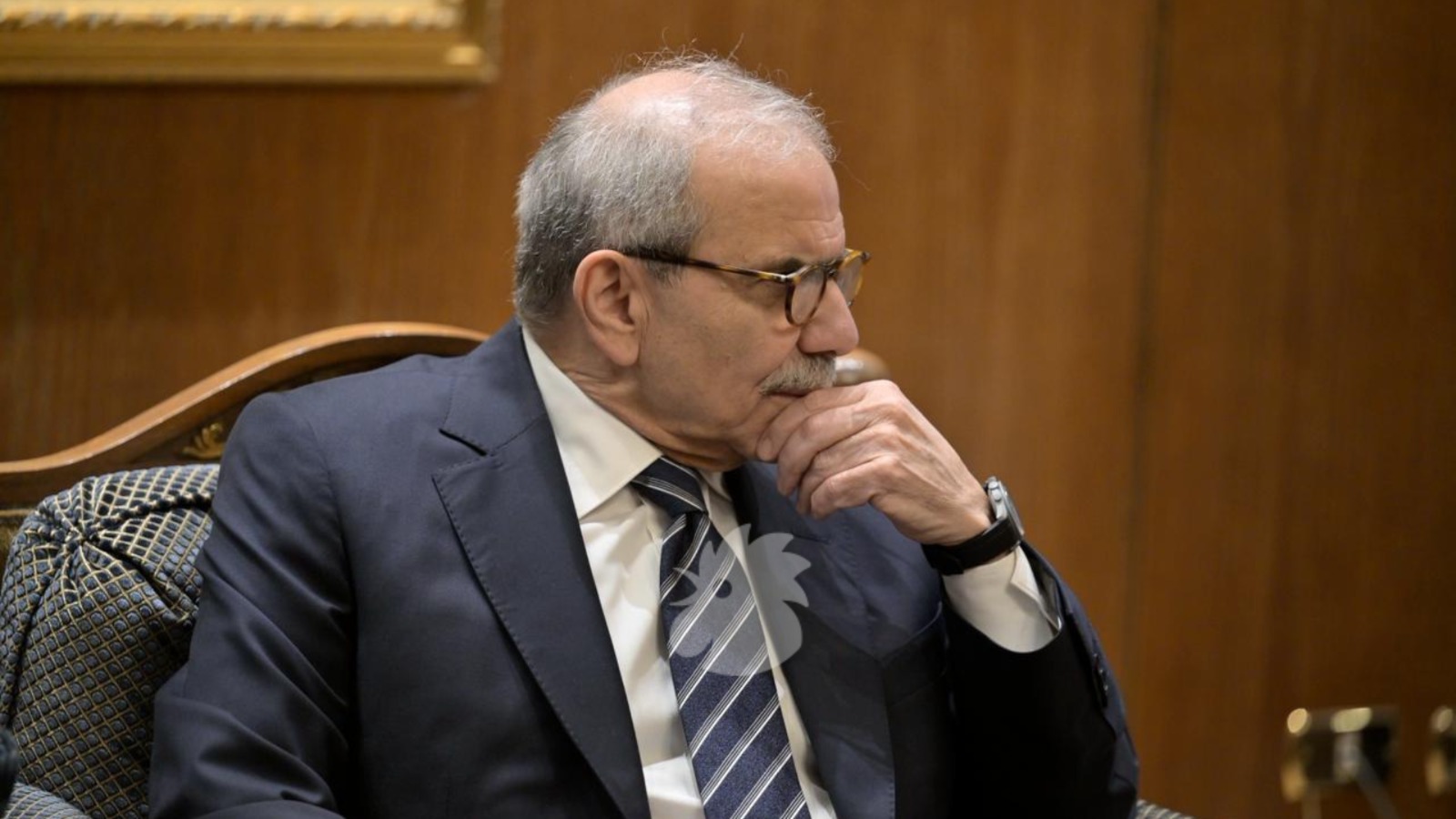
Aoun: No One Negotiates on Behalf of Lebanon
At the start of the session, President Joseph Aoun said: "We are tired of statements of condemnation, and we were hoping that the ceasefire would include Lebanon, but unfortunately you have heard the statements issued on this matter." He added, "In the communications we conduct with a number of Lebanon's friends around the world, we demand that Lebanon be given a chance, as was given to the United States and Iran, to implement a ceasefire and proceed to negotiations, and to pressure for Lebanon to be part of the ceasefire agreement so that we can move forward in negotiations."
He emphasized, "We are a state with our own entity and presence, and the state is the one that negotiates. We do not accept that anyone negotiates on our behalf. We have the ability and the means to negotiate ourselves, and therefore we do not want anyone to negotiate for us. This is something we will not accept."
Commenting on yesterday’s Israeli massacres, Aoun said: "Following yesterday’s Israeli aggression, we can only highly appreciate the solidarity of the various ministries and their joint work in managing the aftermath of this aggression. This has been a tremendous effort to reduce the suffering of our people in every area, whether in medical care, evacuation, rescue operations, clearing rubble, or other urgent matters. This includes the Ministries of Health, Social Affairs, Public Works, and National Defense with the army, the Ministry of Interior with the security forces, along with the fire brigade, civil defense, and the Red Cross, some of whom sacrificed their lives while performing this duty, in addition to international organizations and Lebanon’s friends who stand with us to ease this suffering."
Salam
For his part, Prime Minister Nawaf Salam spoke to journalists after the session, announcing, "We are taking urgent action to file a complaint with the United Nations Security Council regarding the escalation of Israeli attacks on Lebanon, which expanded yesterday, Wednesday, April 8, particularly in the capital Beirut, resulting in a large number of civilian casualties."
He added, "This dangerous escalation comes in defiance of all international and regional efforts to stop the war in the region, disregarding the principles of international law and international humanitarian law, and even going so far as to violate them."
Salam also stated, "According to the National Accord Document known as the Taif Agreement, and relevant Council of Ministers’ decisions, and in order to preserve the safety and security of citizens and their property, the army and security forces are requested to immediately reinforce full state control over the Beirut Governorate, limit weapons there to legitimate forces alone, strictly enforce the laws, take all necessary measures against violators, and refer them to the competent judiciary."
What does limiting weapons under the Taif Agreement mean?
The Taif Agreement, which ended the Lebanese Civil War, clearly establishes the principle that weapons should be in the hands of the Lebanese state as part of extending its sovereignty over all its territory. Key provisions include:
- "Dissolution of all Lebanese and non-Lebanese militias and the handover of their weapons to the Lebanese state within six months following the approval of the National Accord Document, the election of the president, and the formation of the National Unity Government."
The agreement also emphasizes reinforcing state authority:
"Extending the authority of the Lebanese state over all Lebanese territory through its own forces."
This text serves as the fundamental constitutional and political reference for any decision related to limiting weapons, including the measures currently proposed in Beirut.