

Starmer visits Gulf to strengthen alliances and secure Strait of Hormuz
British Prime Minister pledges support to Saudi Arabia and the UAE, emphasizing the importance of a stable Middle East and open global trade routes.


 Messenger
 Whatsapp
 Threads
 Email
Email
 Print
Print
 X
X
 Facebook
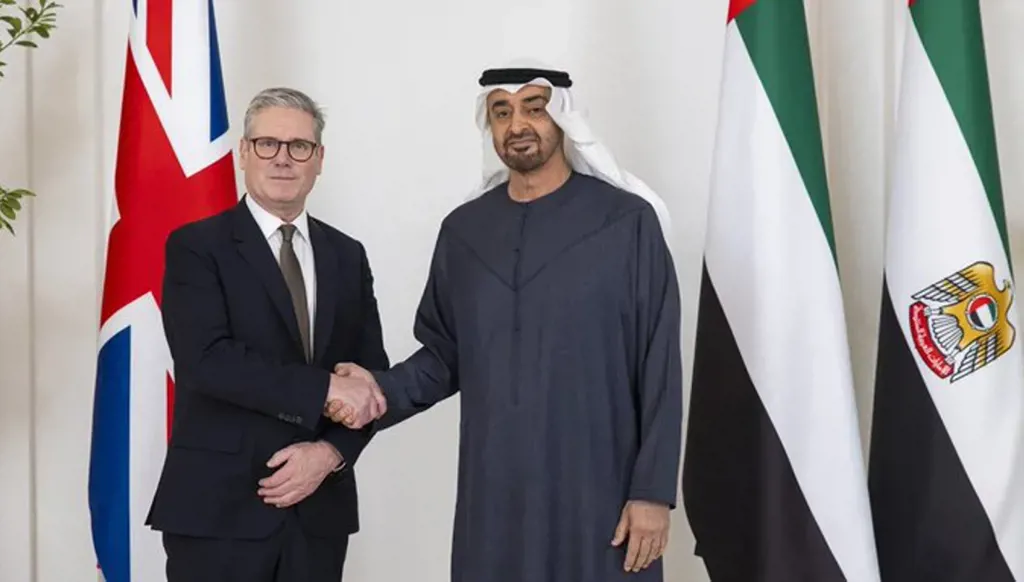


British Prime Minister Keir Starmer arrived in Abu Dhabi today, Thursday, marking the second stop of his Gulf tour after visiting Saudi Arabia yesterday. He was received by Khaldoon Khalifa Al Mubarak, Chairman of the Executive Affairs Authority in the UAE, and is expected to hold talks with UAE President Mohammed bin Zayed Al Nahyan.
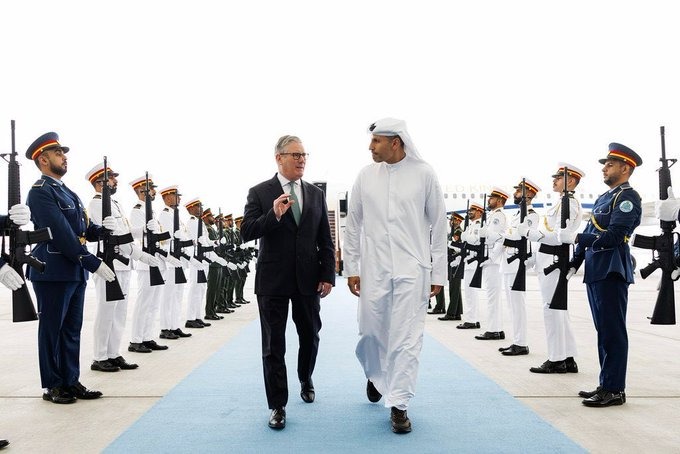
Prime Minister Starmer met with Saudi Crown Prince Mohammed bin Salman in Riyadh, where they discussed developments in the Middle East conflict and the importance of reopening the Strait of Hormuz.
A British statement said that Starmer thanked Saudi Arabia for providing protection to British citizens and pledged to support it as a reliable ally, including through the deployment of the Sky Sabre air defense system. The two sides also discussed deepening cooperation in defense industries and expanding trade and investment relations.
Meanwhile, the UAE announced yesterday, Wednesday, that it is seeking further clarification on mechanisms to prevent future attacks from Iran and on reopening the Strait of Hormuz. The UAE Ministry of Foreign Affairs called for a firm stance that includes holding Iran accountable, compensating for damages, and adopting a comprehensive approach to address Iranian threats, coinciding with preparations for talks between the United States and Iran in Pakistan at the end of the week.
Starmer emphasized that a ceasefire between Washington and Tehran is an important step, but it requires intensive work to ensure its sustainability, with particular focus on the Strait of Hormuz due to its impact on the global economy.
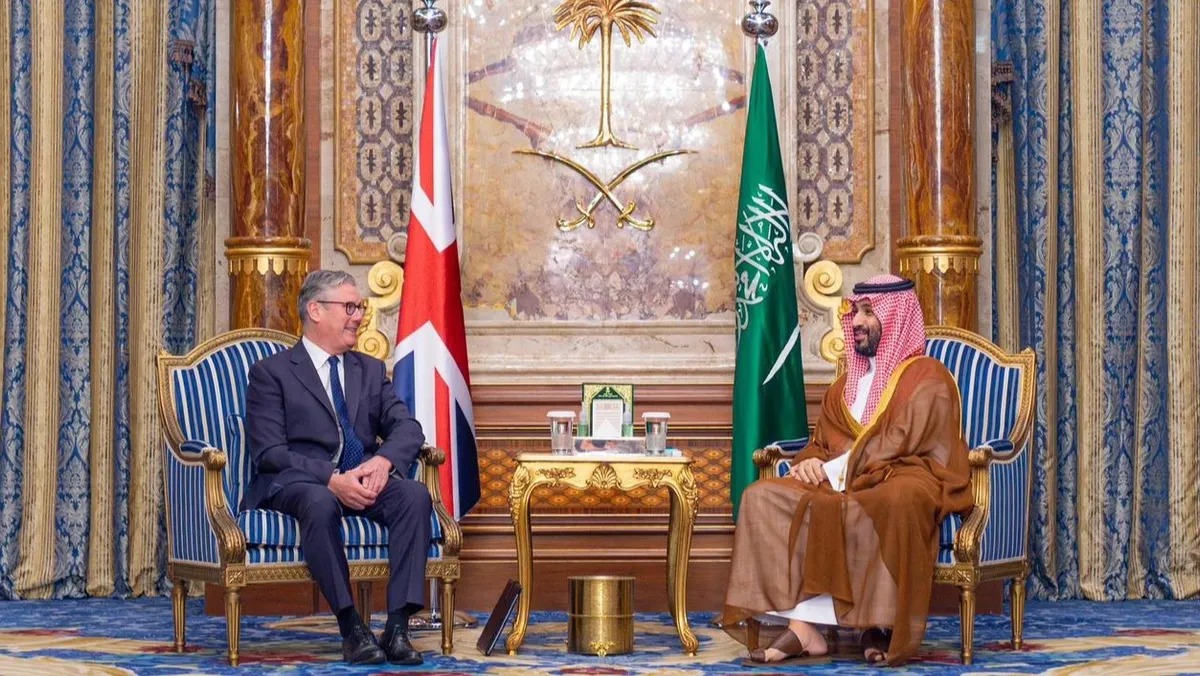
He referred to U.S. President Donald Trump’s criticism of his lack of support for strikes on Iran, emphasizing that Britain’s mission is to ensure the Strait remains open. British Foreign Secretary Yvette Cooper also revealed that her country led a meeting last week with more than 40 nations to discuss reopening the Strait.
During his visit to Saudi Arabia, Starmer addressed British soldiers at a military base, saying, “We now have a ceasefire, but as you know, there is still much work to be done to ensure this ceasefire becomes permanent and delivers the peace we all hope for.” He added, “There is also a lot of work that must be done regarding the Strait of Hormuz, which affects the entire world.”