

Transatlantic strains deepen as Iran war reshapes US Europe ties


 Messenger
 Whatsapp
 Threads
 Email
Email
 Print
Print
 X
X
 Facebook
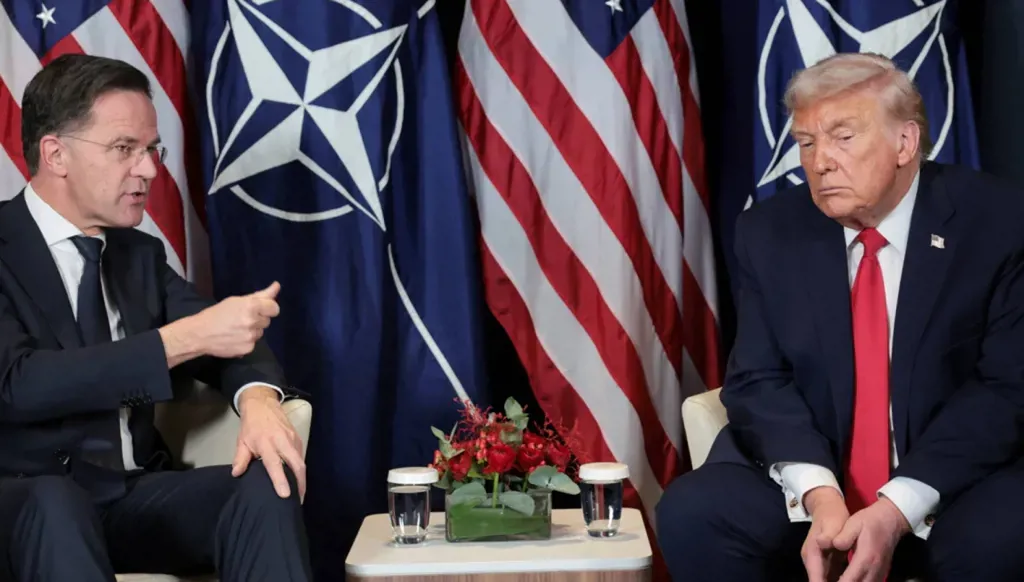


Relations between the United States and Europe have never been free of tension, but today they face one of their most sensitive tests since the end of the Cold War. The conflict linked to Iran has not only exposed temporary political disagreements, it has revealed a deep fracture in the foundations of the transatlantic partnership.
A risky venture
Since Donald Trump returned to the White House, relations with Europe have seemed less like a stable alliance and more like the management of ongoing disputes. Although previous crises related to Ukraine and trade were contained, the war involving Iran has placed both sides before a new reality. For many European capitals, this war was not a strategic necessity but a risky venture, a decision taken without genuine consultation with allies.
This divergence was quickly reflected in concrete positions. Several European countries refused to grant Washington military facilitation, including overflights across the Strait of Hormuz, the use of military bases, or participation in field operations. This refusal was not merely technical but carried a clear political message that Europe does not want to engage in a conflict in which it sees no direct interest.
The American response did not take long. Trump escalated his rhetoric, threatening to withdraw from NATO and describing the alliance as a paper tiger. Although such threats face legal constraints within the United States, they reflect a shift in Washington’s view of its allies, from strategic partners to parties that must bear greater costs or face pressure.
A difficult path
What initially appeared as a threat from Washington has, in Europe, turned into an incentive to rethink. These developments have revived long standing calls to build European strategic autonomy, reducing reliance on the United States in both military and technological fields. However, this path does not seem easy. The relationship across the Atlantic is not just a military alliance but a complex network that extends into the economy, technology, and energy.
Europe still depends on American capabilities in critical areas such as military communications and strategic transport. Estimates suggest that building European alternatives could take more than a decade. In the technological sphere, the challenge is even greater, as achieving real independence requires massive investment and infrastructure that could take many years to develop.
During this transitional phase, Europe appears more vulnerable to American pressure, especially given Washington’s willingness to use unconventional tools to strengthen its influence. At the same time, this pressure could prove counterproductive, reinforcing Europe’s shift toward greater autonomy.
These developments do not signal the end of the transatlantic alliance, but they clearly point to its transformation. Relations between the United States and Europe are moving toward a colder and more flexible arrangement, based more on mutual interests than on traditional commitments.
In a rapidly changing world, the question is no longer whether Europe will distance itself from the United States, but how far it can go without losing its strategic balance.
Disclaimer: The opinions expressed by the writers are their own and do not necessarily represent the views of Annahar.