Netanyahu urges against ceasefire as U.S.-Iran talks intensify
Amid fears of Iran’s nuclear ambitions and strategic power, Israeli and American leaders weigh war and diplomacy, with every move shaping the Middle East’s future.
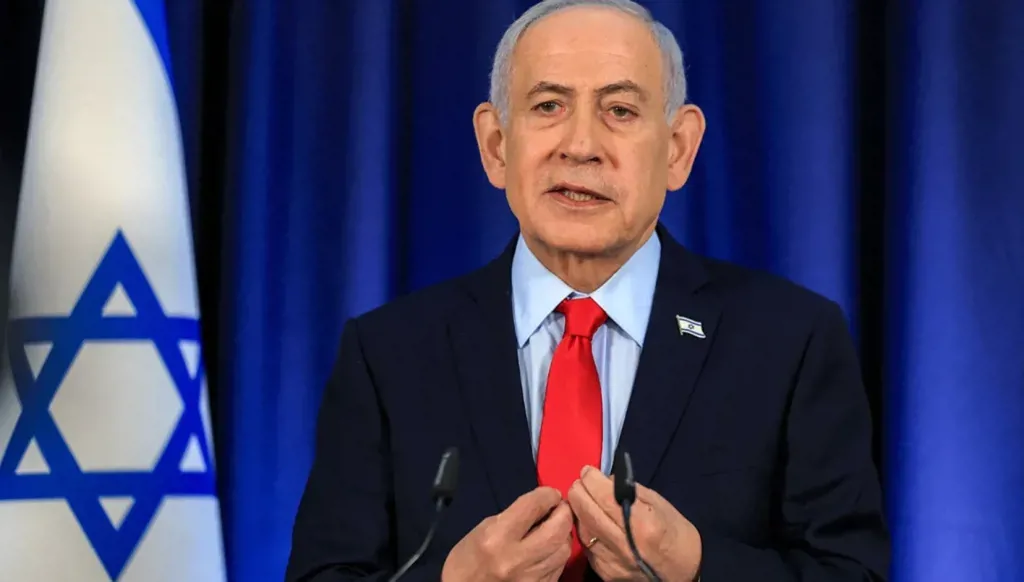
Israeli Prime Minister Benjamin Netanyahu does not want a ceasefire agreement between Iran and the United States. He expressed concerns about the risks associated with this step during a call before the deadline set by U.S. President Donald Trump “prior to destroying Iran,” urging not to cease fire currently, according to an Israeli official revealed to Axios.
According to the official, Trump clarified to Netanyahu that he would not abandon his demand that Iran hand over all its enriched uranium and agree not to resume enrichment.
Israeli concerns… and internal calculations
According to political analyst Lilach Ben David at Sihah Mekomit, Netanyahu, compared to Trump’s controversial policies, presents a more cohesive rhetoric but repeats the usual messages: the Iranian regime is “wicked” and seeks to destroy Israel, will soon acquire nuclear bombs, and even without them would launch an attack with ballistic missiles. He portrays himself as a benevolent savior for the Iranian people.
Ben David considered that perpetual wars are an effective tool for Netanyahu to address his declining popularity, taking advantage of the unique circumstances created by having an American president willing to engage in his venture.
However, Israeli affairs specialist Nehro Jamhour believes that the “real killing blow” to Netanyahu and his project would be the completion of a ceasefire agreement that completely ends the war between America and Iran, because it would not allow him to return to war again, and if he tried, he would be alone without a strong ally.
Jamhour told Annahar that removing Netanyahu from this equation would be a significant blow, as he would not find an American president with Trump’s specifications to embark on an adventure with him, especially amid strong American public opinion against the war.
Jamhour points out that Netanyahu knows any agreement would not lead to ending Iran’s nuclear project or dismantling its ballistic missile capabilities, and “the option of regime overthrow is no longer on the table, meaning political failure for him, facing an internal crisis, especially after waging two wars against Iran with American support.”
He concludes that “Netanyahu’s influence is still clear and significant, racing against time by intensifying and escalating targeting Iranian interests, possibly resorting to security operations, strategic assassinations, and sabotage. There is a shared database between him and Trump, and he realizes Trump is not serious about reaching an agreement, thus Israeli media talk is escalating about the failure of the negotiation track, and Israel is preparing for the post‑negotiation phase.”
Moreover, Trump and Netanyahu share internal conditions in their countries, whether in terms of electoral entitlements or popularity, while the Iranian issue that Netanyahu had long relied on “is starting to yield opposite results.”
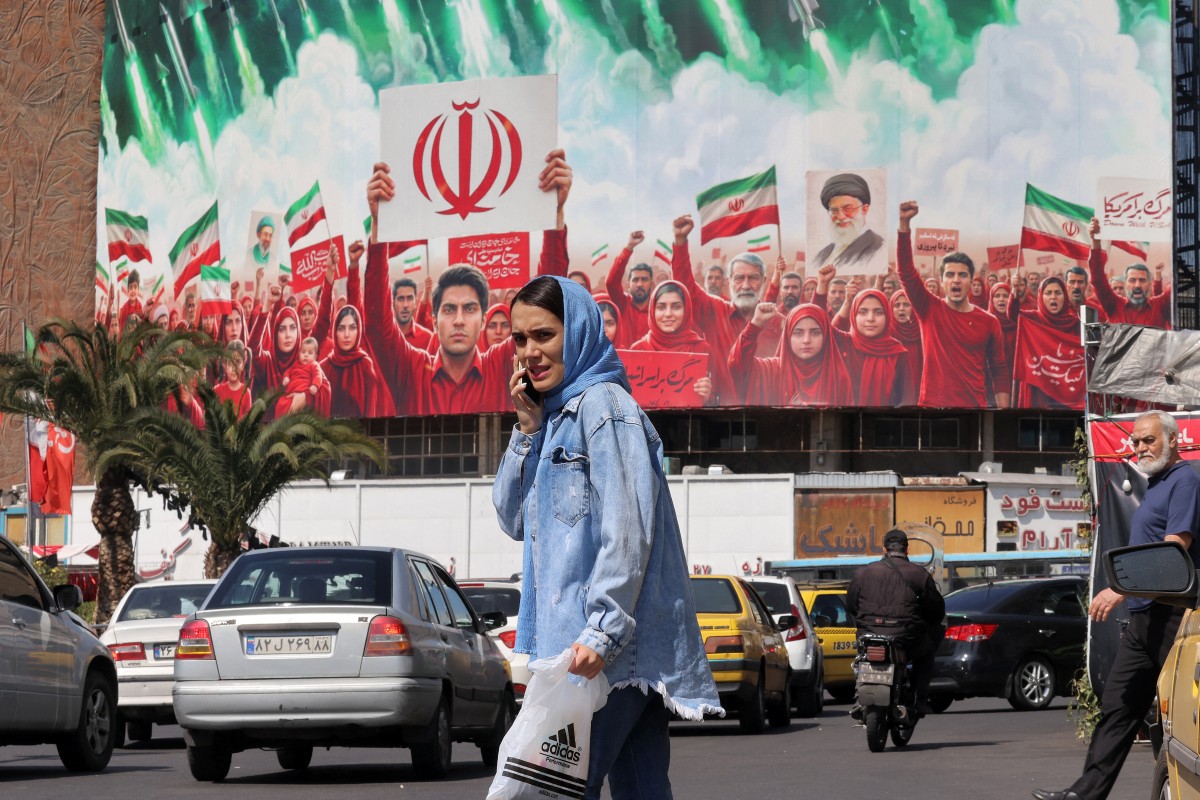
An Iranian lady crosses the road in front of a large political banner at Vali Asr Square in Tehran. (AFP)
Countdown… Between negotiation and destruction
Concurrently, Trump described the negotiations as “progressing and going well, conducted in good faith,” but warned that if no agreement is reached, all bridges and power stations in Iran would be destroyed.
He reiterated that the United States cannot allow Iran to possess nuclear weapons, claiming that a “change” had occurred in the Iranian regime and that it is different from before.
However, Tehran, which rejected mediators’ proposal for a 45-day temporary ceasefire, conveyed through Pakistan, remained committed to its demands: a complete and permanent end to the war in Iran and all axes of support, with guarantees not to repeat attacks. It expressed to mediators its concern that a temporary ceasefire might give the U.S. time to prepare for new attacks.
Iran also demanded, in exchange for opening the Strait of Hormuz, the establishment of a “new system” that would allow it to receive payments from oil tankers passing through this strategic passage — through which about one‑fifth of the world’s oil and gas consumption flows — and full compensation for war damages.
Conversely, two Israeli officials told CNN that Israel has agreed on an updated list of targets to strike infrastructure and energy sites in Iran in anticipation of negotiation failure.
One of the officials said Israel is “extremely skeptical” about the chances of reaching an agreement, emphasizing that any deal must include Iran handing over its entire stock of enriched uranium and permanently ceasing enrichment, amid very wide gaps in the negotiations.
American sources, according to Yedioth Ahronoth, indicated that Trump seemed “less optimistic” in closed talks and might move toward issuing final orders for an attack, with the possibility of changing his stance depending on developments in the negotiations.
The price of agreement… and war calculations
The newspaper Israel Hayom reported, based on political‑level estimates, that any agreement between Washington and Tehran is possible but would only happen if the United States showed readiness to make “major concessions.”
Israeli circles see this scenario as “not ideal,” because it could give Iran a chance to recover and weaken the likelihood of internal protests erupting.
However, estimates point out that the action plan established from the beginning — involving striking the regime, missile systems, and nuclear program, and then deepening the targeting of infrastructure — “still allows achieving war objectives so far.”
From an Israeli viewpoint, continuing the war at this stage is preferred to “push Iran to a weaker position”, ensuring that any subsequent agreement would come with better terms for the United States and Israel.
But the final decision, according to Israel Hayom, doesn’t lie with Tel Aviv, but with Washington, particularly the White House, where broader considerations beyond the Middle East are taken into account.



 Messenger
 Whatsapp
 Threads
 Email
Email
 Print
Print
 X
X
 Facebook