Why did the US and Iran replace the Omani mediator with the Pakistani mediator? This question arises with the emergence of Islamabad as a pivotal point in indirect communications between Washington and Tehran, and in garnering support from Egypt, Saudi Arabia, and Turkey for its diplomatic efforts.
To provide an answer to the question, it is necessary to highlight the strategic weight Pakistan enjoys as a Muslim nuclear state bordering Iran while maintaining defensive cooperation relations with Saudi Arabia, and aspiring to play a role in the Gulf and the Middle East similar to that of India in the region.
Facing a common enemy
Pakistan is a country that has established an economic partnership with China, which later extended to military cooperation. In May of last year, the Pakistani army used Chinese-made fighters and missiles in the four-day war with India. At the same time, Islamabad maintains military cooperation with the United States, particularly in intelligence sharing. In many ways, the U.S. and Pakistan face a common enemy in the ruling Taliban movement in Afghanistan, where border skirmishes nearly escalated into a full-scale war last month.
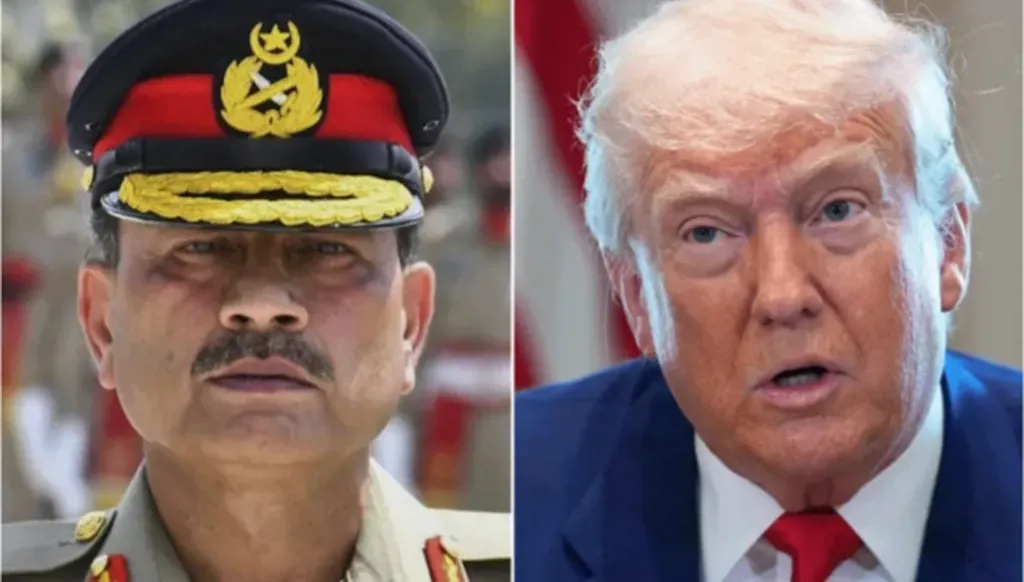
Additionally, the Pakistani army chief, Field Marshal Asim Munir, is admired by US President Donald Trump, who describes him as great and his favorite Field Marshal. Trump received him at the White House last February and discussed regional developments and the Iranian file with him.
Signaling towards Pakistan
Interestingly, the new Iranian Supreme Leader, Mojtaba Khamenei, in his first message after being chosen for this position following his father’s death, called for strengthening relations between Iran and Pakistan.
This was a signal of Tehran’s attempt to turn toward Pakistan to establish some kind of regional balance in the face of close relations between India and Israel.
Pakistan is now interested in assuming a larger role in any arrangements that may follow the war on Iran. Islamabad is certain to be affected by any change in Tehran and does not look favorably on the enhancement of economic and military relations between India and Israel.
Therefore, Pakistan considers ending the war a top priority for all regional countries. It is now working to relay messages between Washington and Tehran and making diligent efforts to persuade both parties to de-escalate and sit at a dialogue table in Islamabad. To facilitate diplomacy, Pakistan has asked the US to pressure Israel to remove Iranian Parliament Speaker Mohammad Bagher Ghalibaf and Foreign Minister Abbas Araghchi from the assassination target list, so the Pakistani side can communicate with them.
Pakistan’s efforts were reinforced by the quad meeting on Saturday and Sunday between the foreign ministers of Pakistan, Saudi Arabia, Egypt, and Turkey in Islamabad, where the necessity of stopping the war and preserving diplomatic options was affirmed.
Israeli officials do not hide their fear of what they describe as a "Sunni axis" in the region, bringing together Pakistan, Egypt, Saudi Arabia, and Turkey to counterbalance Israel, which today presents itself as the dominant regional power in the Middle East.
While Israeli Prime Minister Benjamin Netanyahu boasts that Israel's wars over the past three years have changed the Middle East and established new balances in which Israel holds the controlling power, any attempts by regional countries to create some kind of balance are viewed by Israel with suspicion—especially since Pakistan possesses a nuclear deterrent that gives it undeniable strategic weight, at a time when relations with Turkey are deteriorating and relations with Egypt remain lukewarm due to Israel's wars in the region. Meanwhile, Saudi Arabia links normalization with Israel to the establishment of a Palestinian state.
Disclaimer: The opinions expressed by the writers are their own and do not necessarily represent the views of Annahar.



 Messenger
 Whatsapp
 Threads
 Email
Email
 Print
Print
 X
X
 Facebook