

A world in transition
The war on Iran has exposed a global order in transition, where old rules no longer hold, power is shifting, and the future of international relations is uncertain.


 Messenger
 Whatsapp
 Threads
 Email
Email
 Print
Print
 X
X
 Facebook
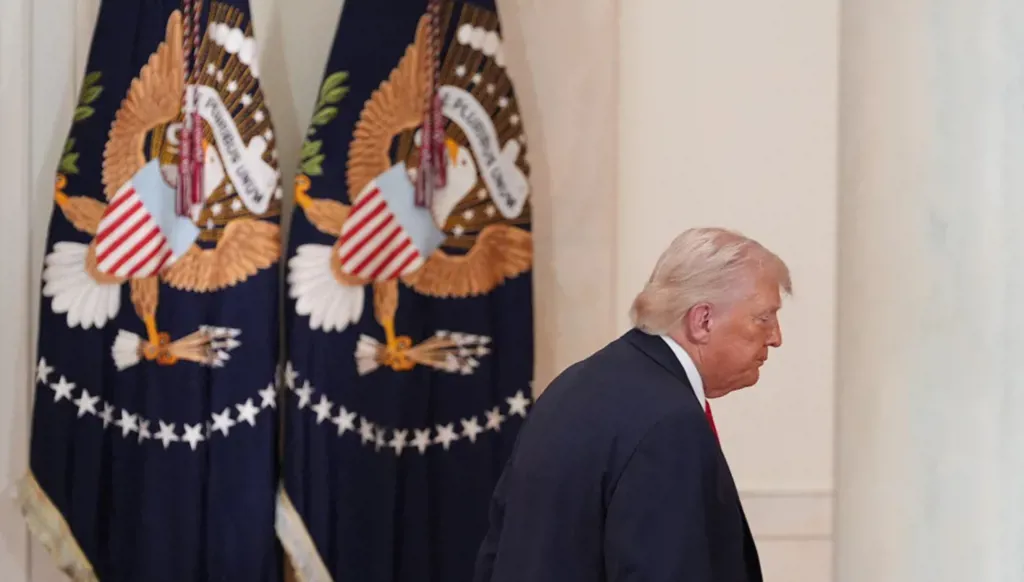


In moments of major transformation, events cease to be mere occurrences and become revelations. What was once discussed theoretically as the “disintegration of the international system” became a living reality with the outbreak of war on Iran at the end of February. This war was not just a military confrontation; it was a pivotal moment that redefined the world shaped after World War II.
This war did not emerge from nowhere, yet it erupted in a shocking manner. Extensive American and Israeli strikes targeted Iran’s military infrastructure, followed by unprecedented Iranian responses, including missiles and drones hitting bases and interests across the region and attacking its Gulf neighbors. The effects spread to one of the most critical routes of the global economy, the Strait of Hormuz. From that moment, discussions about a “post-Trump world” were no longer theoretical; they became directly tied to the decisions of the man in power.
What distinguishes this war is not only its scale but its nature. It represents the first real test of the international system under Trump’s return to the White House. More importantly, it revealed that this system no longer has the capacity to contain crises or even manage them according to clear rules.
After the war began, we did not witness an organized international coalition as in previous conflicts. Instead, the scene was fragmented. Europe was confused, trying to shield its economy from an energy shock. International institutions acted, but only reactively, not as actors capable of guiding the course. Even the United States’ traditional allies faced a new reality: Washington makes the decisions, and others are expected to adapt.
The war on Iran was not only a military confrontation but a global economic shock. Rising oil prices, disrupted supply chains, and increasing inflationary pressures were all direct consequences of the conflict turning into a threat to the global economic system. Suddenly, the world was reminded of its fragility: a crisis in a single strait has the power to reshape the entire global economy.
Fluidity
But more importantly, this war has revealed the nature of the current phase. We are no longer facing an international system led by a single superpower, nor a stable multipolar system. Instead, we are in a state of fluidity. The major powers exist, but they do not agree. Institutions are in place, but they are weak. The rules are known, but they are no longer binding.
In this context, three major trends overlap, and they are no longer just theoretical possibilities—they are realities taking shape before our eyes.
The first trend is the rise of competition among the major powers, but without clear constraints. The war on Iran was not merely a regional conflict; it is part of a broader reordering of power balances. The United States acts unilaterally, China observes and repositions itself, and Russia invests in the tensions to strengthen its position. The conflict is no longer between two camps but among multiple visions of a world without a clear center.
The second trend is the return of spheres of influence. What is happening in the Middle East today clearly reflects this shift. The major powers are not seeking a comprehensive global system; they aim to consolidate influence in specific regions. The problem is that these regions are no longer isolated—they overlap, making any conflict likely to spread and escalate.
The third trend, the most dangerous, is already visible in this war: organized chaos. It is not complete chaos but a state of consensus breakdown. Everyone is acting, but without a unifying framework. The war continues, yet no one has a clear vision of its end. Even political statements, including Trump’s own claim that the war is “nearing its end,” reflect an attempt to manage domestic and international anxiety rather than strategic certainty.
This war is not just an event; it is a test of the international system. The test has shown that the system is weaker than previously thought. It has not collapsed, but it can no longer impose itself.
Notably, this moment is redefining the role of the United States itself. Under Trump, Washington does not act as the leader of the international system but as a major power pursuing its direct interests. This shift changes not only American behavior but also the behavior of others toward it. Allies are recalculating, adversaries are testing boundaries, and middle powers are navigating between all parties.
The Middle East stands at the heart of this transformation. Not only is it a battleground, but it also serves as a model of the new world: relationships are pluralistic, there is no clear overarching framework, and there is increasing reliance on balancing rather than fixed alliances.
An Interregnum Between Systems
The question is no longer what comes after Trump, but what comes after the rules the world once thought were fixed.
The war on Iran did not create this reality, but it revealed it. It showed that the world is no longer governed by a single logic, a single set of rules, or even a single vision of the future.
We are not merely witnessing the end of a system; we are living through an interregnum between systems. A phase in which power is being redistributed, boundaries are being tested, and the very meaning of the “international system” is being redefined.
In this gray zone, between war and order, between power and chaos, the new world is taking shape, even if it has not yet declared itself.
Disclaimer: The opinions expressed by the writers are their own and do not necessarily represent the views of Annahar