

South of the Litani at Risk: Israel Builds Its Case Against the State
Growing Israeli distrust, supported by the US, threatens Lebanon’s sovereignty and complicates its future negotiations


 Messenger
 Whatsapp
 Threads
 Email
Email
 Print
Print
 X
X
 Facebook
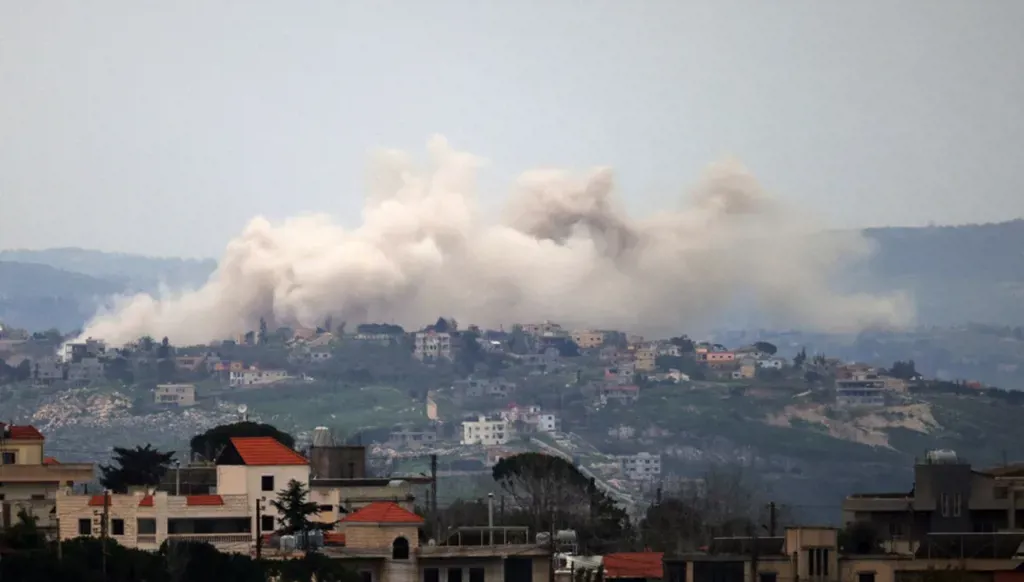


In recent days, the propaganda apparatus of the Israeli army has begun launching an attack on the role played by the Lebanese army south of the Litani River. This apparatus, which operates within the Israeli army spokesperson’s unit, has been focusing, whenever its forces seize a weapon, on what it calls the “failure” of the military institution in carrying out its assigned tasks and in achieving the declared objectives of the “Homeland Shield” plan.
While awaiting official clarifications from the Lebanese army command or the Ministry of Defense regarding these Israeli accusations, and to determine whether the quantities that appeared south of the Litani River were actually there or were brought, partially or entirely, from the north of the river with the start of the “Iran support war,” which Prime Minister Nawaf Salam described as “others’ war on our land,” it is necessary to understand the real background of this Israeli military propaganda campaign against the Lebanese army, as well as its dimensions and its implications for sovereignty, at least in the medium term.
Israel does not justify its attack on the Lebanese army by its current war against Hezbollah. In practice, Hezbollah has handed Lebanon to it on a silver platter, in retaliation for the assassination of the former Iranian supreme leader Ali Khamenei and as part of its involvement in defending the Islamic Republic of Iran, in direct coordination with the Iranian Revolutionary Guard.
This is where the danger of this campaign against the Lebanese army lies. In effect, it provides cover for turning the area south of the Litani River into something resembling Khan Younis in the Gaza Strip, with terrifying destruction, and it justifies its occupation, whether through military presence in some areas or firepower in others, and its declaration as an entirely depopulated security buffer zone, whose registered population, not the actual one, is about six hundred thousand people.
The Lebanese Army and the Lost Trust
Beyond that, according to intelligence reports received in Lebanon, Israel refuses at any stage to assign the Lebanese army the task of completing the disarmament of Hezbollah within a depth of forty kilometers from the Blue Line, the provisional border between the two countries as drawn by the United Nations in 2000. It insists that if an agreement is reached at a later stage for the Lebanese army to take on this task, it must be carried out under direct monitoring by the Israeli army, while the US army would oversee, in more distant areas, the completion of Hezbollah’s disarmament across the rest of Lebanon.
Israeli intelligence believes that the Lebanese army does not have the capability, even if the intention exists, to disarm Hezbollah. When it is compelled to do so, it coordinates its steps with the party’s leaders, which undermines the effectiveness of its actions.
Lebanon’s problem with these Israeli ambitions is that they enjoy unlimited support from the US administration. The visions of US Central Command chief Brad Cooper and Israeli Chief of Staff Eyal Zamir have aligned on this issue, agreeing that getting rid of Hezbollah should take priority as the joint war on Iran approaches its final stages.
Prime Minister Nawaf Salam has not succeeded in persuading Lebanese Army Commander General Rodolphe Haykal, after Hezbollah opened what it called a front in support of Iran, to take field measures that could restore international confidence in the military institution. Haykal made any army action conditional on securing a domestic political consensus, which angered both local and international circles.
According to Lebanese political sources closely connected to this file, this Israeli stance opposing any role for the Lebanese army, backed by the US administration, will have negative repercussions on Lebanon’s negotiating position when the time comes.
The Syria Scenario in Lebanon
There are also concerns that what is happening in the direct negotiations with Syria could be repeated in Lebanon. Israel has been obstructing any agreement that comes close to being reached, as it seeks to maintain full control over the areas it occupied in southern Syria after the fall of Bashar al-Assad’s regime, citing its lack of trust in the composition of the new Syrian army on the one hand, and in a system that it believes naturally sympathizes with Sunni extremism hostile to Israel and its existence.
Disclaimer: The opinions expressed by the writers are their own and do not necessarily represent the views of Annahar