

Lebanon expels Iran’s new ambassador over diplomatic violations
The decision was made in coordination with the President of the Republic and the Prime Minister. Nevertheless, it triggered a crisis within the authorities, prompting renewed focus on the justifications cited by the Lebanese Ministry of Foreign Affairs in its decision, according to information obtained by Annahar.


 Messenger
 Whatsapp
 Threads
 Email
Email
 Print
Print
 X
X
 Facebook
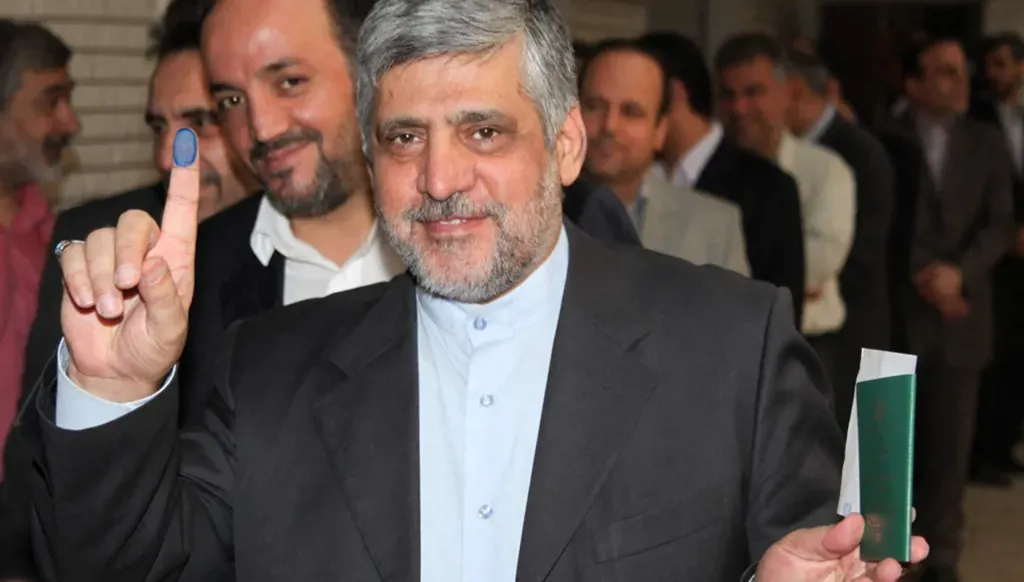


On March 24, 2026, the Ministry of Foreign Affairs and Expatriates delivered an official written diplomatic note to the Embassy of the Islamic Republic of Iran in Beirut, represented by Iranian Chargé d’Affaires Tawfiq Samadi Khoshkho. The note included the withdrawal of approval for the newly appointed Iranian ambassador Mohammad Reza Sheibani and declared him persona non grata, based on Article Nine of the Vienna Convention on Diplomatic Relations. He was requested to leave Lebanese territory no later than Sunday, March 29.
The decision was made in coordination with the President of the Republic and the Prime Minister. Nevertheless, it triggered a crisis within the authorities, prompting renewed focus on the justifications cited by the Lebanese Ministry of Foreign Affairs in its decision, according to information obtained by Annahar.
First: Interference in Lebanon’s Internal Affairs
The Ministry monitored public statements made by Ambassador Sheibani, which it described as “exceeding the limits of the diplomatic role defined in Article Three of the Vienna Convention, which restricts the tasks of diplomatic missions to representation, negotiation, legitimate inquiry, and the promotion of bilateral relations.” The Ministry considered his statements “a blatant interference in Lebanon’s sovereign affairs and an unacceptable assessment of the decisions of the Lebanese state in managing its internal affairs.”
Second: Coordination with Hezbollah Against Government Decisions
In its note, the Ministry of Foreign Affairs referred to the Iranian ambassador’s statement that he “coordinates with the leadership of Hezbollah,” which the Ministry regarded as a clear violation of the principle of non-interference enshrined in the Vienna Convention. This position carries additional legal and political weight in light of the Lebanese government’s decision on March 2, 2026, classifying Hezbollah’s security and military activities as prohibited. In stark contradiction with his diplomatic obligations, the ambassador also described Hezbollah’s rocket launches as “excellent performance and a surprise for the enemy.”
Third: Linking Iran and Lebanon
The appointed Iranian ambassador explicitly stated that his country “will make every effort to link any ceasefire agreement to a similar agreement in Lebanon,” which the Ministry considered direct interference in Lebanese sovereign affairs and a breach of the country’s independent decision-making regarding matters of peace and war.
Fourth: Partisan Bias
The ambassador concluded his controversial statements by warning against “distorting the image of the resistance and attempting to undermine its legitimacy,” which the Ministry viewed as a highly serious statement. It positioned the Iranian diplomatic mission as taking sides with a particular Lebanese party against the decisions of the accrediting state, contrary to the essence of diplomatic duty.
Fifth: Double Violation
Furthermore, the appointed ambassador Mohammad Reza Sheibani had not yet submitted his credentials to the Minister of Foreign Affairs and Expatriates or to the President of the Republic, which legally means he is not authorized to carry out official duties under the provisions of the convention.
The Ministry regarded this as a double violation: a procedural violation for engaging in diplomatic activity before submitting credentials, and a substantive violation in the nature of the activity itself.
Sixth: Breach of Official Obligations by the Embassy
Finally, the Iranian embassy has refrained—and continues to refrain—from providing an official and clear response to the questions posed by the Secretary-General of the Ministry of Foreign Affairs, Ambassador Abdel Sattar Issa, to the Chargé d’Affaires when summoned to the Ministry on March 13, 2026. A written response was requested within 24 hours.
This behavior is considered inappropriate and inconsistent with standard diplomatic conduct. The questions the Iranian embassy was expected to answer concerned whether it was using diplomatic immunities and privileges for activities that violate Lebanese laws and public order, such as managing and supporting Lebanese parties or groups that do not comply with state decisions, or bringing members of the Iranian Revolutionary Guard under diplomatic or technical cover to carry out activities threatening Lebanon’s national security.