

The price of unilateral war: Iraq’s political and security challenges
Despite the complexities of the Iraqi political scene and the state of division, moving toward participation in the ongoing asymmetric war by semiofficial actors without going through the constitutional process may indicate that Baghdad is facing decisive moments...


 Messenger
 Whatsapp
 Threads
 Email
Email
 Print
Print
 X
X
 Facebook
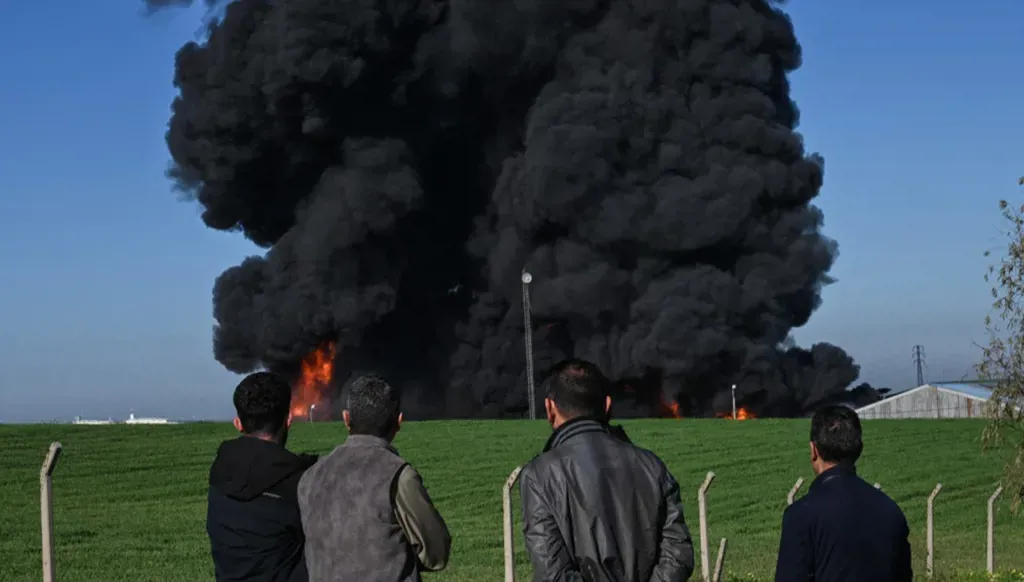


In Iraq, worn down by years of war, the debate has returned over who has the monopoly and the legitimacy to decide on entering a war. This comes after the outbreak of the US-Iranian confrontation on February 28, and the announcement by Iraqi armed factions that they were opening the Iraqi front and adopting it as a support geography and a theater of attrition, as well as activating the “unity of arenas.” This was considered an official declaration by these groups that they were entering the war as a party, without referring to official or constitutional mechanisms.
The decision to go to war, whether defensive or offensive, is regarded as a fateful one that some countries take at certain moments, given its consequences at the political, economic, social, and cultural levels. This typically pushes decision makers in any country to study it in an exceptional way from all angles, to the extent that it reduces future risks and achieves the expected higher national interest. However, what happened in Iraq is that the decision was imposed on the state without any calculations by the armed groups, except those related to their ideological extension and their security and military alliance with Iran.
With this development on the Iraqi scene, a debate arises centered on who holds the authority to declare war and which body is responsible for it. Although the 2005 Constitution of the Republic of Iraq assigns this in Article 61 Ninth A to the jurisdiction of the Council of Representatives, requiring its approval for declaring a state of war based on a joint request from the President of the Republic and the Prime Minister, this did not happen. This is especially the case as the armed wing within the ruling Coordination Framework in Iraq began military operations targeting US assets in Iraq, the Gulf states, Jordan, and Syria, despite the government of the outgoing Prime Minister Mohammed Shia al Sudani announcing that it would prevent any expansion of the arenas of conflict or respond to any targeting, while also conducting parallel dialogues and contacts with armed groups to ensure there would be no further slide into deeper stages of war. The situation ended with a truce lasting several days, but it quickly collapsed as US strikes on Popular Mobilization Forces sites continued.
A unilateral declaration of war in Iraq carries high risk costs that go beyond merely violating the constitution, weakening the state, or undermining the rule of law. As pointed out by the President of the Supreme Judicial Council, Dr. Faiq Zidan, these risks include “the multiplicity of military decision making centers, which creates a state of chaos and instability, drags the country into internal or regional conflicts, increases the likelihood of armed clashes between different groups within society, and exposes the state to international isolation or sanctions due to actions that fall outside the law.”
In addition, the expansion of the war on Iraqi territory against Washington and neighboring Arab countries places the executive authority in a very difficult position towards the Trump administration, which has invoked the Strategic Framework Agreement and emphasized that Baghdad is a long standing ally, warning that the repeated strikes represent a shift from a state of friendship to one of hostility.
Moreover, the six-party statement issued by a group of Arab countries carries warning messages and diplomatic consequences that could lead to Iraq’s isolation in the Arab world if it fails to stop the state of war against them.
Despite the complexities of the Iraqi political scene and the state of division, moving toward participation in the ongoing asymmetric war by semiofficial actors without going through the constitutional process may indicate that Baghdad is facing decisive moments that will deepen the crisis for the current or future prime minister. Internally, this relates to his ability to regain control over the decision of war and to bring weapons outside the framework of the state under control, and externally, to his ability to rebuild Iraq’s foreign relations, which have been undermined by the unofficial decision to go to war.
Disclaimer: The opinions expressed by the writers are their own and do not necessarily represent the views of Annahar.