

Balance over breakdown: Russia and China’s strategy in the US–Iran confrontation
It seems that Russia and China are not seeking to resolve the conflict outright. Instead, they are focused on managing it. For them, the optimal outcome is for Iran to continue existing as a regional power capable of withstanding pressure without becoming a source of widespread chaos.


 Messenger
 Whatsapp
 Threads
 Email
Email
 Print
Print
 X
X
 Facebook
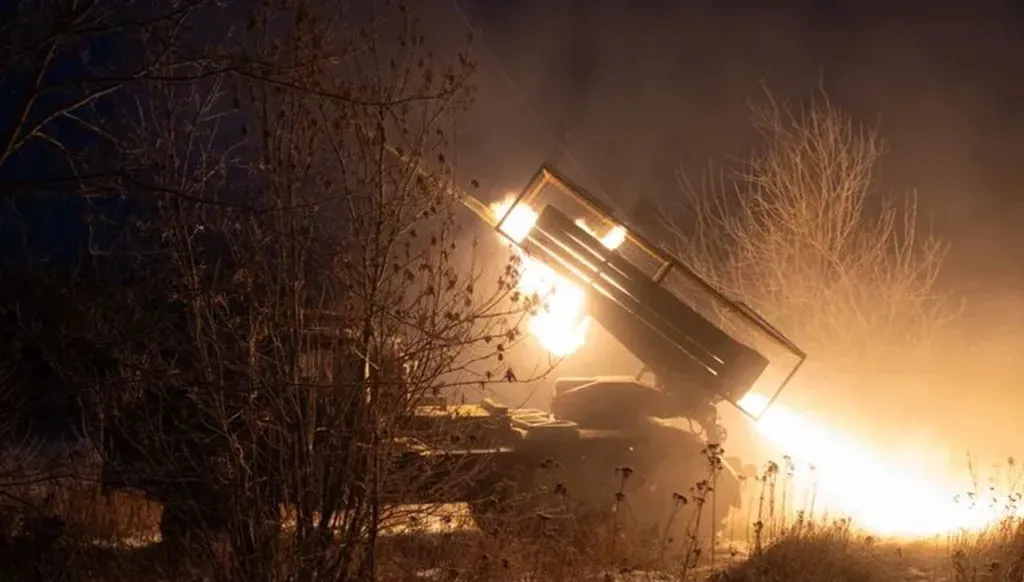


A month after the outbreak of the US-Israeli confrontation with Iran, the map of international positions appears more complex than public statements suggest. Away from the media noise, major powers are acting according to careful calculations aimed at balancing interests and avoiding a full-scale confrontation that could reshape the entire international system. In this context, the Russian and Chinese positions stand out as the most cautious and pragmatic, combining measured support for Tehran with a clear desire to contain escalation.
Russia, already engaged in an open confrontation with the West in Ukraine, sees the war against Iran as a dual strategic opportunity. On one hand, this conflict allows for further depletion of American resources, and on the other, it diverts some Western focus away from the Eastern European front. Therefore, it is not surprising that Moscow leans toward providing forms of indirect support to Tehran, especially in intelligence and technical areas, strengthening Iran’s ability to withstand pressure without placing Russia in direct confrontation with the United States.
This support does not reflect an ideological stance as much as it reflects a logic of self-interest. Moscow understands that a rapid fall of Iran could increase Washington’s influence and give it greater freedom of action in other matters, which would not serve Russian interests in the medium term. Conversely, Russia seeks to keep the conflict at a controllable level so that the depletion continues without escalating into a wide regional war.
New trade routes
This explains Moscow’s interest in securing logistical and economic alternatives for Iran, such as activating new trade routes that reduce Tehran’s reliance on paths monitored by Western naval forces. Using its political tools, especially in the UN Security Council, remains a core part of a strategy aimed at preventing international legitimacy for any broad military escalation against Iran.
China, by contrast, is taking a more cautious position, though no less significant. Beijing, the world’s largest energy importer, is deeply concerned about any disruption that could affect oil markets, particularly the Strait of Hormuz. Its top priority is therefore to maintain stable energy flows, even if that requires walking a delicate diplomatic line between Tehran and Washington.
No interest in escalation
China does not see military escalation as an option that serves its interests. On the contrary, it considers that any large-scale war could undermine its global economic agenda. For this reason, it tends to play the role of a quiet mediator, encouraging calm and applying unspoken pressure on all parties to prevent a major outbreak. At the same time, it seeks to maintain economic relations with Iran, including purchasing oil through alternative channels, giving the Iranian economy a vital breathing space.
However, like Russia, China’s support is not unlimited. Beijing refuses to bear the cost of a direct confrontation with the West over Iran and will not risk exposing its companies to broad sanctions that could harm its economy. Therefore, its stance is governed by a careful balance: enough support to prevent collapse and consistent pressure to avoid escalation.
Despite differing motivations, Russia and China converge on a key point: rejection of absolute US dominance. Both understand that a decisive weakening of Iran could open the door to greater pressure on them in the future. Their shared goal is therefore not an Iranian victory, but rather preventing a crushing defeat—achieving what can be called a strategic equilibrium that preserves the existing balance.
This convergence may also be reflected in forms of indirect support, whether through transferring technology or equipment under existing legal frameworks or through economic measures that mitigate the impact of sanctions. These actions, however, remain constrained by a clear ceiling: avoiding crossing red lines that could provoke a direct Western response.
Still, scenarios exist that could force Moscow and Beijing to reconsider their positions, such as a major Iranian escalation, for example, a prolonged closure of the Strait of Hormuz or moves toward even more sensitive options. In such cases, China might be forced to reduce its support to protect its economic interests, while Russia may reassess its stance depending on other developments on the international stage.
Any change in the relationship between Moscow and Washington, especially if linked to other issues like Ukraine, could also indirectly affect the level of Russian support for Iran. While these scenarios seem unlikely at present, they remain part of the strategic calculations that cannot be ignored.
In conclusion, it seems that Russia and China are not seeking to resolve the conflict outright. Instead, they are focused on managing it. For them, the optimal outcome is for Iran to continue existing as a regional power capable of withstanding pressure without becoming a source of widespread chaos. Between these extremes, the region faces a delicate phase, where major strategic calculations intersect with the complexities on the ground. The situation remains open to multiple possibilities, all centered on a single principle: managing the balance rather than breaking it.
Political researcher and consultant
Disclaimer: The opinions expressed by the writers are their own and do not necessarily represent the views of Annahar