

From Saint Peter to Pope Leo XIV: A journey through the papacy’s history



 Messenger
 Whatsapp
 Threads
 Email
Email
 Print
Print
 X
X
 Facebook
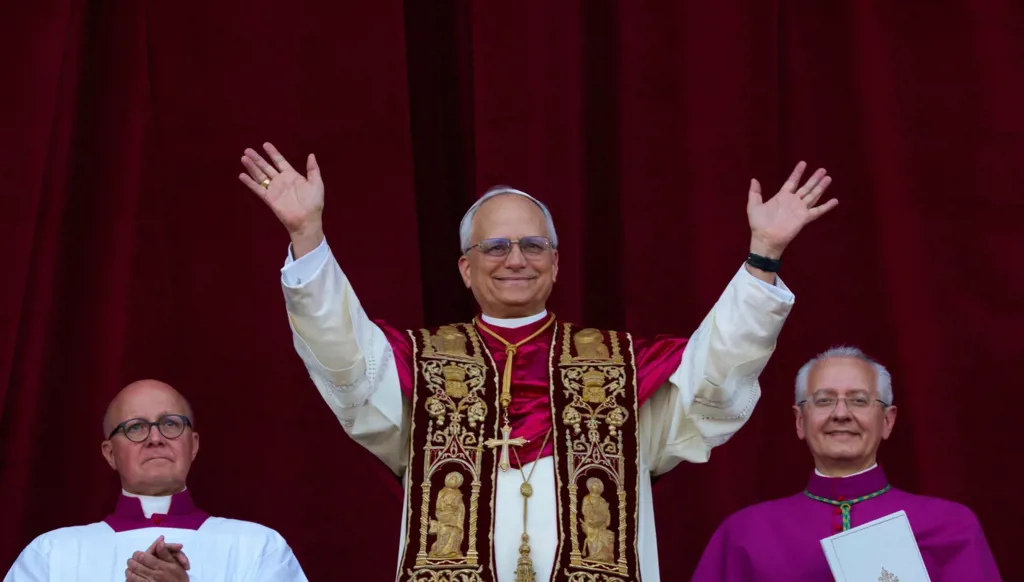


The history of the papacy in the Roman Catholic Church spans nearly two thousand years, making it one of the oldest continuous institutions in the world. As recorded in the New Testament, Jesus chose the Apostle Peter to be the first leader of the Church, saying, “You are the rock, and on this rock I will build my Church” (Matthew 16:18). After him, the bishops of Rome succeeded one another throughout the centuries in an unbroken line.
Today, more than 1.3 billion Catholics view the Pope as the head of the Church and their spiritual father. Since the time of Peter, 267 supreme pontiffs have occupied the Apostolic See. Throughout history, the papacy has played a central role in Western civilization and beyond, guiding believers and influencing the course of religion, culture, and politics.
The Early Beginnings (1st–5th Centuries)
The early popes led a persecuted Church, and many of them faced execution and oppression. The status of Christianity changed radically in 313 A.D. when Emperor Constantine issued the Edict of Milan, legalizing the religion and allowing the Pope to emerge publicly as a religious leader.
By the late fourth and fifth centuries, papal authority began to grow. Pope Leo I (440–461 A.D.) affirmed Rome’s primacy in spiritual affairs and played a remarkable diplomatic role. It is reported that he met Attila the Hun in 452 A.D. and succeeded in persuading him not to sack Rome. Leo’s leadership, including his contributions to shaping Christian doctrine, embodied the rise of papal influence.
In the sixth century, Pope Gregory I (590–604 A.D.), known as “Saint Gregory the Great,” brought about an even deeper transformation in the role of the papacy. He assumed civil administrative duties in Rome, organized relief efforts for the poor, and strengthened the Church’s missionary activity. By the Middle Ages, the idea of the Pope as the “Vicar of Christ on Earth” had begun to take root, along with Rome’s authority and prestige.
The Middle Ages (8th–15th Centuries)
The papacy became a powerful institution, firmly embedded in the power structure of Europe, combining spiritual influence with temporal authority. In 756 A.D., Pope Stephen II formed an alliance with the Frankish king Pepin the Short, who granted the papacy vast lands in central Italy. These lands later became known as the Papal States, which the popes ruled for eleven centuries until 1870.
The papacy reached its peak during the High Middle Ages (1000–1300 A.D.). Under Pope Innocent III (1198–1216 A.D.), the prestige and influence of the Church in European affairs rose to unprecedented levels. He asserted its supremacy over kings and emperors, influenced their elections, and launched Crusades.
Popes of that era were also patrons of architecture and learning. Great churches and European universities embodied the Church’s central role at the time.
However, the papacy also faced major challenges. Tensions with rulers led to conflicts such as the Investiture Controversy in the eleventh century. Internal turmoil followed, and between 1309 and 1377 the popes resided in Avignon under French influence. This was followed by the Great Western Schism (1378–1417), during which rival popes claimed authority, until unity was restored at the Council of Constance.
The conflict between Rome and Constantinople reached its climax in 1054 in what became known as the East–West Schism, which separated the Eastern Orthodox Church from communion with Rome.
Yet the period also witnessed notable moments of dialogue and openness, such as the meeting of Saint Francis of Assisi with the Sultan of Egypt, Al-Kamil, in 1219 during the Fifth Crusade.
Modern Transformations (16th–19th Centuries)
The Protestant Reformation in the sixteenth century posed a major challenge to papal authority, as large parts of Europe broke away from Rome. The Counter-Reformation followed, and the Council of Trent was convened to reform the Church and clarify its doctrines, while religious orders such as the Jesuits played a key role in spreading Catholicism across the world.
In the eighteenth and nineteenth centuries, political revolutions and the rise of nation-states reduced papal influence. With the unification of Italy in 1870, Rome was annexed to the Italian state, bringing an end to the Papal States.
However, the First Vatican Council (1869–1870) affirmed the doctrine of papal infallibility. The “Roman Question” was resolved in 1929 with the Lateran Treaty, which established Vatican City as the smallest independent state in the world.
The Papacy in the Contemporary World (20th–21st Centuries)
The modern papacy has focused on spiritual leadership and the pursuit of peace. After the two World Wars, it became a voice calling for human dignity. Pope John XXIII launched the Second Vatican Council (1962–1965), which modernized Church practices and strengthened openness to the world and to other religions.
Pope John Paul II expanded the global presence of the papacy, visiting more than one hundred countries and opening dialogue with Muslims and Jews. In 2001, he became the first pope to enter a mosque during his visit to Damascus.
His successors continued on the same path. Pope Benedict XVI visited the Sultan Ahmed Mosque in 2006. In 2013, Pope Francis became the first pope from the Americas and made dialogue with Muslims a central priority.
A Historic Meeting in Abu Dhabi
In February 2019, Pope Francis became the first pope to visit the Arabian Peninsula during an official visit to the United Arab Emirates. He celebrated a Mass attended by 135,000 Catholics and met the Grand Imam of Al-Azhar, Ahmed el-Tayeb. Together, they signed the “Document on Human Fraternity,” which called for peace and the rejection of violence in the name of religion.
World leaders praised the meeting. It was followed by the pope’s visit to Iraq in 2021, during which he met Grand Ayatollah Ali al-Sistani in Najaf.
The Abu Dhabi encounter crowned a long journey undertaken by the papacy to strengthen dialogue with the Islamic world. Despite the many transformations it has undergone over the centuries, the Catholic papacy continues to play a global spiritual role based on openness, the pursuit of peace, and building bridges with others. Today, Pope Leo continues this mission, striving for a more humane future for the Church and the world.