

Business Tech
11-12-2025 | 12:30
Non-U.S. companies: The silent economic giants steering global markets
Non-U.S. corporations now stand at the center of global economic growth, driving key sectors
such as energy, technology, healthcare, and finance and reshaping the balance of global
economic power.
such as energy, technology, healthcare, and finance and reshaping the balance of global
economic power.



 Messenger
 Whatsapp
 Threads
 Email
Email
 Print
Print
 X
X
 Facebook
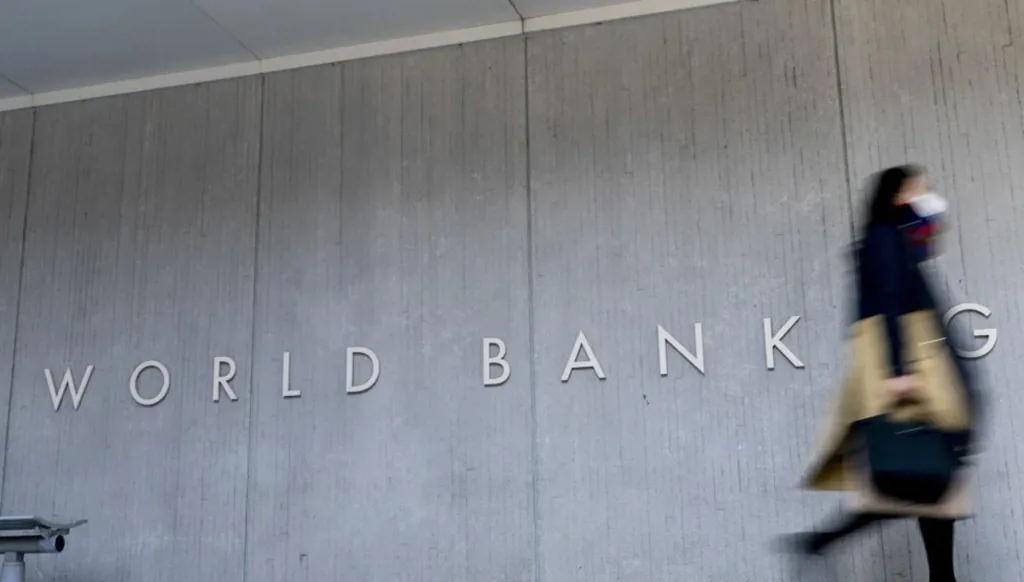
The World Bank building in Washington, Monday, April 5, 2021. (AP Photo/Andrew Harnik, File)


While American corporations often dominate headlines and shape much of the global economic
narrative, powerful forces beyond U.S. borders are quietly driving growth and reshaping
markets. From Asia to Europe to the Middle East, non-U.S. companies operate at the core of
critical sectors—including technology, energy, and healthcare—underscoring that the global
economy is far from a single-centered system.
In this context, Dr. Khaled Ramadan, economist and head of the International Center for
Strategic Studies in Cairo, told Annahar that non-American companies constitute a foundational
pillar of today’s global economy. He noted that they hold critical positions in sectors such as
energy, technology, and finance, adding that the combined market value of the world’s 2,000
largest companies stands at roughly $91.3 trillion.
Dr. Ramadan explained that Saudi Aramco tops the ranking of non-U.S. corporations, with a
market valuation of about $1.8 trillion. It is followed by Taiwan Semiconductor Manufacturing
Company (TSMC), valued at roughly $1 trillion and regarded as the world’s leading producer of
the electronic chips powering artificial intelligence.
From China, Tencent Holdings and Alibaba Group remain major global players, with market
values of around $600 billion and $550 billion respectively, driven by their dominance in
technology and e-commerce. In Europe, Denmark’s Novo Nordisk leads the healthcare sector
with a valuation approaching $500 billion, while France’s LVMH maintains its position at the
forefront of the luxury market with nearly $450 billion. South Korea’s Samsung Electronics also
stands out, contributing close to $400 billion to the global technology and electronics landscape.
Nestlé of Switzerland anchors the global consumer-goods sector with a market value of about
$300 billion, while Japan’s Toyota Motor remains a cornerstone of the automotive industry at
nearly $280 billion. In global finance, the Industrial and Commercial Bank of China (ICBC)
stands out with a valuation of roughly $250 billion.
According to Dr. Ramadan, these corporations are not just regional heavyweights:they are
engines of global economic expansion, particularly across Asia, Europe, and the Middle East. He
noted that Chinese giants such as Tencent, Alibaba, and ICBC alone account for more than 40%
of the total market value of non-U.S. companies, with strong concentrations in e-commerce and
digital finance. This ecosystem, he added, is a key factor supporting China’s projected 3.95%
growth in 2025.
In Asia, TSMC and Samsung Electronics dominate global chip manufacturing, helping power
growth in Taiwan and South Korea by an estimated 2–3%. In Europe, companies such as Novo
Nordisk, LVMH, and Nestlé play a central role in the healthcare and luxury-goods sectors,
supporting the European Union’s modest 0.9% economic expansion. In the Middle East, Aramco
continues to serve as an energy giant, reinforcing Saudi Arabia’s weight on the global economic
stage.
Dr. Ramadan noted that these corporations, despite facing pressures such as trade friction and
inflation, continue to drive innovation and sustainability across their industries. He added that the
sectors in which these companies operate collectively account for roughly 85% of global
GDP,underscoring their central role in shaping the world economy.
The technology and semiconductor sector—headed by giants such as TSMC, Samsung, and
Tencent—now represents roughly 30% of the total market value of non-U.S. companies. Its
momentum is powered by artificial intelligence, which is projected to inject $15.7 trillion into
the global economy by 2030, with annual growth rates estimated between 15% and 20%.
The energy sector, led by Aramco, accounts for about 20% of total value, balancing traditional
oil activity with an accelerating shift toward renewables and expected growth of around 2.3%.
Healthcare, spearheaded by Novo Nordisk, represents 15%, with anticipated growth of 8–10%.
E-commerce, anchored by Alibaba and Tencent, also constitutes 15%, expanding at roughly 12%
annually. Luxury and consumer goods—represented by LVMH and Nestlé—make up about
10%, while the financial sector led by ICBC contributes around 5%. The automotive industry,
with Toyota at the helm, accounts for a similar share.
narrative, powerful forces beyond U.S. borders are quietly driving growth and reshaping
markets. From Asia to Europe to the Middle East, non-U.S. companies operate at the core of
critical sectors—including technology, energy, and healthcare—underscoring that the global
economy is far from a single-centered system.
In this context, Dr. Khaled Ramadan, economist and head of the International Center for
Strategic Studies in Cairo, told Annahar that non-American companies constitute a foundational
pillar of today’s global economy. He noted that they hold critical positions in sectors such as
energy, technology, and finance, adding that the combined market value of the world’s 2,000
largest companies stands at roughly $91.3 trillion.
Dr. Ramadan explained that Saudi Aramco tops the ranking of non-U.S. corporations, with a
market valuation of about $1.8 trillion. It is followed by Taiwan Semiconductor Manufacturing
Company (TSMC), valued at roughly $1 trillion and regarded as the world’s leading producer of
the electronic chips powering artificial intelligence.
From China, Tencent Holdings and Alibaba Group remain major global players, with market
values of around $600 billion and $550 billion respectively, driven by their dominance in
technology and e-commerce. In Europe, Denmark’s Novo Nordisk leads the healthcare sector
with a valuation approaching $500 billion, while France’s LVMH maintains its position at the
forefront of the luxury market with nearly $450 billion. South Korea’s Samsung Electronics also
stands out, contributing close to $400 billion to the global technology and electronics landscape.
Nestlé of Switzerland anchors the global consumer-goods sector with a market value of about
$300 billion, while Japan’s Toyota Motor remains a cornerstone of the automotive industry at
nearly $280 billion. In global finance, the Industrial and Commercial Bank of China (ICBC)
stands out with a valuation of roughly $250 billion.
According to Dr. Ramadan, these corporations are not just regional heavyweights:they are
engines of global economic expansion, particularly across Asia, Europe, and the Middle East. He
noted that Chinese giants such as Tencent, Alibaba, and ICBC alone account for more than 40%
of the total market value of non-U.S. companies, with strong concentrations in e-commerce and
digital finance. This ecosystem, he added, is a key factor supporting China’s projected 3.95%
growth in 2025.
In Asia, TSMC and Samsung Electronics dominate global chip manufacturing, helping power
growth in Taiwan and South Korea by an estimated 2–3%. In Europe, companies such as Novo
Nordisk, LVMH, and Nestlé play a central role in the healthcare and luxury-goods sectors,
supporting the European Union’s modest 0.9% economic expansion. In the Middle East, Aramco
continues to serve as an energy giant, reinforcing Saudi Arabia’s weight on the global economic
stage.
Dr. Ramadan noted that these corporations, despite facing pressures such as trade friction and
inflation, continue to drive innovation and sustainability across their industries. He added that the
sectors in which these companies operate collectively account for roughly 85% of global
GDP,underscoring their central role in shaping the world economy.
The technology and semiconductor sector—headed by giants such as TSMC, Samsung, and
Tencent—now represents roughly 30% of the total market value of non-U.S. companies. Its
momentum is powered by artificial intelligence, which is projected to inject $15.7 trillion into
the global economy by 2030, with annual growth rates estimated between 15% and 20%.
The energy sector, led by Aramco, accounts for about 20% of total value, balancing traditional
oil activity with an accelerating shift toward renewables and expected growth of around 2.3%.
Healthcare, spearheaded by Novo Nordisk, represents 15%, with anticipated growth of 8–10%.
E-commerce, anchored by Alibaba and Tencent, also constitutes 15%, expanding at roughly 12%
annually. Luxury and consumer goods—represented by LVMH and Nestlé—make up about
10%, while the financial sector led by ICBC contributes around 5%. The automotive industry,
with Toyota at the helm, accounts for a similar share.