

Libya’s east-west divide on display at Munich Security Conference


 Messenger
 Whatsapp
 Threads
 Email
Email
 Print
Print
 X
X
 Facebook
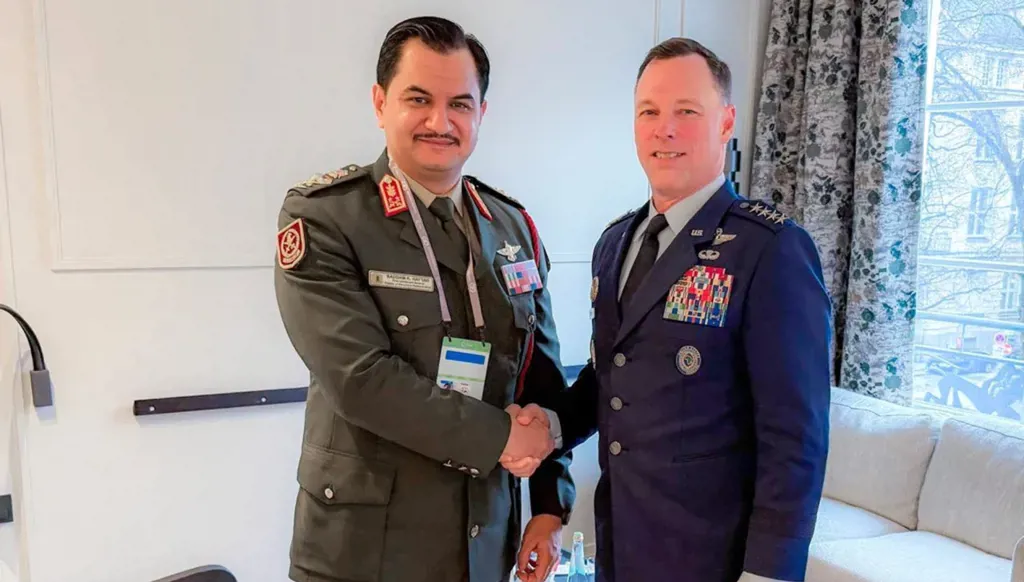


The participation of Libya in the Munich Security Conference highlighted the growing Western interest in its affairs amid rising regional tensions. The invitation of Saddam Haftar, Deputy Commander of the Libyan National Army, as the sole representative of a Libya grappling with institutional divisions, reflects an increased level of international trust in him. Notably absent was a representative from the internationally recognized government in western Libya, indicating a preference by the international community, and the United States, for the military force that controls most of Libyan territory.
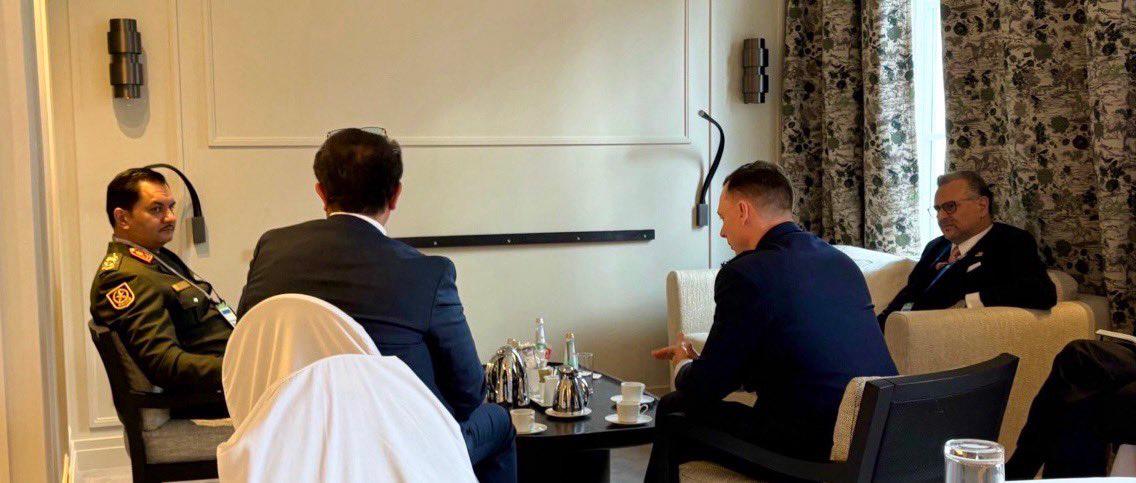
Saddam Haftar's participation in the international conference comes about two months before the first joint exercise between forces from both sides of Libya, as part of the "Flintlock 26" maneuvers organized by the United States in the coastal city of Sirte (central Libya). On the sidelines of the forum, Haftar held a series of security meetings, including one with Dagvin Anderson, Commander of the U.S. Africa Command (AFRICOM), partially attended by U.S. Presidential Adviser Massad Boulos. Boulos expressed his satisfaction with the meeting, describing it as "fruitful," and stating, "We discussed the importance of the upcoming Flintlock exercise and tangible steps to enhance military integration between east and west."
Political and Security Implications
Dr. Youssef Al-Farsi, a professor of political science, told Annahar that Libya's participation, after years of division and diplomatic regression, in one of the prominent international platforms to discuss security and foreign policy is "an attempt to reintegrate Libya into the international system, open direct channels with influential actors, and send a message that the Libyan issue remains present on the international agenda."
Al-Farsi says Haftar's participation carries multiple implications, most notably "enhancing the image of eastern Libya as an organized security actor with international recognition, and as the strong military and security representative to the international community. However, it also reflects the ongoing institutional division between east and west." He points out that the absence of a representative from the western camp "indicates a legitimacy crisis and the difficulty of unifying the Libyan discourse in international forums," adding that some international powers "deal pragmatically with the dominant parties on the ground, regardless of official recognitions."
Al-Farsi emphasizes that the Munich meetings focused on strategic issues such as counter-terrorism—particularly ISIS activities in southern Libya—border security, the impact of irregular migration on Europe, and securing oil installations, as oil is a key element for Libya's stability and the energy market. He notes that the restructuring and unification of the military institution were also discussed, but the success of international efforts hinges on "serious international pressure to unify the military institution amid common threats, and achieving political consensus between the two executive authorities."
The military and political reality
Libyan political analyst Omar Abu Asseida says Haftar's participation "establishes a new reality, as the leadership of the National Army has become the legitimate and most disciplined military representative of the state internationally, while the absence of western representatives reveals the weakness and fragmentation of its military system amid rival factions... The message is clear: those who control land, organization, and decisions sit at the table of international partnerships."
Abu Asseida notes that the meetings focused on regional security issues, most notably countering cross-border terrorism, the movement of terrorists between southern Libya and the African Sahel, securing the Mediterranean Sea, and combating illegal migration. Furthermore, the discussions addressed developing the National Army's capabilities, exchanging intelligence, and enhancing the efficiency of regular units as an alternative to militias, in addition to uniting the military institution as a fundamental prerequisite for political stability.
Challenges of military integration
However, Abu Asseida warns of the difficulties in achieving military integration between east and west, "as the National Army relies on an institution, leadership, and military doctrine, while western forces represent fragmented formations with conflicting loyalties." He stresses that resolving this issue depends on "dissolving militias rather than superficially integrating them, subjecting everyone to a unified general command, criminalizing uncontrolled arms, and cutting external funding, which requires a courageous political decision from the west before the east."