Egypt appoints new defense minister

North Africa 11-02-2026 | 15:46

Egypt appoints new defense minister

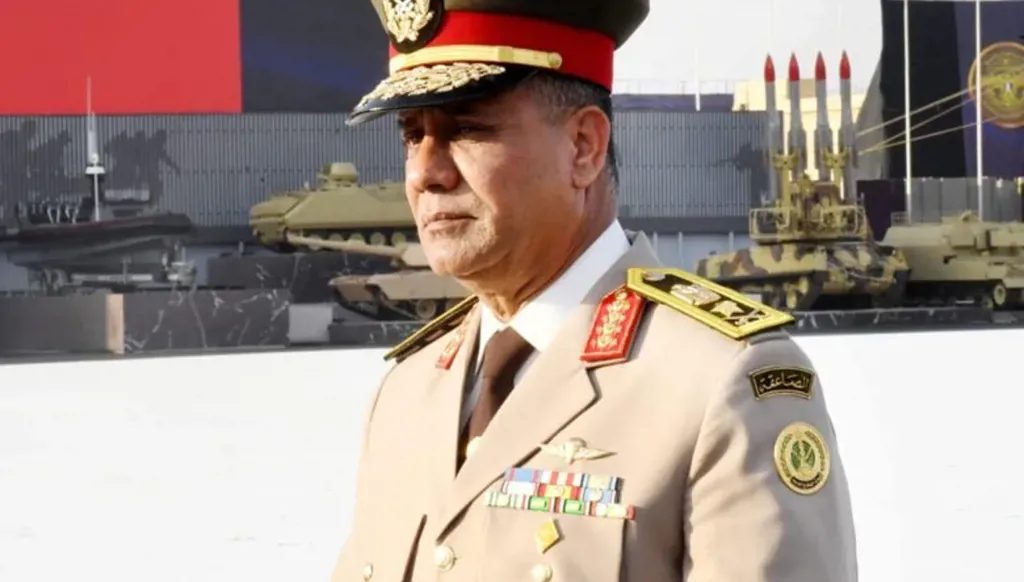
Lieutenant General Ashraf Salem Zaher takes charge of Egypt’s defense, blending modern military training with scientific innovation to shape the next generation of officers.
Egypt appoints new defense minister
Ashraf Zaher. (X)
Smaller Bigger

Egyptian President Abdel Fattah El-Sisi appointed Lieutenant General Ashraf Salem Zaher, Director of the Military Academy, as Minister of Defense on Wednesday, succeeding Lieutenant General Abdel Majeed Saqr.
Lieutenant General Ashraf Salem Zaher is a prominent Egyptian military leader who currently serves as Director of the Egyptian Military Academy. He was promoted to the rank of Lieutenant General in January 2023. He previously served as Director of the Military College and is regarded as one of the leaders responsible for developing training systems and admissions at Egypt’s military colleges.

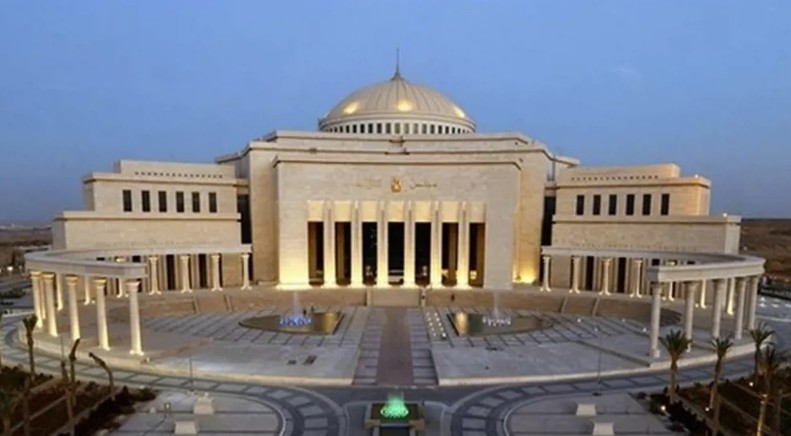
Egyptian Parliament. (X)

Salem Zaher focuses on updating curricula and developing trainees’ personalities within the academy during an intensive training period of approximately six months of full-time residence. He is also known for welcoming international military delegations, such as the Libyan Air Defense Chief of Staff, and for signing cooperation protocols with the Ministry of Higher Education and Scientific Research to support scientific research among youth.

He is also a key figure in the Egyptian Ministry of Defense’s efforts to advance military training in the New Republic. His name has become associated in modern military memory with the concept of “qualitative development.” Since assuming leadership of the Egyptian Military Academy and its various branches—including the military colleges and the naval, air, and air defense academies—he has gone beyond the limits of traditional physical and tactical training, driving a comprehensive “scientific revolution” that integrates modern civilian sciences with established military curricula.

Thanks to this vision, the academy under his leadership has evolved into an institution that awards graduates dual degrees, combining a bachelor’s degree in critical fields such as economics, politics, engineering, information systems, and military sciences. This approach has produced a generation of officers equipped with the intellectual and scientific tools needed to understand the complexities of the contemporary world and manage modern warfare technologies.

The philosophy of Lieutenant General Ashraf Salem Zaher represents a fundamental pillar in understanding the nature of the tasks that await him. He firmly believes that “the possession of power is the only guarantee for imposing peace,” a vision he has reiterated on many national occasions, emphasizing that a strong state safeguards its stability through the knowledge of its people and the strength of its army.

His organizational efficiency was evident in his supervision of the inauguration and development of the new headquarters of the Military Academy in the New Administrative Capital, designed to serve as a military educational beacon meeting global standards. He also played a key role in signing cooperation protocols with leading scientific institutions, such as Cairo University, to enhance the level of academic qualification within the armed forces.

Throughout his years of service, Lieutenant General Zaher has served as a trusted liaison between the academy and the political leadership. He has earned widespread appreciation for his hands-on and meticulous oversight of training plans, as well as for his commitment to shaping the character of the Egyptian officer to be qualified not only to defend the nation’s borders, but also to contribute consciously to building a comprehensive and strong state.

This coincides with the swearing-in of the new government, headed by Mostafa Madbouly.

The ministerial formation in Egypt was as follows:

  • Hussein Mohamed Ahmed Issa, Deputy Prime Minister for Economic Affairs

  • Lieutenant General Ashraf Salem Zaher Ali Mansour, Minister of Defense and Military Production

  • Khaled Atef Abdel Ghaffar Mohamed, Minister of Health and Population

  • Kamel Abdel Hadi Faraj El Wazir, Minister of Transport

  • Manal Awad Mikhail Abu Ghattas, Minister of Local Development and Environment

  • Badr Ahmed Mohamed Abdel Aty, Minister of Foreign Affairs, International Cooperation, and Egyptian Expatriates

  • Randa Ali Saleh Fouad El Menshawy, Minister of Housing, Utilities, and Urban Communities

  • Raafat Abdel Aziz Fahmy Mohamed Amin Hindi, Minister of Communications and Information Technology

  • Abdel Aziz Hassanein Mohamed Saad Konsowa, Minister of Higher Education and Scientific Research

  • Mohamed Farid Mohamed Saleh, Minister of Investment and Foreign Trade

  • Diaa Youssef Rashwan Ahmed, Minister of State for Media

  • Salah Mohamed Said Mahmoud Suleiman, Minister of State for Military Production

  • Hani Hanna Sedra Azar, Minister of Parliamentary Affairs

  • Mahmoud Mohamed Helmy Ahmed El Sherif, Minister of Justice

  • Hassan Raddad Ibrahim El Sayed, Minister of Labor

  • Jihan Mohamed Ibrahim Zaki, Minister of Culture

  • Ahmed Mohamed Tawfiq Rostom, Minister of Planning and Economic Development

  • Jawhar Nabil Jawhar Mohamed, Minister of Youth and Sports

  • Khaled Hashim Ali Maher, Minister of Industry

  • Mohamed Abu Bakr Saleh Fattah, Deputy Minister of Foreign Affairs, International Cooperation, and Egyptian Expatriates for African Affairs

  • Walid Abbas Abdel Qawi Othman, Deputy Minister of Housing, Utilities, and Urban Communities for Urban Communities

  • Ahmed Omran Ahmed Omran, Deputy Minister of Housing, Utilities, and Urban Communities for Utilities

  • Samar Mahmoud Abdel Wahid Ibrahim El Ahdal, Deputy Minister of Foreign Affairs, International Cooperation, and Egyptian Expatriates for International Cooperation