

Libya after the assassination of Saif al-Islam: Power, memory, and an unfinished investigation


 Messenger
 Whatsapp
 Threads
 Email
Email
 Print
Print
 X
X
 Facebook
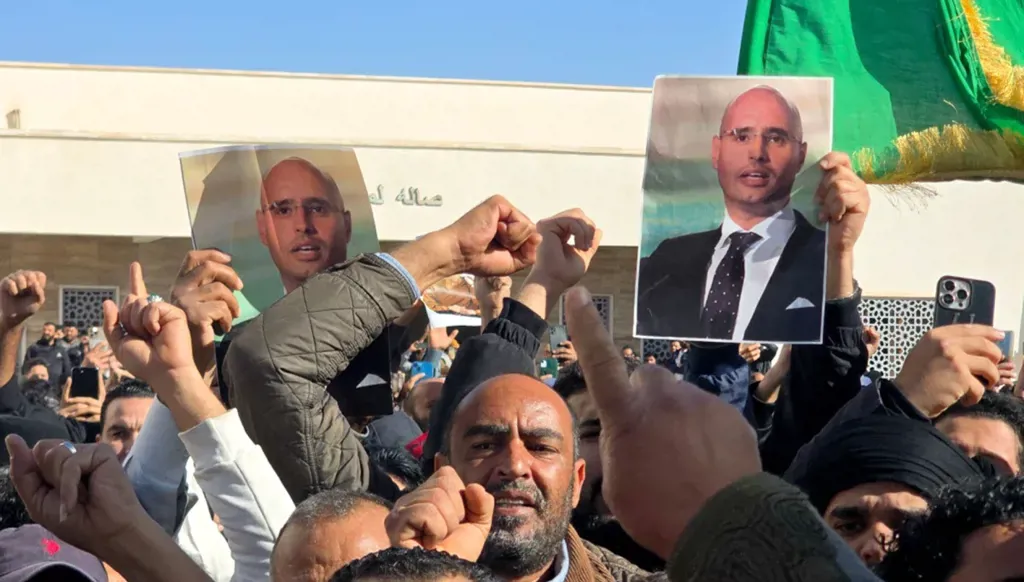


Libya has turned the page on Saif al-Islam Gaddafi, the son of the late president Muammar Gaddafi, but his shadow will apparently remain present in the Libyan scene for a long time, amid widespread doubts about the ability of the divided authorities to uncover the circumstances of his assassination and those involved.
The funeral as a political indicator
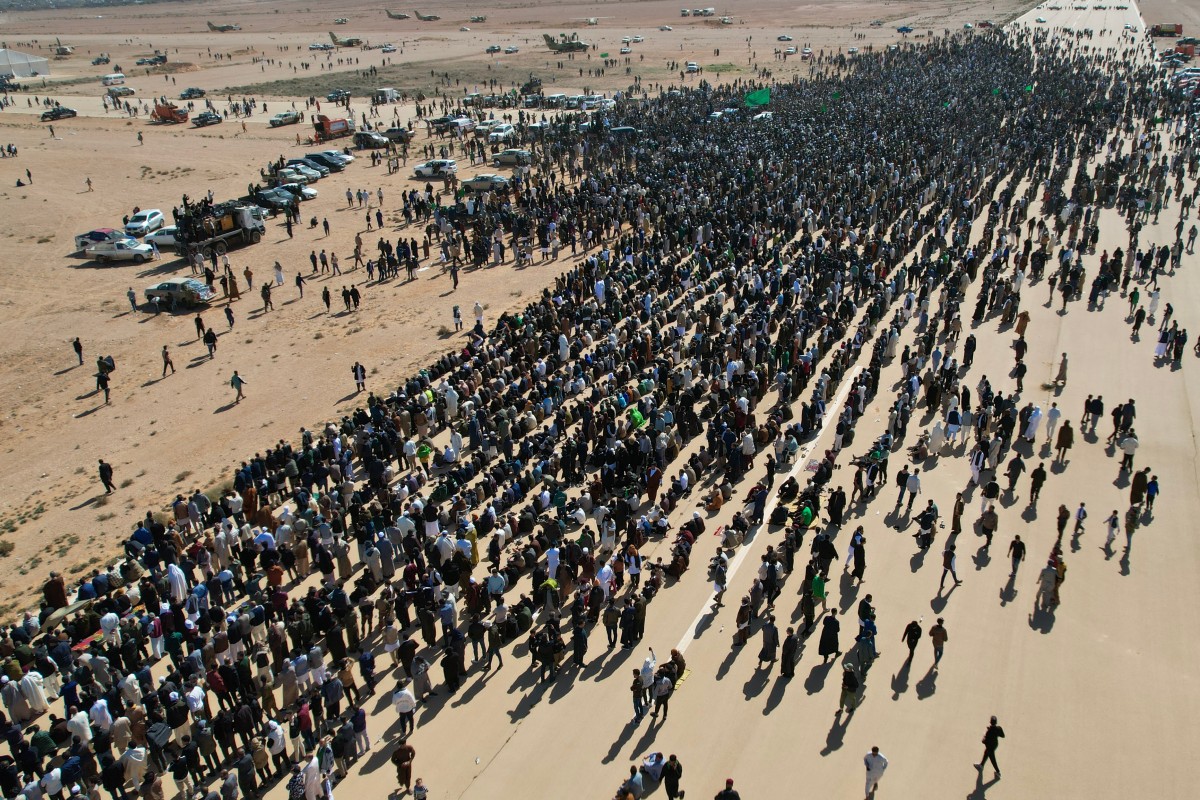
The funeral of Saif al-Islam, held in Bani Walid (a city in western Libya known as a stronghold of Gaddafi loyalists), was not merely a farewell ceremony but turned into a striking political and popular indicator. The large turnout and the chants accompanying it, calling for the disclosure of Gaddafi’s killers and clinging to his political project, once again highlighted the size of the support base he enjoyed and opened the door to questions about the fate of this current and who could inherit it.
Conversely, the absence of other members of the Gaddafi family, especially his siblings Aisha, Hannibal, and Saadi, reflected the continued complexity of the family issue and the fact that it has not been closed with the departure of the most influential and controversial son.
A complex investigation and questions beyond the perpetrators
At the same time, the ambiguity surrounding the circumstances of Saif al-Islam’s assassination continues to weigh heavily on the scene, with attention focused on the commander of the Abu Bakr al-Siddiq Brigade (a local armed group), Ajmi al-Atiri, who had been responsible for his protection for years, as a key witness to the final hours before his killing, especially after the revelation that security elements withdrew from the vicinity of his home shortly before the operation was carried out. The controversy surrounding al-Atiri’s attendance at the funeral itself reflected the sensitivity and division surrounding the case.
In this context, the stance of Saadi Gaddafi, who denied making any accusations and affirmed that he was awaiting the results of the investigation, coincided with the family’s call on its supporters to observe media silence, in an attempt to control the public narrative and leave the course of the case in the hands of the judiciary.
Law professor Fathi al-Shibli expresses confidence in the Libyan public prosecutor’s ability to reach those who carried out the crime, but he stresses, in his remarks to An-Nahar, that “there is a difference between uncovering the perpetrators of the assassination and reaching those who stand behind them. The real difficulty lies in identifying the party that gave the orders and carried out the operation, especially in light of political interference and indications that the crime has international dimensions.”
Al-Shibli, who heads the Libyan Parties Coalition, believes that the funeral, which witnessed a massive popular turnout from across the country, represents to a large extent a popular referendum on Saif al-Islam’s standing, stressing that “were it not for security conditions and long distances, the turnout would have been much larger.” He adds that “everyone knows, since the cancellation of the 2021 elections, that Saif al-Islam enjoyed broad popularity, whether among supporters of the September Revolution (the 1969 coup that brought Muammar Gaddafi to power) or even among some supporters of the February Revolution (the 2011 uprising), who have come to be convinced that the path events took did not lead to the building of a state, especially among segments of the younger generation.”
Al-Shibli believes that the emergence of a figure capable of succeeding Saif al-Islam and unifying his current behind them “would be extremely difficult,” as this would require a long time for a new leadership to take shape, and this path remains tied to political developments locally and internationally.
A “symbolic” void
In turn, political affairs researcher and adviser Alaa al-Din bin Othman believes that “the real challenge does not lie in opening the investigation, but in convincing the Libyan public of its results.”
Bin Othman tells Annahar that “the intensity of division and the loss of trust among political actors drive part of public opinion to pre-emptively doubt any outcomes, which makes international technical or oversight support a helpful factor in enhancing credibility.”
He adds that the large turnout at the funeral “reflects a reality that already exists in the Libyan street, but it cannot be read as a direct political vote.” He explains that “broad segments of Libyans are experiencing political and economic exhaustion after years of division, which has generated a sense of nostalgia for a period viewed as safer and more stable compared with the present,” noting that “this turnout expresses lost hope more than it reflects a fully formed political project.”
Bin Othman also stresses that “currents linked to specific figures always face a difficult test after the central figure is gone,” pointing out that Saif al-Islam “represented a meeting point for part of the former regime’s supporters, and that his absence opens a symbolic vacuum rather than an organizational one.” Therefore, any figure seeking to succeed him “will not be judged by name or affiliation, but by their ability to present a realistic project that engages with Libya after 2011.”