

Saddam Haftar expands regional outreach as Libya’s power struggle deepens


 Messenger
 Whatsapp
 Threads
 Email
Email
 Print
Print
 X
X
 Facebook
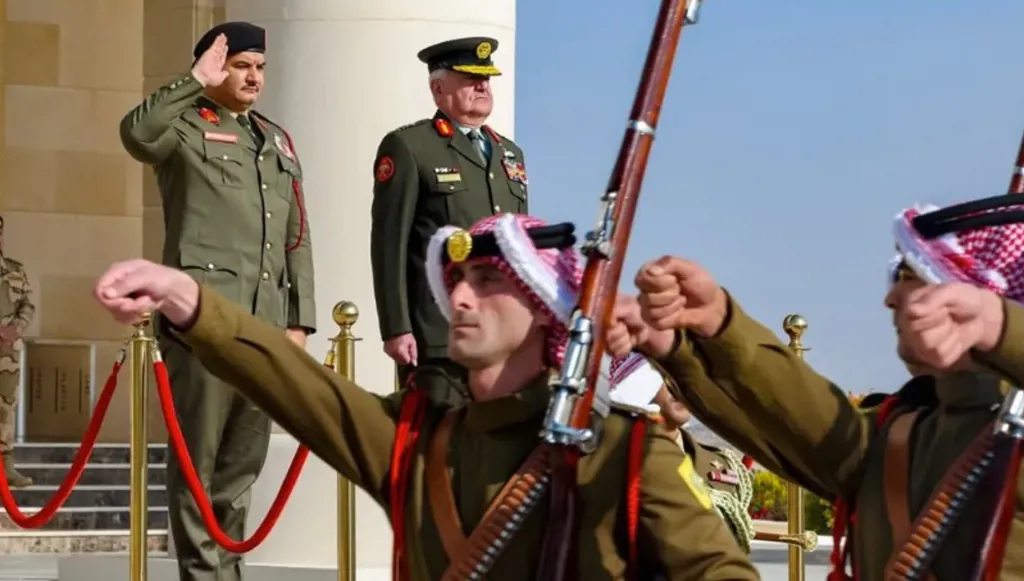


Saddam Haftar, deputy commander-in-chief of the Libyan National Army, is expanding his presence in influential regional capitals about four months after his appointment. This reflects a clear effort to strengthen the alliance network of the rising general, who is moving toward the top of the military leadership pyramid that controls eastern Libya and much of the south, amid an escalating internal power struggle and a deadlock in the political process.
In this context, Haftar’s son visited the Jordanian capital, Amman, on Tuesday at an official invitation, where he held talks with Chairman of the Joint Chiefs of Staff of the Jordanian Armed Forces Maj. Gen. Yousef Ahmed al-Hunaiti, in the presence of senior Jordanian military leaders. According to a Libyan statement, the meeting discussed “prospects for cooperation and joint coordination, and the exchange of expertise in training, development and capacity building.” Saddam also conveyed the greetings and appreciation of his father, Field Marshal Khalifa Haftar, to King Abdullah II, affirming the depth of bilateral relations between the two countries.
A Libyan military source told Annahar that the Libyan-Jordanian talks followed a visit to Amman about a month ago by a Libyan military delegation led by the secretary-general of the National Army and chairman of the Libyan-Jordanian Joint Military Cooperation Committee, Gen. Khairi al-Tamimi. The source said Saddam’s visit aimed to “enhance cooperation with the Jordanian side in joint military training and technical services, particularly medical,” noting that an agreement was reached on a plan for training courses to be attended by Libyan officers at Jordanian military academies this year to raise professional standards and build capacity. The talks also covered the organization of joint exercises between the two armies, with dates to be agreed later.
Libyan political analyst Omar Abu Saeeda told Annahar that the talks “covered a range of strategic issues, primarily security and military cooperation, especially in training, capacity building and the sharing of expertise in counterterrorism and border protection.” He added that the discussions also included political coordination and the unification of positions on regional issues, as well as cooperation in intelligence, cybersecurity and the rebuilding of security institutions, opening broader avenues for economic and technical cooperation that would enhance stability in both countries.
Abu Saeeda said the visit “does not fall within the framework of traditional protocol but comes as part of Saddam Haftar’s moves aimed at repositioning Libya regionally and building strong, realistic alliances in line with rapidly changing international and regional dynamics.”
He noted that these moves serve a core objective of protecting Libyan sovereignty and strengthening stability in the medium and long term.
He added that Haftar’s son has “effectively taken the reins of the military institution, succeeding in convincing major regional and international powers that he is a genuine partner, while pursuing a balanced policy through communication with all sides.”
Abu Saeeda added that amid rising regional tensions and accelerating international shifts, Libyan-Jordanian cooperation has gained added importance by contributing to the reinforcement of Libyan national security, the strengthening of regional stability and the building of an effective Arab alliance network capable of confronting common threats.
He said the partnership with Jordan represents a key pillar in establishing a rational regional balance based on coordination and shared interests, limiting the spillover of regional crises into Libya’s internal affairs.
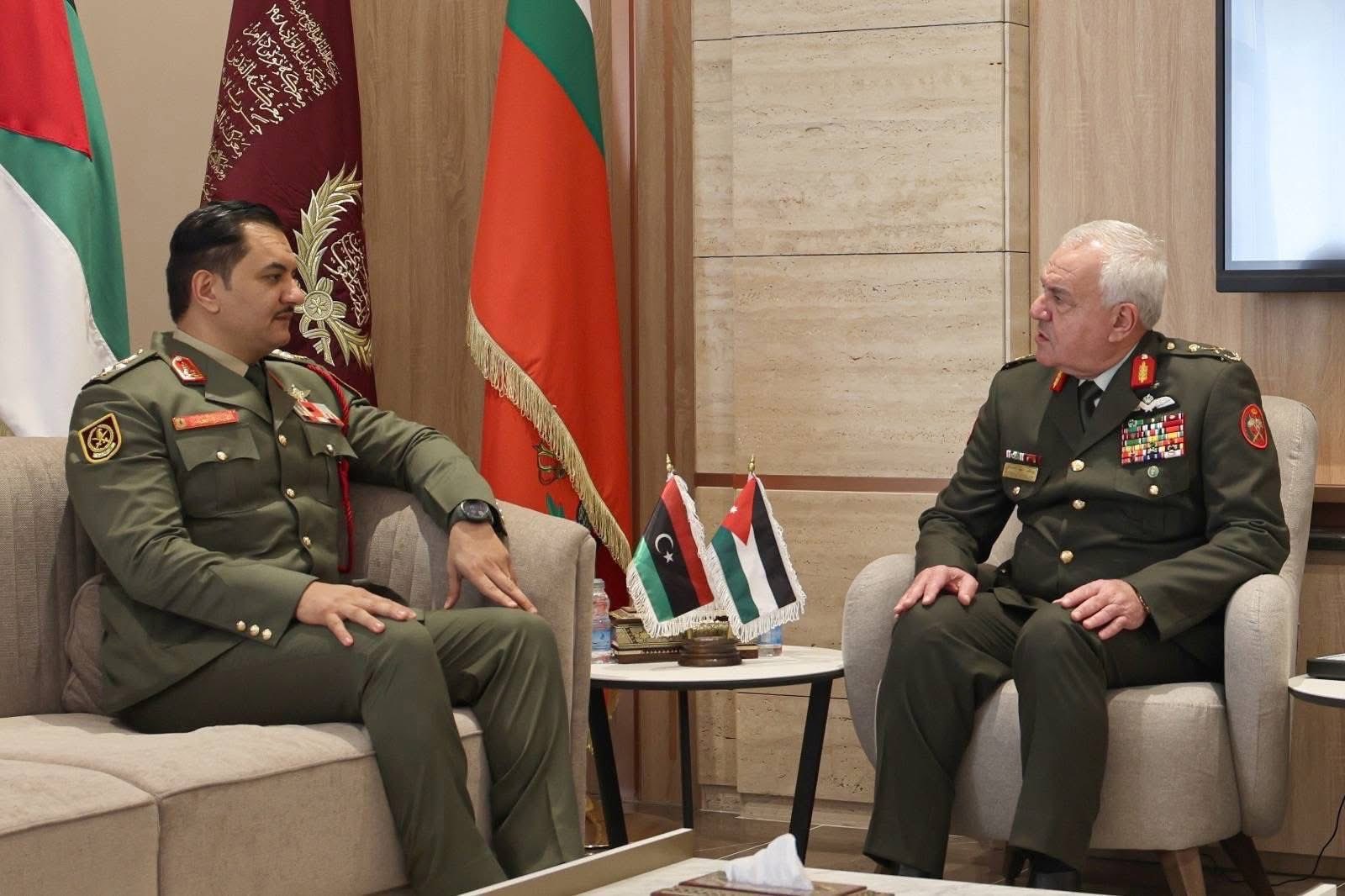
Researcher in political and strategic affairs Mohammad Imtairid confirmed that the talks included “ways to develop cooperation in military and security training, counterterrorism, border security and the exchange of technical expertise, in addition to discussing coordination mechanisms on regional issues.”
Imtairid told Annahar that Haftar’s visit to Jordan reflects, on the political level, both sides’ desire to strengthen communication channels, enhance mutual understanding and unify positions on regional issues that directly affect Arab security.
Militarily, he said, it underscores the importance of benefiting from Jordan’s advanced experience in organization, training and institutional discipline, supporting efforts to build a professional Libyan military institution capable of maintaining security and stability.
He stressed that “Libyan-Jordanian cooperation holds particular importance in light of the region’s security tensions and rapid challenges, making joint Arab cooperation a strategic necessity rather than a political choice.”