

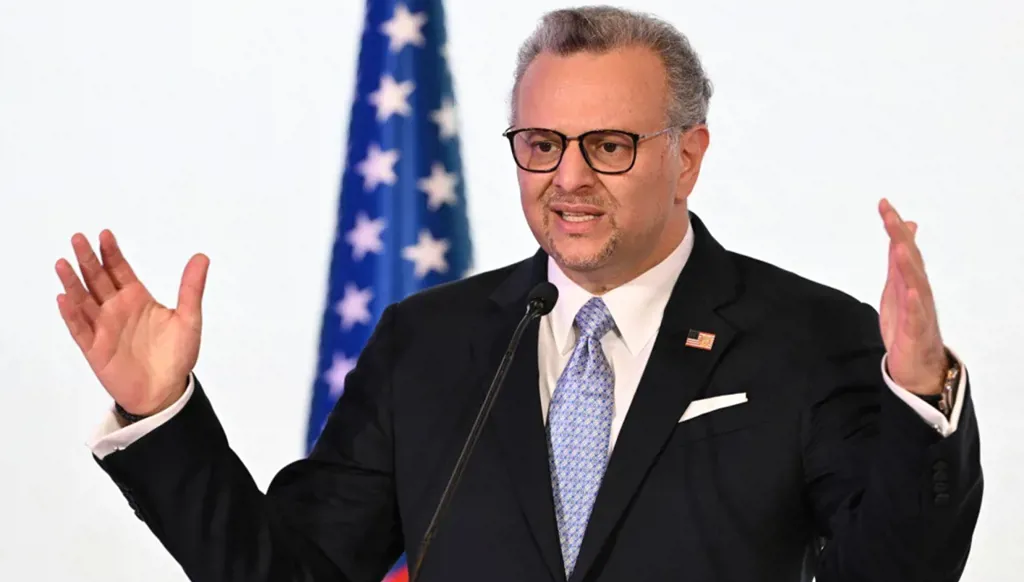
President Trump wants peace in Sudan; Massad Boulos, U.S. Senior Advisor, in an interview with Annahar.


 Messenger
 Whatsapp
 Threads
 Email
Email
 Print
Print
 X
X
 Facebook


Amidst an open war that has exhausted Sudan and turned it into a stage for the world's largest humanitarian crisis, American diplomatic efforts are intensifying to seek a ceasefire to stop the bloodshed between the Sudanese army and the 'Rapid Support Forces.' Amid battlefield complexities, conflicting calculations of the warring parties, and intertwining regional and international agendas, Washington tries to revive negotiation paths, emphasizing the priority of the humanitarian dimension and the rejection of any military solutions.
Massad Boulos, the senior advisor to the US president for Arab and African affairs, explains to Annahar the American administration's approach to the Sudanese crisis, the obstacles hindering the cessation of war, and the pressures exerted to push for an unconditional humanitarian truce. He also discusses Washington's stance on Sudan's possible openness to Moscow, humanitarian support priorities, and war prospects in 2026.
Boulos also talks about interconnected regional files, from transformations in the African Sahel, to US-Algerian relations and the Western Sahara issue, up to the escalating tension surrounding the Grand Ethiopian Renaissance Dam, providing a comprehensive reading of Washington's role in an increasingly turbulent region.
Here is the Q/A interview text:
Q: It is clear that Washington is throwing its weight behind resolving the Sudan crisis. However, no progress has been made towards ending the war. What are the main obstacles to a solution?
A: President Trump wants peace in Sudan. The onus is on the RSF and the SAF to agree to and comply with a humanitarian truce without preconditions.
The United States is committed to ending the horrific conflict in Sudan. Under President Trump’s leadership, we are working with our allies and others to facilitate a humanitarian truce and bring an end to the external financial and military support fueling the violence. With peace and stability, we believe the Sudanese people transition to civilian-led governance in a unified Sudan.
A strong text for a truce has been put forward. We have urged the parties repeatedly to accept this humanitarian truce as presented without preconditions. All sides must honor their commitments and allow full, safe, and unimpeded humanitarian access. There must not be any preconditions to humanitarian assistance delivery or politicization of access. Not only will the truce save lives, but it should also serve as a vital step towards sustained dialogue and lasting peace.
Q: After the head of the Transitional Sovereignty Council, General Abdel Fattah al-Burhan, rejected the proposal submitted by the international quartet on Sudan, what practical steps is the US administration currently taking to revive efforts to end the war?
- Al-Burhan insists on adopting the proposal submitted by the Port Sudan government for a solution. Does Washington consider this proposal acceptable?
A: We are in contact with General Burhan and his team and with the RSF and other parties to the conflict as well. We have to overlook these comments and focus on the heart of the matter, which is the humanitarian crisis and violence. And we all know that this is the world’s biggest humanitarian crisis, just as President Trump described it. There is no military solution to this conflict, so there must be a negotiated solution that can end the fighting and provide space for the Sudanese people—not the warring parties--to determine the future of Sudan.
Q: The American newspaper "The Wall Street Journal" recently reported on a Sudanese offer to Russia to establish a naval base in Sudan. What are the reasons behind this offer, in your opinion? Is the Port Sudan government seeking Russian support?
A:The United States is aware of report of a deal between Russia and the SAF to establish a Russian naval facility on Sudan’s coast.
Moving forward with such a facility or any other form of security cooperation with Russia would further isolate Sudan, deepen the current conflict, and risk further regional destabilization.
Q: What are Washington's humanitarian priorities in Sudan, and are there any additional programs to support civilians and displaced persons?
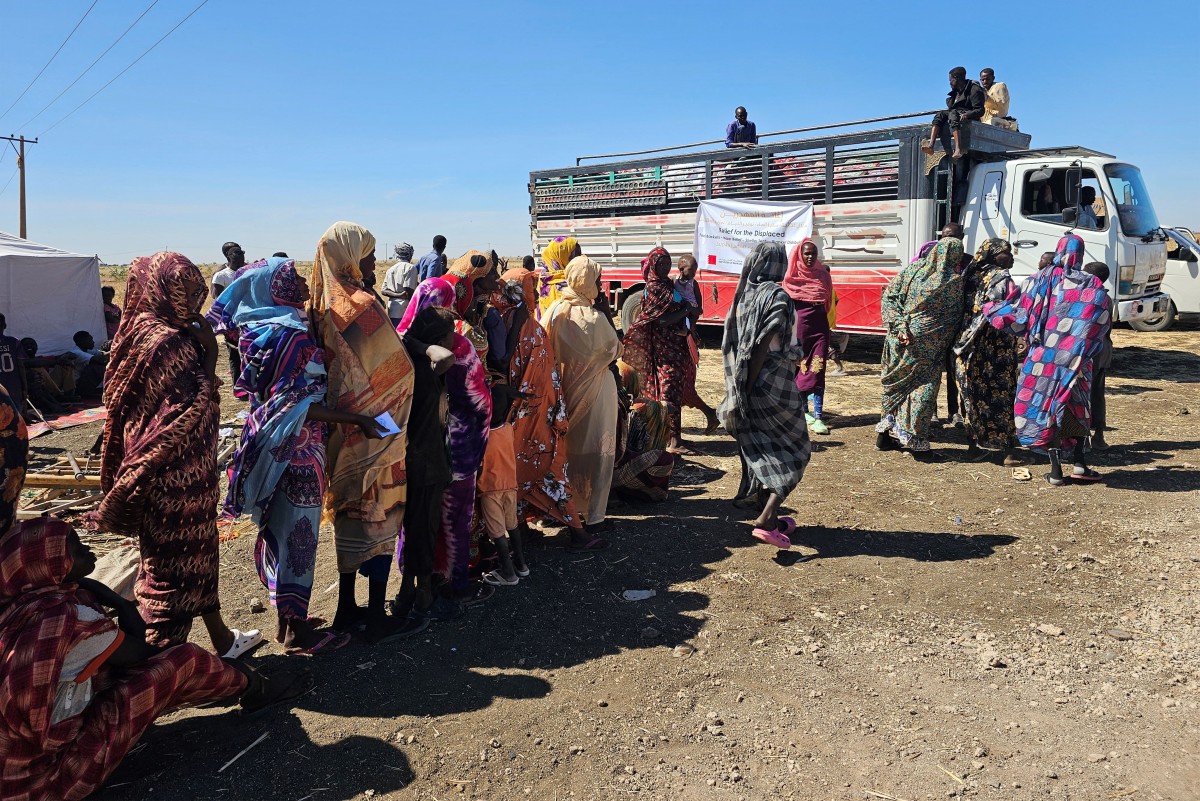
A:The United States remains the leading donor of humanitarian assistance in Sudan. The United States provided more than $579 million in humanitarian assistance to Sudan in FY 2025, and nearly $844 million in FY 2024, including lifesaving food assistance, nutrition, sanitation, and shelter. Sudan also received $2 million in FY 2024 Global Health assistance.
The U.S. is also leading humanitarian diplomacy efforts to achieve unhindered humanitarian access and aid delivery throughout Sudan, working closely with UN OCHA and other aid agencies, as well as directly engaging the warring parties. We are also prioritizing achieving a humanitarian truce so that aid can reach all the suffering people.
In fact, after months of negotiations via a U.S.-facilitated process and hard work by OCHA and other humanitarian partners, a UN assessment mission took place in El Fasher on December 26. We look forward to seeing aid convoys regularly reach El Fasher.
Q: Where is the Sudanese war headed in 2026, based on current trends?
A:The September 12 Quad statement comprehensively laid out a roadmap to end the bloodshed. We presented the parties a strong text for a three-month humanitarian truce. We would like to see them accept the specific text that we presented, which is quite comprehensive and was extensively discussed with both sides. There should be no preconditions. We would then hope to see the truce lead to sustained humanitarian access and assistance delivery, with continued talks and agreements for a permanent ceasefire and related security arrangements, and a political phase in which the Sudanese people decide the future of their governance through inclusive dialogue and a transparent civilian-led transition process. There will also need to be planning for Sudan’s longer term recover and reconstruction.
Q: How is Washington dealing with the recent political shifts in the Sahel countries, especially after the decline of Western influence in some capitals?
A: The United States has engaged with Sahelian countries using a pragmatic approach that focuses on advancing our foreign policy priorities. Deputy Assistant Secretary of State Will Stevens’ recent visits to the region reinforced the U.S. government’s work with host country officials to advance U.S. commercial opportunities.
Q: How would you describe current US-Algerian relations, particularly after the recent Security Council resolution concerning Western Sahara?
A:The United States and Algeria have a strong partnership in advancing regional peace, security, and prosperity under President Trump’s and President Tebboune’s leadership.
The U.S. looks forward to facilitating commercial access to the Algerian market for American companies and collaborating on opportunities for mutual prosperity.
Regarding Western Sahara, President Trump is committed to enabling durable peace in the region and a better future for all its peoples
The United States welcomes the historic vote to adopt UN Security Council Resolution 2797, extending MINURSO’s mandate for another year and seizing this unique moment to catalyze momentum for long-overdue peace in Western Sahara – progress made possible by the United States’ deep partnership and close, continuing cooperation with Morocco.
Q: The dispute between Ethiopia and Egypt over the Grand Ethiopian Renaissance Dam has intensified. There has been talk of the possibility of Egypt bombing the dam. Do you foresee an escalation between the two countries in 2026?
A:The United States supports a diplomatic solution on the Nile River that meets the needs of all parties.
This is clearly an issue that President Trump feels strongly about, and we are working with all sides to find a diplomatic solution. Throughout his leadership, the President has consistently worked to prevent conflicts from escalating and to resolve disputes through diplomacy.