


 Messenger
 Whatsapp
 Threads
 Email
Email
 Print
Print
 X
X
 Facebook


After more than twenty years, the Algerian government has submitted a draft law to parliament proposing a major revision of the nationality law.
The draft includes provisions allowing the government to revoke Algerian nationality from individuals involved in high treason, actions undermining national unity, receiving funds to harm national cohesion, or taking up arms against the country.
The draft has sparked widespread debate across the country, particularly over its timing and potential implications, including questions about how it would be applied in practice and its emphasis on stripping nationality rather than pursuing alternative measures.
In this context, lawyer Mariam Akrout told Annahar that “amending the nationality law at this particular time comes amid a sensitive security and legal environment in Algeria, especially concerning challenges related to protecting national sovereignty and countering terrorist threats or attempts to undermine the country’s higher interests.”
She added that these amendments are “essential to expand the scope of judicial deterrents against individuals involved in acts that threaten state security.”
Akrout highlighted the positive aspects of the measure and its potential impact, stating that “the amendment will send a clear message that nationality is a legal and ethical bond, grounded in loyalty to the country and respect for its laws.”
She added, “While amending the law is a sovereign and legal decision, its application should be limited and carried out under judicial oversight,” ensuring that the rights and freedoms guaranteed by the constitution are respected.
However, the lawyer at the Algiers Court of Appeal noted that the government “could have legally used other mechanisms without resorting to amending the nationality law,” such as imposing stricter criminal penalties during trials, enforcing anti-terrorism laws, expanding the scope of judicial proceedings, or suspending civil rights and restricting political participation - measures that allow for the punishment of those involved without affecting their nationality.
Political activist Salim Sirout told Annahar that “the primary target of the law’s amendment appears to be opponents residing abroad,” noting that “some have already been sentenced to prison terms of up to twenty years, while others remain wanted by Algerian authorities for involvement in prosecutable acts.”
He added that “the proposed amendments risk restricting freedoms and curbing the opposition, particularly if the law’s language is not defined with utmost precision, leaving room for ambiguity regarding the individuals targeted.”
Sirout urged members of parliament to closely examine the wording in the draft law, including terms like “serious acts affecting the state’s interests,” to ensure they are not applied beyond their intended scope.
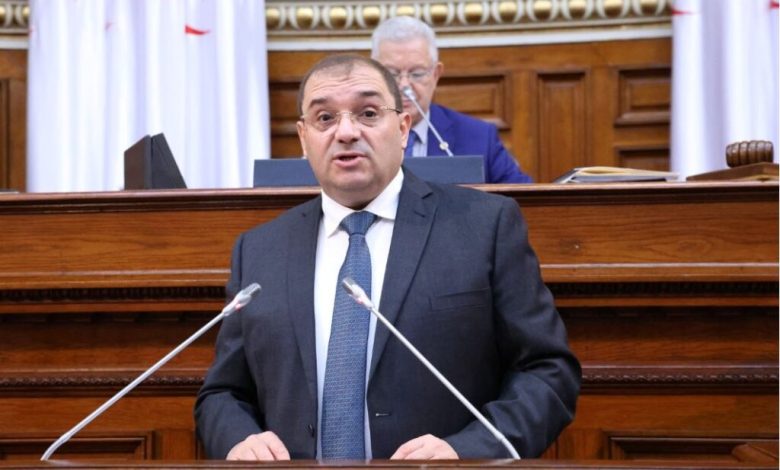
The government included specific guarantees in the draft amendment, particularly regarding cases of nationality revocation. The Minister of Justice Lotfi Boudjemaa stated that “this measure primarily targets individuals who have acquired another nationality, who undermine their original nationality, reside abroad, and use another nationality to carry out such acts.”