

In rural Morocco, women still wait for economic empowerment
In villages across the countryside, countless women work without rights, recognition, or the promise of change.


 Messenger
 Whatsapp
 Threads
 Email
Email
 Print
Print
 X
X
 Facebook
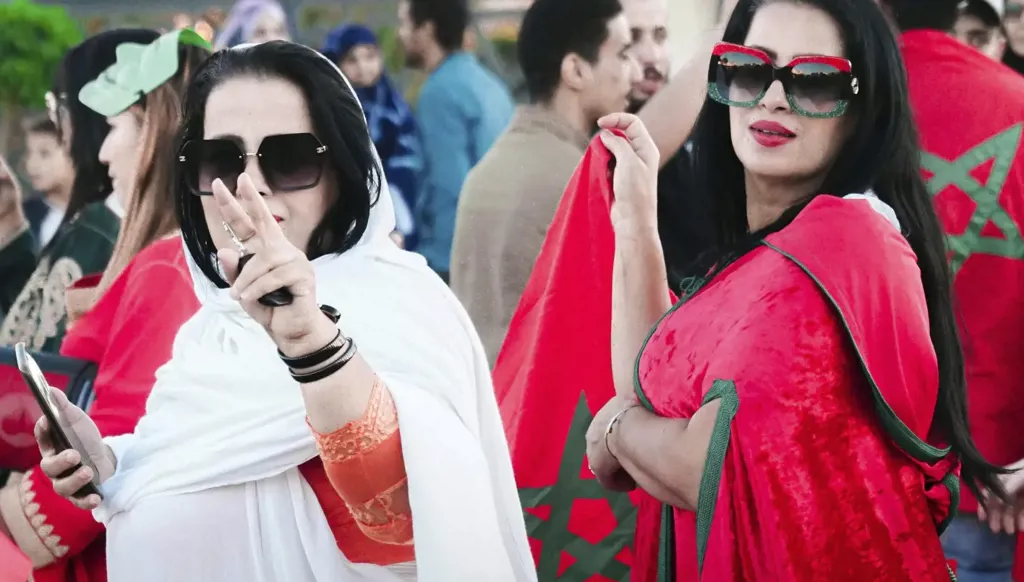


In the small village of Inzer, perched on the slopes of the Middle Atlas Mountains, mud-and-stone houses sit scattered across a rugged landscape where daily life offers little comfort. This is the home of Fatima, a 45-year-old woman whose face carries the traces of years of exhaustion, even as a modest smile struggles to mask a deeper reservoir of hardship.
Fatima’s day begins at sunrise. She heads to the fields to tend livestock and harvest crops—labor that stretches from dawn until dusk for a meager wage that rarely exceeds 70 dirhams a day, with no rights, protections, or social guarantees. When asked what meaning the phrase “economic empowerment” holds for her, she answered with a bitter smile: “We hear that term a lot on television, but it has never reached our village. We don’t ask for much—just to be seen, and for our efforts to be recognized.
Fatima’s story is only one among countless similar experiences across rural Morocco. A recent study by the Moroccan government’s High Commission for Planning found that 60.3% of economically active rural women work as domestic helpers, with most of them receiving zero financial compensation.
This alarming figure underscores the scale of exclusion facing rural women, whose labor remains economically unrecognized and legally unprotected. Despite their relentless efforts, they remain invisible to state institutions and to the very development programs meant to support them.
When describing her situation to Annahar, Fatima attempted to hold back her tears: “I have been working since I was a child. I have known nothing but exhaustion, and we see no results — neither in our lives nor in the future of our children.”
These realities have reignited the debate over the harsh living conditions faced by women in many rural parts of Morocco. In the shadows of the mountains and in the depths of forgotten villages, thousands of women like Fatima sustain local economies through farming, herding, and seasonal labor, yet remain excluded from formal labor protections and rights guaranteed by law.
The story of Naima, a young woman in her twenties, sheds light on another dimension of this struggle. She lives in a village in the Al-Haouz region, recently devastated by the earthquake near Marrakesh. Although she holds a high school diploma, she finds herself trapped in a suffocating cycle of unemployment and inactivity.
As explained by Naima: “When I earned my high school degree, I believed I was stepping into a new chapter of my life. Instead, I ran into a harsher truth. Here, there are no job opportunities and no vocational training centers to give us even a glimpse of hope. Most girls in our village are just like me. Our dream is simple: we just want a real chance to change our lives.”
Naima’s words resonate strongly with official data that reveal the magnitude of the crisis. Statistics show that 61.8% of young rural women aged between 15 and 29 are not in education, employment, or training (NEET) — the highest rate in the country. The unemployment rate among young rural women with higher education reaches 38%, highlighting a deep disconnect between educational attainment and labor market needs, as well as a lack of investment in young women who could transform these marginalized regions.
Amid this bleak reality, social researcher Dr. Hayat Al-Razi argued that “the primary cause of this wide gap is the absence of clear policies on education and vocational training for rural girls.”
She stressed that “there is a fundamental failure to understand the specific nature of rural areas and the needs of the women who live there. Development projects designed in cities are not necessarily suited to the realities of isolated villages.”
According to Al-Razi, “the slogans of equality and empowerment repeated at conferences and official events rarely translate into concrete programs capable of changing these women’s daily lives or giving them real opportunities to grow and participate meaningfully in development.”
And while the employment rate for rural women (21.9%) appears higher than in urban areas (13.7%), this figure masks deeper problems.
“I work in agriculture and livestock. I don’t get paid because it’s considered helping my husband.” Zuhour said. “If I dared to demand my rights, I would face problems with my family. We are trapped between social traditions and government neglect.”
She added with regret: “We live in the shadows, and talk of equality and women’s empowerment remains empty words unless it reaches these marginalized villages.”
Yet the economic marginalization of rural women is not only reflected in their personal lives but also undermines the broader structure of the national economy.
According to a recent official study, this exclusion costs Morocco an estimated 2.2% of its annual GDP — a significant loss that could have been avoided had the capacities of these women been invested in effectively and fairly.
Commenting on these troubling figures, Fatima Al-Zahra Bouhalla, an expert in social economics, told Annahar that “this loss is not simply a passing statistic; it is a stark indicator of the deep structural imbalance in our development model.”
She explained that the continued marginalization of rural women represents a systematic waste of significant potential that could otherwise contribute to economic growth and to greater social and regional balance. “We are speaking about thousands of women capable of generating real added value in agriculture, traditional crafts, and services,” she noted.
“If the government truly intends to lay the foundations for a strong and inclusive economy, it must direct its attention to this group,” Bouhalla added with emphasis. “Integrating rural women into the economic cycle is not merely a matter of improving their income — it is a strategic investment in regional and social justice, and in strengthening the national economy’s resilience in the face of crises. We are not asking for privileges, but for a basic right to recognition and participation. The face of the Moroccan economy could change dramatically if targeted, effective programs were implemented — programs capable of dismantling structural and cultural barriers and allowing these women to contribute to the country’s development as they should.”
Among the most striking figures in the study reviewed by Annahar are indicators of deep yet quiet social shifts: a noticeable rise in fertility rates among rural women to 2.37, a decline in the average age of first marriage, and an increase in the proportion of women over 50 who remain unmarried. These trends point to structural transformations in lifestyles and family patterns and mark developments that require urgent attention from policymakers and social actors.
Nadia Mezwar, a professor of social psychology, explained to Annahar that these indicators cannot be understood in isolation from the broader cultural and economic transformations reshaping rural communities. She argued that “the absence of public policies that take these shifts into account will inevitably lead to the accumulation of long-term social and psychological crises. Today’s rural women are no longer only mothers or wives; they have become active contributors to household and community economies — yet this evolving social role remains unsupported by any institutional framework capable of accommodating and reinforcing it.”
“Women are living under mounting pressure, caught between traditional expectations that still define them and modern challenges that confront them without offering the tools to cope.” She continues. “This contradiction generates deep psychological and social tensions, and may lead to isolation, self-harm, or even social violence unless smart, realistic policies are implemented to restore balance and respect the specific dynamics of rural life.”
The official study concludes with a set of recommendations, ranging from improving infrastructure and expanding access to education and healthcare, to establishing rural childcare facilities and activating programs for women’s entrepreneurship. Yet despite their merit, these recommendations repeatedly crash into a hard wall of financial constraints.
According to human rights advocate Leila Chawi, “What rural women need today is not more ink on paper or recommendations decorating official reports, but genuine political will and courageous decisions that uphold spatial justice and human dignity.”
“Rural women are not numbers in a spreadsheet,” she added in a tone tinged with anger.”They are the backbone of this country’s development. It is time to stop treating them as unpaid labor and start recognizing them as full citizens with full rights.”
The central question is now whether the voices of Fatima, Naima, Zohra, and countless others will finally reach decision markers or if the High Commission for Planning’s report will join the long archive of studies that are neatly shelved but never translate into real change.
Although the answer might ultimately rest in the hands of policymakers,it also echoes in the rising voices of rural women who are no longer willing to remain silent.