

Polygamy resurfaces in Tunisia: A reversal of Bourguiba’s vision?
A Tunisian MP’s call to legalize polygamy ignited widespread backlash from officials and civil society, reviving a long-settled issue that many view as a threat to the country’s hard-won women’s rights and secular identity.


 Messenger
 Whatsapp
 Threads
 Email
Email
 Print
Print
 X
X
 Facebook
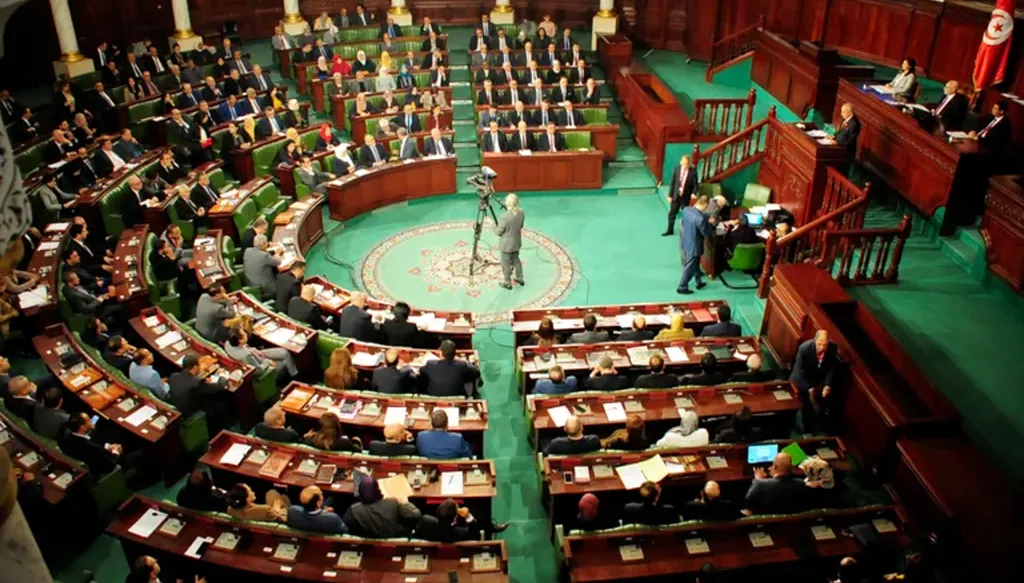


In Tunisia, the question of polygamy was formally settled more than five decades ago with the 1956 enactment of the Code of Personal Status, the first legislation of the newly independent state in 1956, yet it remains a highly contentious issue. Discussions about it often provoke significant debate among the public, human rights circles, and even within political spheres.
On Tuesday, for the first time since the enactment of the Code of Personal Status, this debate resurfaced, this time from within the walls of the parliament. A lawmaker officially raised the discussion on polygamy after calling for the ban to be lifted.
In a rare and unprecedented parliamentary intervention that sparked wide controversy across the country, MP Abdessattar Zarai, representing the "Honesty and Labour" bloc, called for a reconsideration of the Code of Personal Status and proposed legalizing polygamy.
Zarai described lifting the ban on polygamy as “a solution to many societal problems.”. He argued that current laws are unfair, emphasizing that they restrict men, and claimed he was speaking “on behalf of a large segment of Tunisians who are waiting for this discussion to be addressed boldly.”
The Tunisian MP stressed that his call was not motivated by religion but by social considerations. He viewed polygamy as a potential mechanism to address issues such as alimony obligations and the country’s rising divorce rates.
Tunisia currently bans polygamy, and anyone who violates this law faces imprisonment–a policy widely attributed to the early-post independence reforms led by former President Habib Bourguiba.
A Red Line
The response to Zarai’s statements was swift, especially after they became a trending topic across social media within hours.
The first to condemn these remarks was Minister for Women Asma Jebri, who expressed surprise that such comments were made from the parliament chamber. She stressed that there is absolutely no room to roll back the legislative gains of Tunisian women.
The minister described any discussion of polygamy as a “red line” that must not be crossed in any revision of the Code of Personal Status.
On social media, Zarai’s statements sparked a major uproar. While some comments expressed support, the overwhelming reaction was one of condemnation, with many highlighting the dangers of promoting such a proposal.
The President of the National Union of Tunisian Women (UNFT), Radhia Jerbi, published a post strongly criticizing Zarai’s remarks, describing them as “shameful, both in content and timing.” She emphasized that this issue has already been decided by Tunisians.
Others argued that the Zarai’s call seemed aimed at diverting attention by raising a controversial issue settled decades ago, instead of focusing on the real challenges facing women and families in Tunisia.
The Secular Nature of the State
Debate over polygamy in Tunisia has resurfaced strongly since 2011, following the fall of President Zine El Abidine Ben Ali’s regime and the rise of Islamist parties to power. At that time, concerns grew over the potential rollback of legislative gains achieved by Tunisian women.
While the issue of polygamy has been raised on several occasions, it never reached the official level, as Islamists feared societal backlash, particularly from human rights circles, for whom this topic remains a “red line.”
MP Fatma Mseddi told Annahar that every constitution drafted since Tunisia’s independence, including the post-2011 constitution, has preserved the country’s secular identity at its core. She explained that the Code of Personal Status, now over half a century old, is part of Tunisia’s national identity, not merely a legal text.
Mseddi emphasized that calls to reconsider the ban constitute a violation of the constitution. She added that this debate is not a priority for Tunisians, whose main concern is “addressing today’s problems and improving social conditions.”
Mounir Charfi, head of the Observatory for the Defense of the Civilian Character of the State, described the proposal as “out of place and out of time.” He emphasized that it is “completely unacceptable in a country that has made significant strides toward modernization over the past seventy years and continues to pursue further progress in that direction.”
Charfi expressed concern that this statement may be a way to test public opinion in Tunisia or a continuation of a desperate campaign to revert to the era before the Code of Personal Status. He noted that “this campaign began a few months ago with an Iranian woman invited to give a lecture in Tunisia about polygamy in Iran.”
He stressed that the Code of Personal Status is “a civilizational achievement that our country proudly upholds, and under no circumstances, at any time, can it be undone.”
In a country like Tunisia, with its long legislative and human rights record in securing women’s rights, the discussion of reintroducing polygamy seems detached from reality and a pursuit of an illusory battle that may only sow division among Tunisians.