

Mediators gather in Pakistan for talks on ending the monthlong Iran war


 Messenger
 Whatsapp
 Threads
 Email
Email
 Print
Print
 X
X
 Facebook
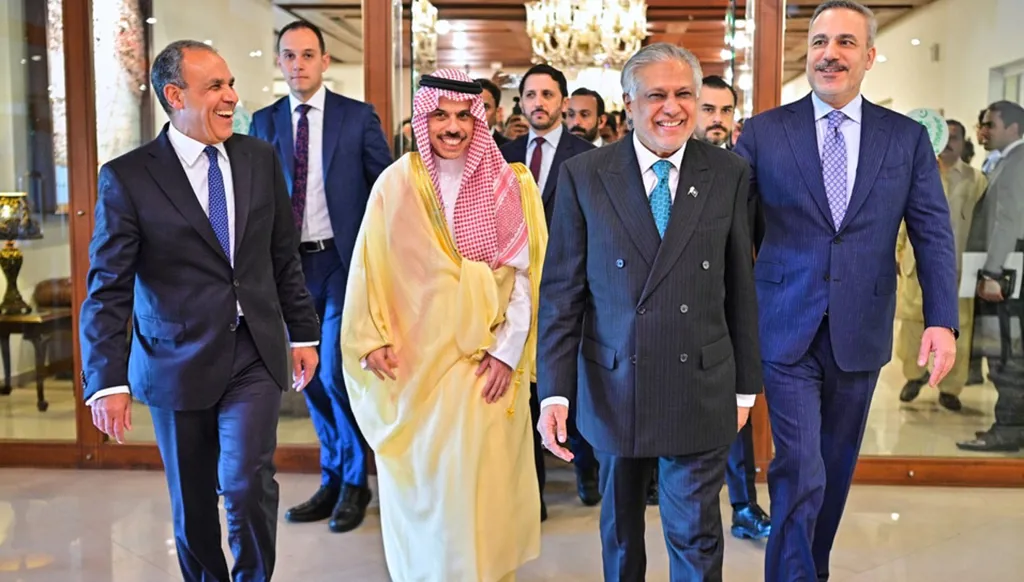
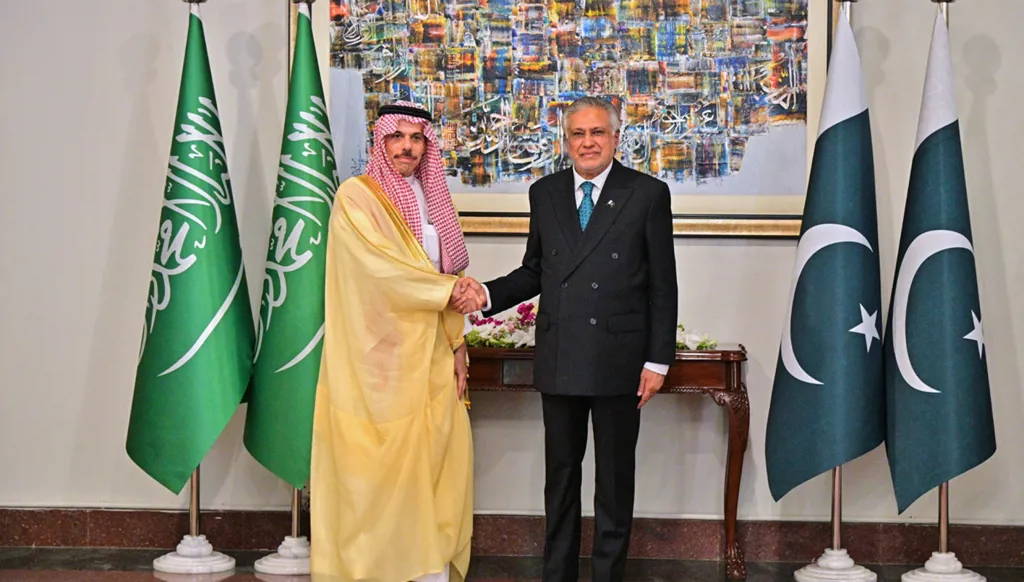
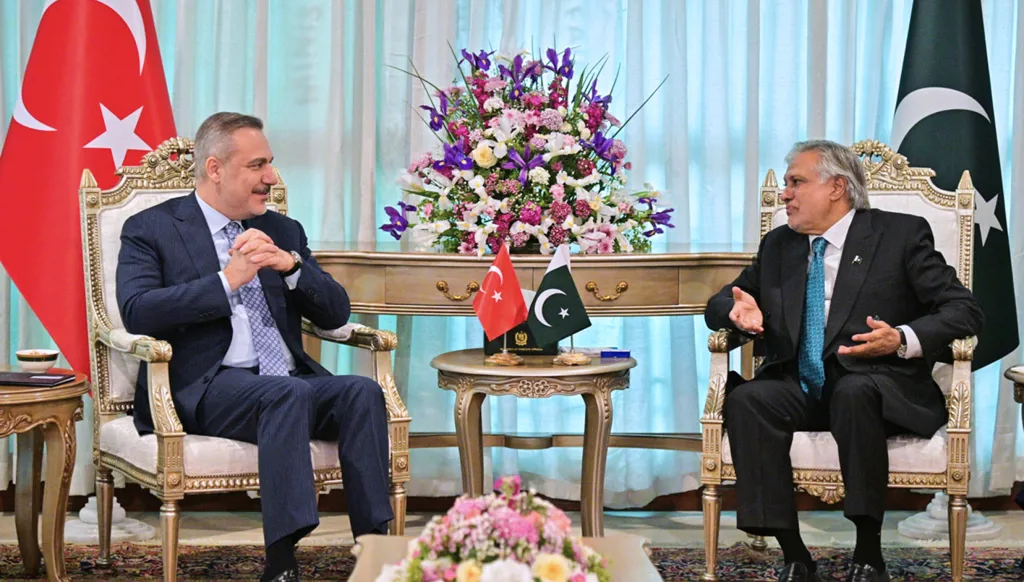


Top diplomats from key regional powers gathered in Pakistan on Sunday to discuss how to end the fighting in the Middle East, but there were few signs of progress as Israel and the U.S. kept up strikes on Iran, and Tehran responded by firing missiles and drones across the region.
Pakistan said foreign ministers from Saudi Arabia, Turkey and Egypt were participating in the talks in Islamabad. Pakistani Prime Minister Shehbaz Sharif said he and Iranian President Masoud Pezeshkian held “extensive discussions” on regional hostilities.
More than 3,000 people have been killed throughout the monthlong war that began with U.S. and Israeli strikes on Iran, triggering Iran's attacks on Israel and neighboring Gulf Arab states.
The U.S. and Israel were not participating in the Islamabad talks. Iran’s parliament speaker, Mohammad Bagher Qalibaf, dismissed the talks as a cover while the U.S. dispatches additional troops to the Middle East. He warned against any ground invasion and said Iran was ready to set American troops “on fire” and punish U.S. regional allies, according to Iranian state media.
Israel announced waves of incoming strikes from Iran on Sunday and explosions could be heard throughout Tehran.
Mideast leaders try to break impasse at weekend talks
Egypt’s Badr Abdelatty, Turkey’s Hakan Fidan and Saudi Arabia’s Prince Faisal Bin Farhan were in Islamabad as part of talks scheduled days after the U.S. offered Iran a 15-point “action list" as a framework for a possible peace deal. Abdelatty said the meetings were aimed at opening a “direct dialogue” between the U.S. and Iran, which have largely communicated through mediators during the war.
Yet during the talks, Iran has eased some restrictions on commercial ships passing through the Strait of Hormuz. It agreed late Saturday to allow 20 more Pakistani-flagged vessels to transit the critical passageway, Pakistani officials said, adding to the select few it has let through as Iran works to choke but not cut off the strait entirely.
The weekend provided little sign of the talks narrowing the disconnect between the U.S. and Iran. U.S. officials have insisted the war may be nearing an inflection point but Iranian leaders continue to publicly reject negotiations.
To the contrary, the United States has dispatched thousands of additional Marines and paratroopers to the region. And the Iran-backed Houthis, who govern parts of Yemen, announced their long-awaited entry into the war, launching missiles toward what they called “sensitive Israeli military sites” for the first time on Saturday.
Despite the deployments, U.S. Secretary of State Marco Rubio said on Friday that Washington “can achieve all of our objectives without ground troops” as domestic opposition grows to expanding the war to a potential ground invasion, including among Republicans.
Yet Iranian officials have rejected the U.S. framework and in public dismissed the idea of negotiating under pressure. Still, Press TV, the English-language arm of Iran’s state broadcaster, reported last week that Tehran drafted its own five-point proposal, citing an anonymous official. The plan reportedly called for a halt to killing Iranian officials, guarantees against future attacks, reparations and Iran’s “exercise of sovereignty over the Strait of Hormuz.”