

Mohammad Bagher Qalibaf: Iran’s emerging voice in U.S. negotiations
In a shifting power landscape, the parliament speaker steps forward as a central figure connecting Iran’s military and political decision-making.


 Messenger
 Whatsapp
 Threads
 Email
Email
 Print
Print
 X
X
 Facebook
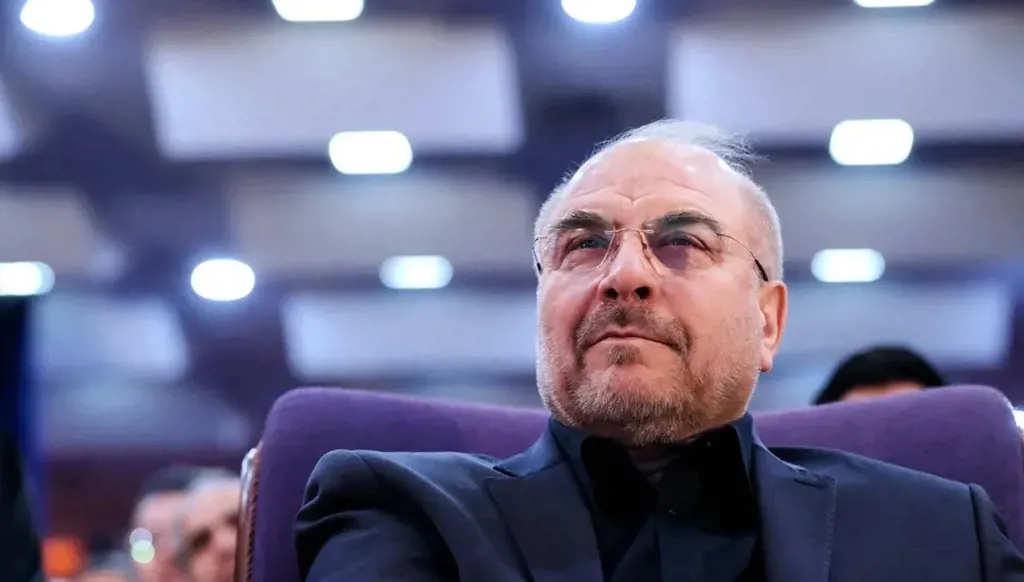


In an unprecedented power vacuum in Iran’s leadership, the name of Mohammad Bagher Qalibaf stands out as a figure who goes beyond his official position. He is no longer just the speaker of parliament, but one of the few figures who can represent Tehran amid war and political turmoil.
Today, Qalibaf has stepped into the spotlight at a moment when the roles of other figures have diminished or disappeared due to military strikes. Reports suggest that Washington now treats him as a key player in any potential negotiations, given the absence of a clear decision-making center within the Iranian system.
Who is Qalibaf?
Qalibaf is not a conventional politician.
He began his career in the Revolutionary Guards during the Iran-Iraq War, rising to lead the Guards’ Air Force before moving into security and civilian positions, most notably leading the police force and serving as mayor of Tehran for many years, eventually becoming speaker of parliament in 2020.
This dual military/security and political career have made him a bridge between Iran’s institutions: the Revolutionary Guards, the political establishment, and religious networks.
Why is he in a negotiating position?
This shift is not accidental.
The recent war has reshaped centers of power in Iran:
- The death or absence of key leadership figures
- The decline of traditional diplomatic channels
- The rise of the Revolutionary Guards’ influence
In this context, Qalibaf has emerged as a new key power player, able to link military and political decisions, making him a natural candidate for external engagement.
Estimates indicate that the U.S. leadership, seeking a “clear point of contact” in Tehran, has found in him a strong figure to engage with amid the ambiguity surrounding Iran’s top leadership.
Hardliner or pragmatist?
Qalibaf is considered a conservative hardliner and has adopted a confrontational stance against the United States and Israel, threatening broad retaliation to any attack.
At the same time, he has cultivated an image as an “executive pragmatist,” capable of managing complex issues rather than relying on slogans. This explains why he is accepted as a front figure for negotiations in a sensitive period.
What does his emergence mean?
His name appearing in the context of indirect talks—such as efforts to arrange a meeting in Islamabad—reflects not just a negotiation track, but a deeper transformation: from a system led by a clear supreme leader to one in which crises are managed through multiple centers of power.
In this landscape, Qalibaf becomes more than a potential negotiator—he is a sign of shifting power dynamics in Iran under the pressure of war.